REVIEW · VENICE
Venice Walking Tour with Audioguide on Your Smartphone
Book on Viator →Operated by TouringBee · Bookable on Viator
Venice feels easier when you can pause. This self-guided route lets you move at your own pace with smartphone audio and an offline map, plus it’s easy to stop and restart over multiple days. I especially like how it ties famous landmarks—like the Ponte dei Sospiri—to the day-to-day Venice behind the postcards. One thing to consider: the GPS can occasionally lag, and a few points can be a little tricky to spot, especially if you miss one step in the middle.
The upside of this kind of tour is simple: you’re not trapped in a slow group rhythm, and you’re not stuck staring at a screen trying to figure out what you’re looking at. At about 2 hours long and $8.42 per person, it’s a strong value if you want context without paying for a full guided tour.
One practical note before you go: you’ll need your own phone and headphones. And while the route is designed for navigation, you’ll want to be comfortable using a map on foot in tight streets.
In This Review
- Key highlights at a glance
- What you’re really getting for $8.42 in Venice
- Starting point and getting oriented fast without frustration
- Ponte dei Sospiri and Palazzo Ducale: the prison-to-palace story
- Campanile di San Marco views and the Torre dell’Orologio clock details
- Basilica di San Marco: mosaics, marble, and St. Mark’s horses
- Caffè Florian and the Procuratie arcades: a smart pause in Piazza San Marco
- Casino di Venezia and the walk toward Rialto’s big moments
- Rialto Bridge and Canal Grande: Venice’s commerce on display
- Rialto’s local squares and the market senses: Campo San Giacomo and Mercato di Rialto
- Il Gobbo di Rialto and Ca’ d’Oro: stories behind the famous fronts
- San Cassiano, Ponte delle Tette, and Basilica dei Frari: art and darker street lore
- How the smartphone audio guide actually helps you walk smarter
- The biggest pros and cons I’d weigh before you book
- Who should choose this self-guided route
- Should you book this Venice walking tour?
- FAQ
- How long is the Venice Walking Tour with Audioguide on Your Smartphone?
- What language is the audio guide in?
- Do I need to bring headphones?
- Are entrance tickets included for places like Doge’s Palace or the Basilica di San Marco?
- How do I access the audio guide?
- Can I cancel for a full refund?
Key highlights at a glance
- Offline map + GPS route helps you keep moving without constant re-checking your phone
- 25 audio recordings cover sights, traditions, and the stories that make Venice feel alive
- Illustrations for landmark spotting reduce the guesswork at tricky corners
- Icon-to-local mix: you hit San Marco, Rialto, and also off-the-main-walk spots like San Cassiano and Ponte delle Tette
- Start-stop flexibility means you can spread it across days instead of cramming one long sprint
- Entrance fees aren’t included, so you’ll plan tickets separately if you want interiors
What you’re really getting for $8.42 in Venice
You’re paying for a low-cost, self-guided way to understand Venice while you walk. That price is the big hook: for the cost of a couple coffees, you get an app-based narration route built around major sights and a few overlooked corners.
The experience runs in English, lasts about 2 hours (approx.), and you get 1 year access to the audio. That matters because Venice is best when it’s flexible. If you get tired, duck into a church, or stop for a snack, you’re not failing a group schedule.
The tour also includes a mobile ticket plus an app download (iOS and Android). It’s not a guided tour, so you won’t have a person correcting you on the spot. You’re following the route and listening in sequence.
You can also read our reviews of more walking tours in Venice


Starting point and getting oriented fast without frustration

The meeting point is Calle Seconda de la Fava, 4196, 30122 Venezia VE, Italy, and the experience ends back there. Since this is self-guided, your real “start” is the moment you open the app and follow the route on the map.
A few small things can make or break your first 10 minutes. First, bring headphones—the audio won’t play for you through speakers in a quiet church. Second, be ready for the fact that Venice corners can hide landmarks behind buildings, so you might need to confirm you’re on the correct side of the street before you commit.
If you’re coming from a busier area (or if the first stop looks “off” compared to what you expected), rely on the app route first, not the address. One useful habit: do a quick 360° look when you arrive at a point. Venice loves to place the important bit just behind your line of sight.
Ponte dei Sospiri and Palazzo Ducale: the prison-to-palace story
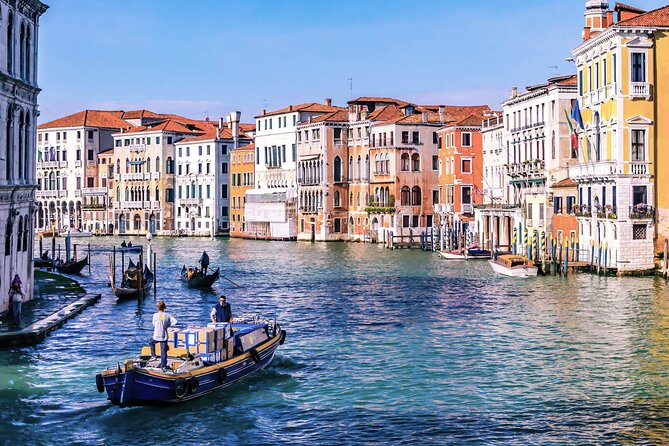
Your route begins with Ponte dei Sospiri (Bridge of Sighs), the dramatic connection between the Doge’s Palace and the New Prison. The bridge is known for delicate stonework, and the legend tied to prisoners giving sighs as they crossed adds a haunting tone to what looks like romantic architecture.
Right after that mood comes Palazzo Ducale, Venice’s famed Doge’s Palace. This is Gothic in style and packed with art—Tintoretto and Veronese are specifically called out. Even if you don’t buy an interior ticket, you’ll still get value from understanding what you’re looking at: power, courts, and artists all built into the same walls.
Practical consideration: entrance tickets are not included. If you want to step inside Palazzo Ducale, plan for separate tickets and possible lines. The audio helps most when you’re reading the architecture while you’re standing there.
Campanile di San Marco views and the Torre dell’Orologio clock details
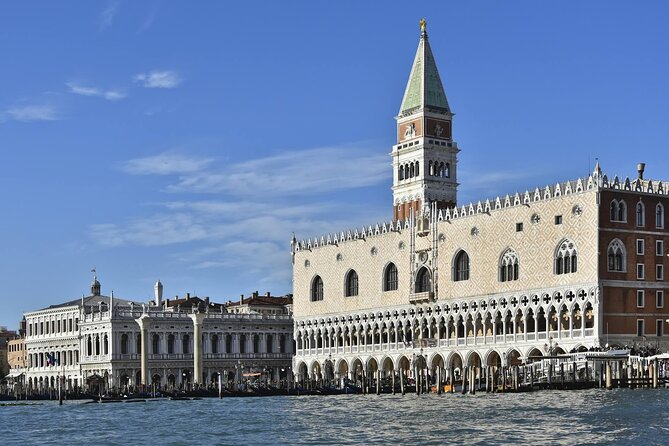
Next up is Campanile di San Marco, Venice’s iconic bell tower in Piazza San Marco. The route encourages you to look closely at the bronze Moors and then consider the climb for wide views of the city and lagoon.
After the bell tower, you’ll hear about Torre dell’Orologio (the Clock Tower). This is another Piazza San Marco landmark where engineering and design overlap. The two bronze Moors striking the hours are a key visual cue, so it’s worth timing your glance so you catch them in motion if you can.
For both of these, remember the same rule: the audio can guide you to the best angles, but summits and interiors may require separate tickets. If you’re trying to keep the trip strictly low-cost, focus on the exterior viewpoints and let the narration do the heavy lifting.
Basilica di San Marco: mosaics, marble, and St. Mark’s horses
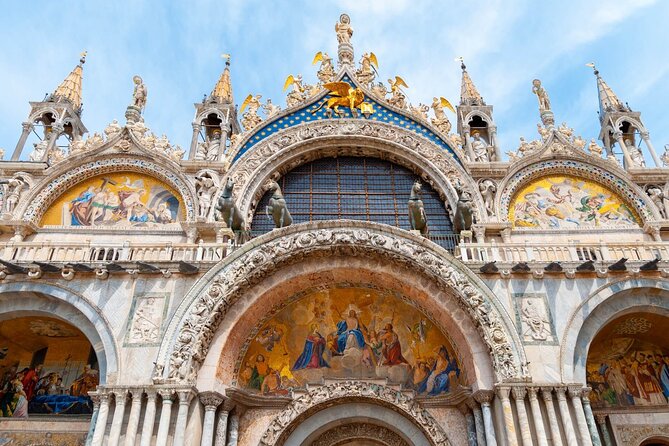
At Basilica di San Marco, the story shifts from civic power to spiritual Venice. The highlights called out include the golden mosaics, the intricate marble façade, and the famous horses of St. Mark’s.
This stop is valuable because the basilica isn’t just one attraction. It’s a symbol of Venetian wealth and influence made visible in art and materials. The audio approach helps you look at details that you’d otherwise rush past while trying to get a photo.
One heads-up: the route frames it as a must-see, but it doesn’t include admission. If you want to go in, check tickets and expected entry flow ahead of time. If you don’t, you can still use the audio cues to make the façade and atmosphere meaningful.
You can also read our reviews of more tours and experiences in Venice






Caffè Florian and the Procuratie arcades: a smart pause in Piazza San Marco
You’ll get a break at Caffè Florian in Piazza San Marco. This is one of Venice’s most storied coffee places (it’s linked to the year 1720 and mentions Casanova). It’s not only a coffee stop—it’s a lesson in how social life used to happen in public spaces.
Then the route shifts to Procuratie Vecchie and Procuratie Nuove, the long arcaded stretch lining the piazza. These buildings once housed procurators and government offices. Today, they’re part of the shopping and café world, including Caffè Florian, so it’s a good spot to sit for a few minutes and let the architecture explain itself.
I like that this section gives you a practical “slow down” moment. Venice’s best walking days include at least one real pause, and Piazza San Marco is where that works.
Casino di Venezia and the walk toward Rialto’s big moments
The route includes Casinò di Venezia (Casino di Venezia), described as the world’s oldest casino. It’s housed in Palazzo Vendramin-Calergi, and the narration leans into the Baroque opulence around the gaming tables.
A useful way to treat this stop: don’t plan it like a casino night unless that’s your style. Think of it as a history-and-architecture detour. Even if you just take a look around and learn the background, it adds variety to a day that otherwise focuses on churches and government buildings.
From there, you pivot toward Venice’s commerce and movement—starting with the famous crossing.
Rialto Bridge and Canal Grande: Venice’s commerce on display
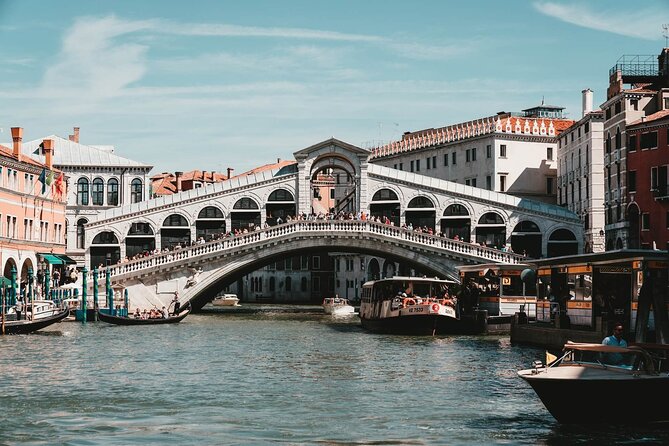
Ponte di Rialto is next, and it’s exactly what you want at the “big icon” stage. The narration points you to views from the arched walkways and the scene below, where the market energy feeds into the broader story of Rialto as commerce.
Immediately after, Canal Grande becomes the camera in your mind. The route frames it as Venice’s main waterway and encourages you to absorb the palace-lined banks. If you’re visiting near sunset, this is a good time to linger—watching the canal change light can turn a normal stroll into a real memory.
Transportation note: the route suggests you glide by vaporetto for the Canal Grande experience. The tour itself doesn’t include transport, so you’ll decide if you want the water view enough to pay for it.
Rialto’s local squares and the market senses: Campo San Giacomo and Mercato di Rialto
The audio then heads to Campo San Giacomo di Rialto, described as a lively local square with a market vibe. The stop highlights a historic church and a clock tower, plus the everyday café atmosphere that makes this area feel more lived-in than postcard central.
Next is Mercato di Rialto, where the narration goes for senses. Expect a lively mix of fresh produce, seafood, and local specialties, with stalls set against the Rialto Bridge backdrop. Even if you don’t buy much, standing here while the audio explains what you’re seeing helps you understand the market as a working system, not a staged show.
If you do shop, keep it simple and small. Carrying bags through Venice’s foot-only paths can turn a fun detour into an annoying workout.
Il Gobbo di Rialto and Ca’ d’Oro: stories behind the famous fronts
At Il Gobbo di Rialto, you’ll meet a whimsical sculpture near Rialto Bridge. It’s called the Hunchback, and the audio mentions different legends—one idea is good luck, another ties it to an old moneylender. That mix of folklore and local myth is a nice change of pace in the middle of the architectural heavy hitters.
Then comes Ca’ d’Oro (The Golden House). The facade facing the Grand Canal is Venetian Gothic, and the route points you toward the art collection inside (Renaissance treasures are specifically referenced). Even if you don’t go in, the “golden” idea makes you look for details in the exterior.
Practical reminder again: interior entry is not included, so you’ll need separate tickets if you want the collection.
San Cassiano, Ponte delle Tette, and Basilica dei Frari: art and darker street lore
The latter part of the route leans more personal and less famous-cookie-cutter.
Chiesa di San Cassiano is presented as a quieter Baroque stop with artistic treasures and stunning altarpieces. The point here is simple: if you want fewer crowds and more room to sit inside your own thoughts, this kind of church works well.
Then the audio turns to Ponte delle Tette (Bridge of Breasts). The name connects to history: it was linked to an area for courtesans and served as a boundary for a red-light district. You’re not expected to moralize; you’re expected to notice how Venice labels its past in strange ways that keep the city human.
Finally, Basilica dei Frari closes the art loop. The narration points out Titian’s Assumption and Bellini’s Madonna. It also mentions the Franciscan setting and the cloisters as a calmer break from the street noise.
This end stretch is where audio-guided walking can feel most rewarding. By the time you reach these stops, you’re not just ticking boxes—you’re collecting how Venice has stored different kinds of stories in stone.
How the smartphone audio guide actually helps you walk smarter
This tour isn’t about constant guidance. It’s about timing, pacing, and making the city legible.
You get offline map + route navigation, which is a huge deal in Venice because network coverage can be spotty around canals and between tall buildings. If GPS jumps or the map view seems angled, it’s worth stepping back, checking your bearings, and then moving again.
The audio library includes 25 recordings plus illustrations to recognize the landmarks. That matters for two reasons. One: Venice signage isn’t always obvious. Two: most people take photos first and read details later. The illustrations nudge you toward looking first.
You can also stop and restart. That’s perfect for real-world Venice days, where you might plan for two hours and then decide the church you found is worth more time, or you duck into a café and end up staying longer.
The biggest pros and cons I’d weigh before you book
Based on the pattern of feedback tied to this style of tour, here’s what I’d treat as the deal-making (or deal-breaking) parts.
What works really well
- The narration is often described as charming and well structured, with stories connecting palaces and canals to legend and everyday life.
- The format lets you explore without the pressure of a group pace, which is especially nice if you’re walking solo.
- The start-stop flexibility is a big win when you’re spreading sightseeing over more than one day.
- The navigation tools and offline setup help you find major highlights, even if you take breaks.
What can annoy you
- GPS can lag, and the map can be hard to interpret, especially at complex corners. If you’re relying on it like a perfect compass, you may feel frustrated.
- If your phone reception is weak, the map features can suffer, so close and restart the app if things freeze up.
- Some people found accessing the tour through third-party checkout steps confusing. The simplest fix is to download and start directly from the actual app flow connected to your purchase.
- One mention that’s worth knowing: the voice can sound like a generic computer narration and can feel a bit slow. If you strongly prefer human guides, this may not satisfy you.
If you hit a real access problem, use the contact support email listed for the provider. For this product type, most failures are fixable once you’re on the right activation path.
Who should choose this self-guided route
You’ll likely love this if you:
- want a budget way to cover key Venice sights
- prefer walking at your own tempo and making spontaneous detours
- want audio guidance that helps you understand what you’re seeing, without scheduling a human guide
- travel solo or as a small group who don’t want to wait for everyone else
You might want a different option if you:
- hate using phone navigation and want everything spelled out in person
- plan to move only with minimal screen time
- expect the price to include museum and church entry fees (it doesn’t)
Should you book this Venice walking tour?
Book it if you want a smart, low-cost way to turn a walk into learning and you’re comfortable using a smartphone with headphones. The value is strong, and the stop selection covers both the obvious icons and a few more intriguing side stories like Ponte delle Tette and San Cassiano.
Skip or reconsider if you know you get annoyed by GPS quirks, or if you want a human guide to handle tickets, directions, and questions in real time. If that’s you, spend your money on a guided option instead.
FAQ
How long is the Venice Walking Tour with Audioguide on Your Smartphone?
It’s listed at about 2 hours (approx.).
What language is the audio guide in?
The audio guide is offered in English.
Do I need to bring headphones?
Yes. The tour notes that smartphones and headphones are not included, so you’ll need your own headphones to hear the audio.
Are entrance tickets included for places like Doge’s Palace or the Basilica di San Marco?
No. Entrance fees/tickets are not included. The tour focuses on guiding you to the sights, and you’ll need to purchase separate tickets if you want to go inside.
How do I access the audio guide?
You download the TouringBee audio guide app for iOS or Android, activate your purchase, and follow the route using the app’s map.
Can I cancel for a full refund?
Yes. Free cancellation is available up to 24 hours in advance for a full refund. If you cancel within 24 hours, it’s not refunded.