REVIEW · VENICE
Venice Sightseeing Small Group Walking Tour with a Local Guide
Book on Viator →Operated by Raphael Tours & Events · Bookable on Viator
Venice is a city you need to walk. This 2-hour small-group stroll links the big sights with the stories behind them, from the former maritime republic to Marco Polo’s birth connection. The guide-led flow also helps you get your bearings fast, and it’s the kind of route where names like Gianmarco and Valentina come up a lot for clear explanations and patience.
Two things I really like: the small group size (max 15) keeps it feel manageable, and the local-guide focus means you get context, not just postcard stops. You also pick a morning or afternoon slot, so you can match your day plan.
One thing to weigh: this is real walking, with stairs and bridges. If you dislike climbing (or you need frequent stops), you may want a more relaxed option.
In This Review
- Key things that make this Venice walk worth your time
- Two hours in Venice: why this quick walk works
- Where you start and why the route ends at St. Mark’s
- Campo San Pantalon: the practical opening act
- Scuola Grande di San Rocco: power shown through art and devotion
- Ponte di Rialto: the trade route in one striking view
- Marco Polo’s home connection: history with a human hook
- Campo Santa Margherita and the Frari area: art that lingers
- Crossing toward San Zanipolo: Venice doges and the city-state mindset
- Piazza San Marco finish: what to do right after the tour
- What to expect on the ground: steps, shade, and when to ask questions
- English, private tours, and what language flexibility really changes
- Value: why $48.37 can make sense in Venice
- Who this tour is best for (and who should skip it)
- Should you book this Venice walking tour?
- FAQ
- How long is the Venice sightseeing walking tour?
- What is the price per person?
- How large is the group?
- What languages are offered?
- Where do I meet, and where does the tour end?
- Is hotel pickup included?
- Is a mobile ticket provided?
- Are entrance tickets included for the stops?
- Do I need to pay the Venice access fee?
- What happens if the weather is bad?
- What is the cancellation policy?
Key things that make this Venice walk worth your time
- Max 15 people: easier questions, less crowd crush, better pacing.
- Top sights with orientation: Rialto Bridge and St. Mark’s Square at the right moments.
- Local history thread: the city’s trade power shows up in what you see and where you walk.
- Stops that shape the whole map: Rialto, San Marco, and Cannaregio areas connect into one story.
- Practical free-time tips: food and what to do next in Venice after the tour ends.
- Comfort matters: you’ll cross bridges and move through uneven, stairy Venice streets.
Two hours in Venice: why this quick walk works
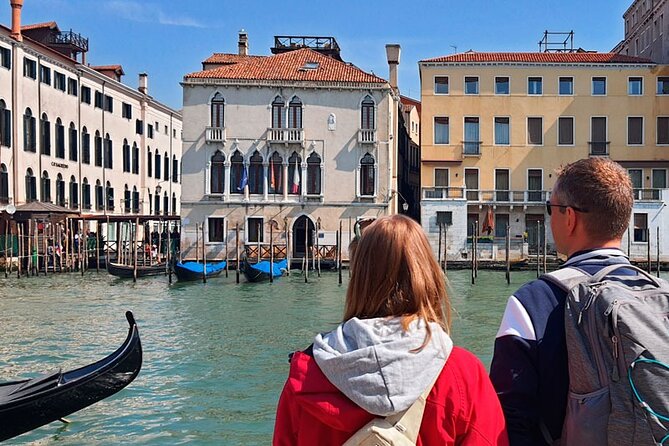
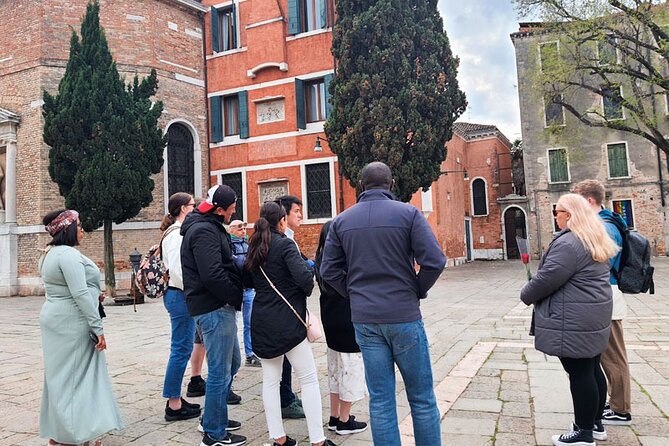
Venice can feel like a maze until someone gives you a spine to follow. This tour is built for that exact problem. In about 2 hours, you get a guided route that strings together major landmarks and several of the surrounding neighborhoods so you understand where you are in the city, not just what you’ve seen.
The pacing is “walking tour” pacing: steady, with lots of turning corners and crossing footbridges. That’s a good thing. Venice doesn’t do well with long, slow sight-seeing inside a single bubble. You get the feel of the place by moving through it.
And the small-group limit matters more than you might think. With fewer people, the guide can keep a closer eye on the group, answer questions without a 30-person bottleneck, and adjust for pace. In the best versions of this tour, guides like Valentina are also very patient with questions, so you leave with actual understanding rather than a blur of facts.
You can also read our reviews of more walking tours in Venice
Where you start and why the route ends at St. Mark’s
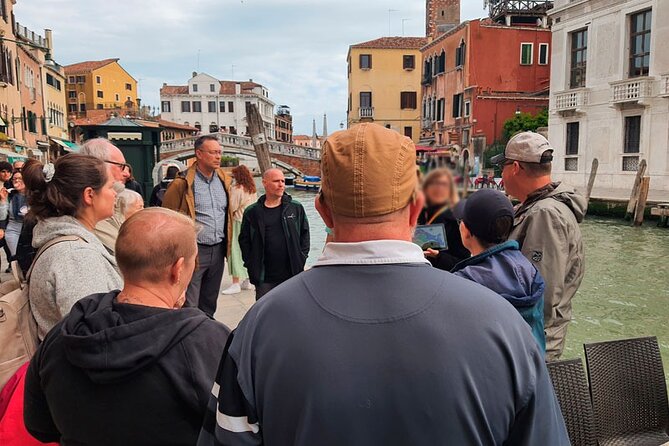
Your meeting point is Campiello dei Squelini, Sestiere Dorsoduro (2766), 12242 Venezia VE. The tour finishes at St. Mark’s Square (Piazza San Marco), 30124 Venezia VE.
That start-to-finish choice is smart. Dorsoduro tends to feel a little more “local Venice” than the immediate St. Mark’s tourist core. When you start there, the city feels like it has texture. When you finish in Piazza San Marco, you’re placed exactly where most first-timers want to go next—so the tour becomes a launchpad instead of just a standalone event.
No hotel pickup is included, so plan to arrive on your own using the nearest public transport option you prefer. You’ll also want to treat this as walking-only. There’s no vehicle break in the middle.
Campo San Pantalon: the practical opening act
The walk starts around Campo San Pantalon. This is a helpful first stop because it sets the tone: you’re not only moving from one famous building to the next. You’re learning how the city’s layout and waterways shape daily life and power.
This is also where good guides do their best work—giving you a framework for what you’ll see later. Think: why these areas mattered when Venice was a trading power, and how the city’s reputation came from its maritime reach. When you get that context early, the later stops click faster.
A heads-up: the “2-hour tour” can run a bit long depending on pace and questions. It’s still usually worth it, but don’t schedule something tight right after.
Scuola Grande di San Rocco: power shown through art and devotion
Next up is Scuola Grande di San Rocco. Even if you don’t go inside on this walk, the site matters. In Venice, a lot of meaning is carried by institutions tied to religion, community, and civic status. Scuola Grande di San Rocco is one of those places where the guide can connect art, influence, and the way Venice organized itself.
I like this stop for a specific reason: it shifts your focus away from only bridges and squares. It reminds you Venice wasn’t built just for sightseeing. It was built for people—organized communities with identity, money, and strong beliefs.
Potential drawback: if you’re expecting a tour packed with indoor entry everywhere, you may be disappointed. This walk is more about the city’s public spaces and streets than a museum-style deep visit.
Ponte di Rialto: the trade route in one striking view
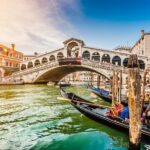
Then you hit Ponte di Rialto. This is the moment most people come for, and it’s also one of the most useful. The guide can explain why this bridge area became so central when trade drove the economy.
Rialto is a visual lesson in Venice’s logic: water routes, market gravity, and the way movement funnels through certain crossings. Once you understand that, you’ll start noticing the same pattern elsewhere as you explore on your own later.
One practical note: Rialto gets busy. The group size helps, but you should still expect some “shuffle” moments around the most famous photo angles.
You can also read our reviews of more guided tours in Venice

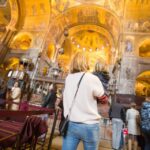

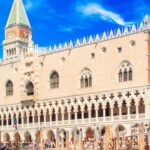

Marco Polo’s home connection: history with a human hook
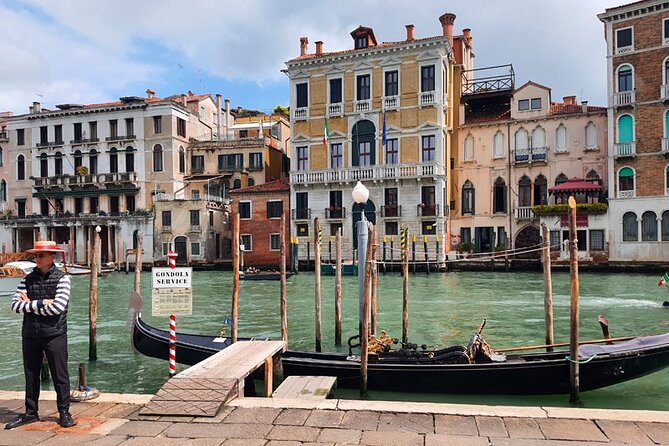
You’ll also make time for Casa di Marco Polo. This stop adds a different flavor to the tour. Instead of only focusing on institutions and politics, you get the human story thread—Marco Polo and the birth connection that became part of Venice’s global identity.
It’s a good contrast after Rialto. Trade power explains the city’s wealth; Marco Polo adds the curiosity factor. If you like travel history with a personal entry point, this works well.
Also, it helps you remember Venice beyond “pretty architecture.” It ties the scenery to people and ideas that traveled farther than the lagoon.
Campo Santa Margherita and the Frari area: art that lingers
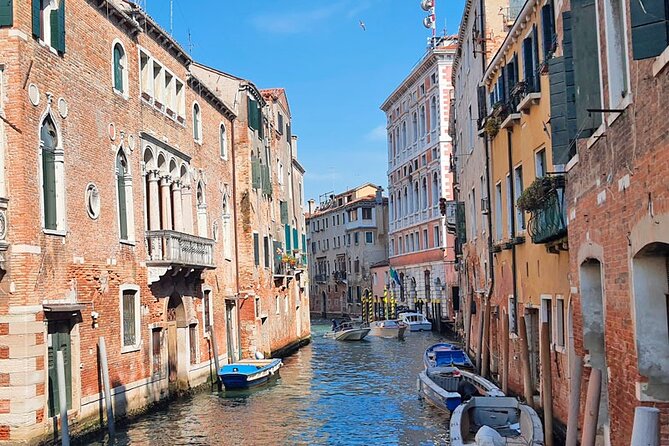
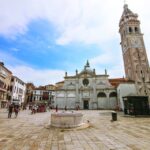
The route also passes through Campo Santa Margherita and the area around Basilica di Santa Maria Gloriosa dei Frari, where Titian is buried. This is a valuable addition because it grounds Venice’s story in art and legacy, not only in trading power.
Titian’s burial matters here because Venice’s cultural status ran alongside its political economy. The guide can connect that shift—how influence didn’t stop at commerce. It turned into patronage, art, and long-lasting fame.
The downside is timing: these moments can be quick if your group is moving and the guide is keeping everyone together. If you want linger time for photos or reading plaques, go with the flow during the tour, then plan a return on your own.
Crossing toward San Zanipolo: Venice doges and the city-state mindset
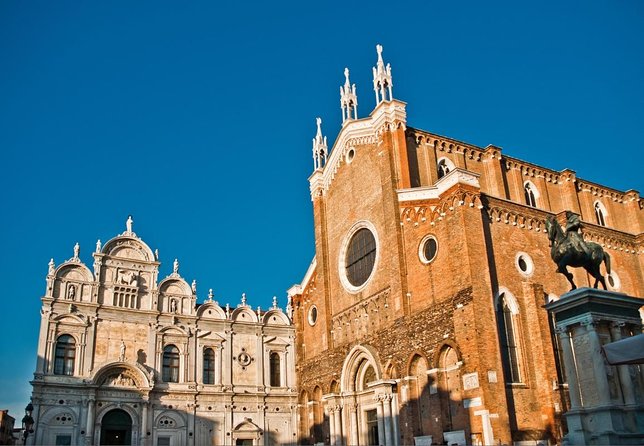
When you cross Campo San Bartolomeo, you reach San Giovanni e Paolo—also known by the name Basilica dei Santi Giovanni e Paolo (San Zanipolo). This church is tied to the resting places of many Venice doges, and the guide uses that to explain how Venice thought about leadership and civic identity.
This stop is strong if you enjoy political history that’s tangible. Instead of abstract explanations, you’re standing in a place where power was memorialized. It’s the kind of detail that makes your later strolls feel more meaningful, because you’ll recognize what you’re looking at.
One consideration: it’s still a walking route. You’ll be moving, not lingering in quiet indoor pacing.
Piazza San Marco finish: what to do right after the tour
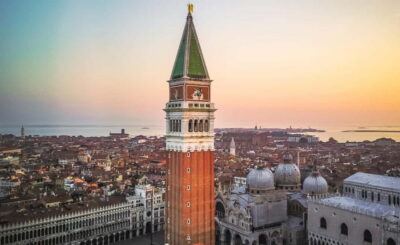
The walk ends in St. Mark’s Square (Piazza San Marco). Ending here is strategic. If you start your Venice trip with this tour, it acts like a city compass: you’ve learned how the neighborhoods relate, and now you’re dropped into the place everyone wants to see.
Your guide can offer recommendations for where to eat and how to spend free time. That kind of advice is genuinely helpful in Venice, where the “obvious” choices can be expensive and repetitive.
Tip: after the tour, give yourself a little time to reset. St. Mark’s can be a sensory wall. Take in the square once, then pick one or two specific things you want to do next, so you don’t end up wandering in circles just because it’s impressive.
What to expect on the ground: steps, shade, and when to ask questions
Venice is not flat. Even when walking is described as manageable, you’ll still deal with stairs and bridges. Some guides do a good job keeping people in the shade on hot days, and the pace is usually steady rather than sprinting, but plan for real movement.
Audio can be a factor. In some groups, headsets have had trouble carrying the guide’s voice clearly. If you get offered audio, test it early, and don’t be shy about asking for volume adjustments if you can’t hear well. Better to speak up immediately than lose the story during the good parts.
Photo opportunities exist, but they’re not everywhere. If you want lots of perfect shots without slowing the group, this may not be your best match. The tour is about orientation and highlights, not long shutter sessions.
English, private tours, and what language flexibility really changes
The standard format is English-speaking. The private option can be done in English, Spanish, and German.
Here’s what that means for you: if you want the explanation tailored to your group’s interests and you don’t want to compete with questions from others, a private tour can feel smoother. If your English is strong enough and you like group energy, the small-group English option is usually the sweet spot.
The tour also gives you plenty of chances to ask questions. Guides like Flavia and Gianmarco are often praised for giving clear answers without turning the walk into a lecture marathon.
Value: why $48.37 can make sense in Venice
At $48.37 per person for about 2 hours, you’re paying for something Venice is hard to buy alone: a local walking route plus context. You’re not just paying to see Rialto and St. Mark’s. You’re paying to understand what those places meant and how to navigate the city afterward without guessing.
This can be strong value because the tour is built around public areas and exterior viewing. The stops are listed with admission as free, so you’re not loading up your day with extra ticket costs tied to each landmark.
Also, the time compression matters. If you’re in Venice for a short stay, an informed orientation walk can prevent wasted hours. Even if you still return later to see things indoors, you’ll return smarter.
Who this tour is best for (and who should skip it)
This is a great choice if:
- you want a fast introduction to the main sights and nearby neighborhoods
- you like learning what you’re looking at, not just taking photos
- you want a route that helps you plan the rest of your Venice day
It may be a less ideal match if:
- you want a sit-down, low-walking experience
- you need frequent comfort breaks or long pause time
- you’re bringing young children who need constant entertainment rather than history and place explanations
One useful hint from the vibe of the experience: it’s straightforward, history-forward, and guide-led. If you want more play than facts, look elsewhere.
Should you book this Venice walking tour?
Book it if you’re at the stage where you need direction. This walk gives you a clear spine through Venice: Dorsoduro-area start, major landmarks like Rialto and St. Mark’s, and the extra context that makes the city feel less random.
I’d skip it if your day is built around slow pacing, lots of indoor time, or you strongly dislike stairs. Venice will still be Venice, and this tour leans into walking rather than avoiding it.
If you do book, wear comfortable shoes, keep some buffer time before and after, and go in ready to ask questions. The best part isn’t the checklist of stops. It’s how the guide helps the map in your head start working.
FAQ
How long is the Venice sightseeing walking tour?
The tour lasts about 2 hours.
What is the price per person?
It costs $48.37 per person.
How large is the group?
The tour is limited to a maximum of 15 travelers.
What languages are offered?
The tour is offered in English. The private option can be done in English, Spanish, and German.
Where do I meet, and where does the tour end?
Meet at Campiello dei Squelini, Sestiere Dorsoduro (2766), 12242 Venezia VE, Italy. The tour ends at St. Mark’s Square, Piazza San Marco, 30124 Venezia VE, Italy.
Is hotel pickup included?
No, hotel pickup and drop-off are not included.
Is a mobile ticket provided?
Yes, the tour includes a mobile ticket.
Are entrance tickets included for the stops?
Admission is listed as free for the listed stops, and the tour does not include separate admissions in the details provided.
Do I need to pay the Venice access fee?
On certain dates, people visiting Venice who are staying outside Venice may be required to pay a €5 access fee. Check the official details here: https://cda.ve.it
What happens if the weather is bad?
The tour requires good weather. If it’s canceled due to poor weather, you’ll be offered a different date or a full refund.
What is the cancellation policy?
You can cancel for a full refund up to 24 hours in advance of the experience start time. Free cancellation is allowed up to that window.