Venice can feel endless—until someone points your feet the right way. I like that this tour mixes iconic highlights with quieter corners, then sends you off with a Vox City app to keep exploring. One watch-out: the meeting point is in the San Marco area, which is famously crowded, so you’ll want to arrive on time and ready to spot the guide.
You’re paying $32.51 for about 2 hours of guided walking, with a max group size of 30. That makes it a good value if you want orientation fast and don’t want to overthink logistics. The main drawback is that it’s designed as a city overview, so if you’re chasing deep, detailed history for every building, you might want to pair it with a more specialized tour.
A big plus is how well the tour supports different languages and learning styles. You’ll hear guided commentary in English (and other options), and you can also use app audio in multiple languages—helpful if you’re traveling with mixed-language friends or you want to replay key stops later.
In This Review
- Key highlights you’ll actually notice
- Why this 2-hour Venice walk is a smart start
- Meeting at San Marco: don’t let crowds steal your tour
- Staircase stop: the snail staircase behind the Othello connection
- Daniele Manin courtyard: Risorgimento ideals in a quiet place
- A narrow street detour near Hotel Corte di Gabriela
- Rialto area alley: the Street of the Blind
- A central square of palaces tied to a church’s fate
- La Fenice opera house: premieres and the thrill of music culture
- A Baroque church façade with statue detail
- Vox City app and audio: keep the trip going after the last stop
- Price and time: where $32.51 makes sense
- Who should book, and who should pair it with something else
- Potential hiccups to plan for
- So, should you book this Venice walking tour?
- FAQ
- How long is the Venice walking tour?
- Where does the tour start?
- Does the tour end in the same place?
- Is the tour group size limited?
- What language options are available?
- What do I need on my phone?
- Are entry tickets included for attractions?
- Are headsets or a mobile device provided?
- Is there an extra Venice access fee?
Key highlights you’ll actually notice
- A tight route that hits both famous sights and lesser-walked streets
- The spiraling 15th-century staircase tied to the Othello story (and the snail nickname)
- Political Venice on the quiet side with the Daniele Manin courtyard stop
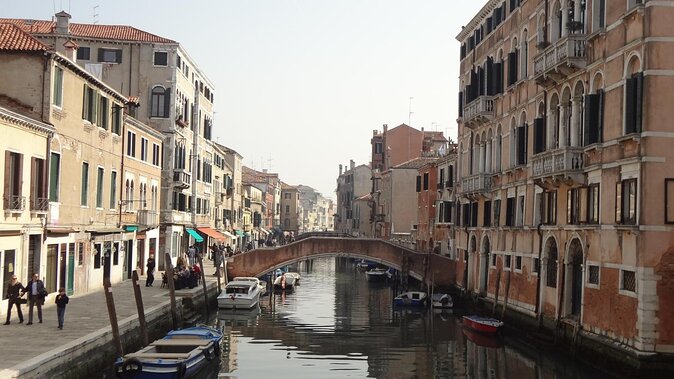
- Rialto-area alleys like the Street of the Blind—less obvious, more character
- La Fenice in the same outing for a real hit of opera culture
- Vox City app follow-up with two self-guided walking tours after the walk
Why this 2-hour Venice walk is a smart start
Venice is great, but it can also be disorienting. Streets twist. Squares look similar. And you can easily spend half a day “going in circles” without meaning to. This tour is built to fix that. In about two hours you get a guided path that links well-known landmarks with smaller side streets, so your brain starts making maps of the city.
I also like the practical structure: you’re not stuck listening for hours in one spot. You’re moving, stopping, listening, then moving again. That matters in Venice, where time and energy are both limited—especially if you plan to see museums or do more walking later.
Finally, the app add-on is a real plus for independent pacing. You don’t have to end your day when the guide stops talking. You can scan the QR code on your voucher, download the app, and use the audio after the tour for extra context.
You can also read our reviews of more walking tours in Venice


Meeting at San Marco: don’t let crowds steal your tour
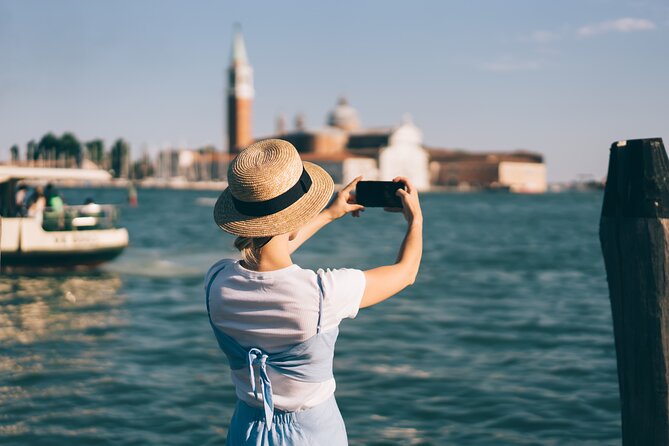
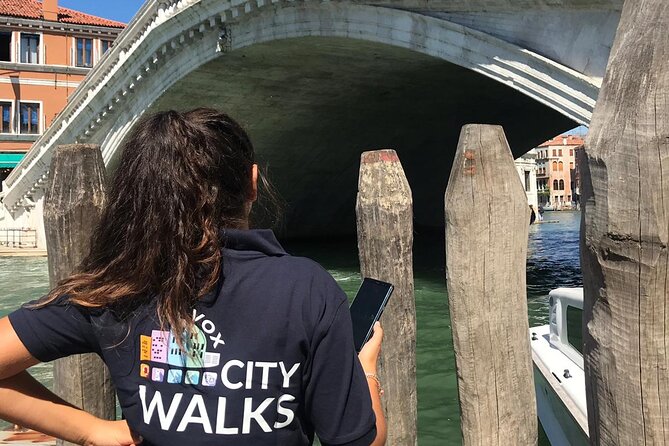
This experience is scheduled to start near San Marco, with the official meeting location at the Venice Tours office in Campo San Gallo, San Marco 1093/B (the guide wears a dark blue Vox City uniform). The tour ends back at the meeting point.
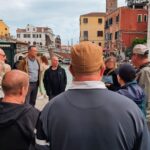
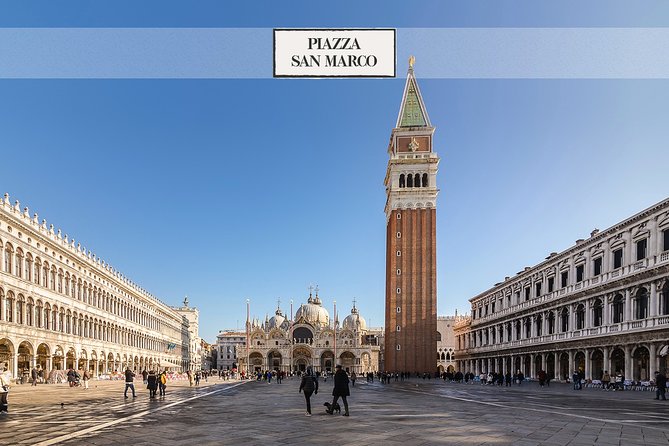
Here’s the practical bit: San Marco Square is crowded, and that area can feel like one big pedestrian river on peak days. If you show up late, you may have a hard time matching your guide to your group. Arrive about 5 minutes early when you can—before you’re already swept into the crowd.
Also double-check what you need before you arrive. The tour uses a mobile ticket, and the sightseeing app works through a QR code on your voucher. The guidance suggests you download the app and audio guides prior to arrival, so you’re not hunting for Wi-Fi or the QR screen right at departure time.
Staircase stop: the snail staircase behind the Othello connection
One of the first stops brings you to an iconic spiraling staircase associated with Orson Welles’ 1952 adaptation of Shakespeare’s Othello. The tour also shares the origin of its name, which translates to of the snail. That sounds like trivia—until you stand there and see the shape for yourself.
What’s worth paying attention to here is the visual rhythm. Venice loves stairs and staircases that look like they were designed for both architecture and storytelling. The spiral form is the point: it changes how you look at the surrounding buildings, and it instantly makes the area feel film-like, even if you’re not thinking about movies.
A potential drawback: if you’re expecting a full explanation of every artistic or film detail, this stop is still part of a broader two-hour route. You’ll learn enough to make the staircase memorable; you won’t get a dissertation.
Daniele Manin courtyard: Risorgimento ideals in a quiet place
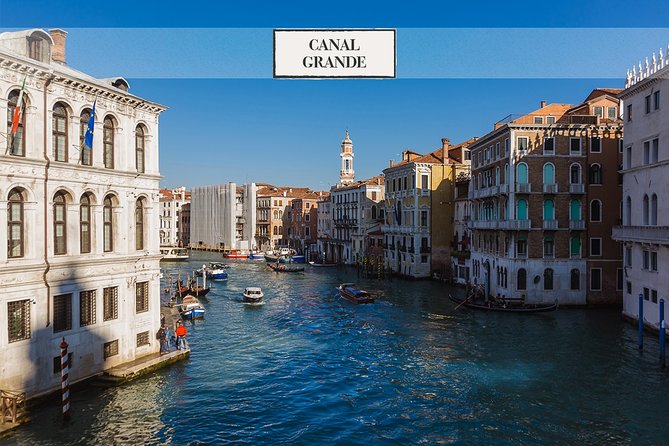
Next you’ll visit a courtyard named after Daniele Manin, who led part of the Risorgimento in the 19th century. The Risorgimento was the movement to unite Italy against the Austrian Empire, and this stop is a reminder that Venice wasn’t just canals and tourism—it was also politics, power shifts, and national identity forming.
What I like about stops like this is how they change your travel “lens.” Instead of walking past a name and forgetting it, you get a story you can carry forward. It makes later reading—about Venice’s relationship to the rest of Italy—feel less random.
For practical pacing: courtyards are often calmer than the main lanes, so it’s a nice reset from busy streets. You’ll likely hear the explanation and then have a moment to look around and connect the story to the setting.
A narrow street detour near Hotel Corte di Gabriela
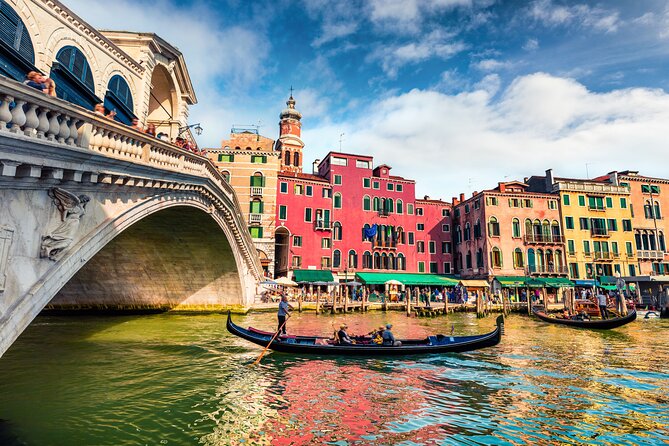
The itinerary also includes a “secret corner” stretch of narrow street with apartments, plus a reference to the nearby Hotel Corte di Gabriela. This is the kind of stop that doesn’t scream famous landmark. It’s more about feel: the scale of the buildings, the tight corridor of a Venetian calle, and the way everyday life sits right beside the postcard scenery.
Why this matters: if you only tour the biggest names, Venice can feel like a museum set. Stops like this help you remember that people actually live here. You start noticing practical things—doorways, window placement, how narrow spaces shape movement.
One consideration: these lanes are narrow, and the tour is still moving as a group. If you’re traveling with mobility issues or you prefer extra space, you’ll want comfortable shoes and patience while the group squeezes through.
You can also read our reviews of more guided tours in Venice





Rialto area alley: the Street of the Blind

You’ll also walk an alley near the famous Rialto Bridge called the Street of the Blind (the name translates that way). This is one of those Venice oddities that’s more interesting in person than in a guidebook blurb.
What to watch for: the alley’s relationship to the bridge. Even if you aren’t crossing Rialto itself, walking in the surrounding streets gives you a more layered sense of the area—less about one monument and more about how the monument sits within a network of passages.
Also, this kind of stop is often exactly what people mean when they say they want something beyond the main tourist routes. If you’re trying to balance “must-see Venice” with “I want to feel like I walked around for real,” this fits.
A central square of palaces tied to a church’s fate
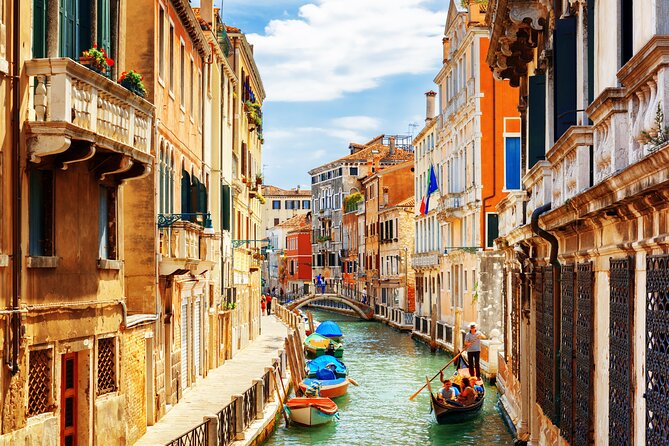
The tour includes a square in the heart of the city lined with several palaces. Its name comes from a church that was closed and later demolished during the Napoleonic era.
This is a smart storytelling move. Instead of treating the square like a blank open space, you’re told that its very name holds a record of what happened here in a specific historical moment. It’s not just architecture; it’s memory built into geography.
What you’ll likely appreciate is how quickly Venice turns “past” into “present.” A church’s disappearance doesn’t erase its impact. Names, street patterns, and nearby palaces keep that historical trace in daily walking life.
La Fenice opera house: premieres and the thrill of music culture
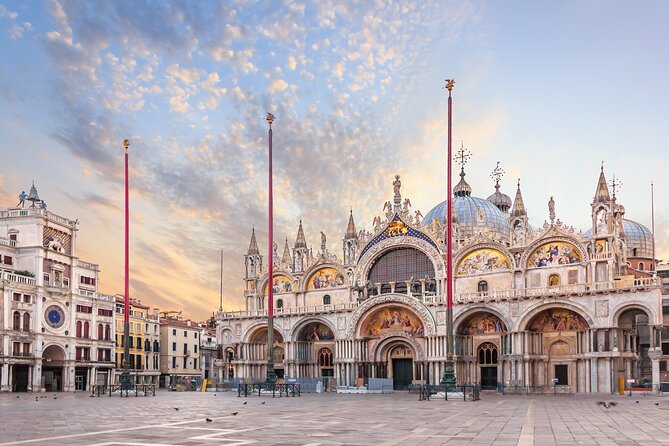
One of the biggest landmark stops is this historic opera house, one of Italy’s most famous and important theatres. It’s described as a place where major composers—Rossini, Bellini, Donizetti, and Verdi—held operatic premieres.
If you like culture, this stop can be a real jolt. Venice doesn’t only do romance; it does performance history. Hearing that a list of major composers premiered work there gives you a way to look at the building as a creative engine, not just a pretty exterior.
Even if opera isn’t your thing, the stop helps you understand why Venice’s civic identity has long been tied to spectacle, music, and public gatherings. It also helps your later evenings: you’ll know what to look for when you spot posters, theatres, or references to opera.
A Baroque church façade with statue detail
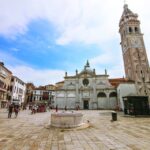
Another included stop is a church that’s said to date back to the 7th century, with a Baroque-style façade featuring intricate statues.
This is where you can switch modes. Up to now, you’ve been learning and walking. Here, it’s worth slowing down and letting your eyes do the work. Baroque façades reward close looking: the statue work, layered ornamentation, and visual “movement” across the front are part of what makes the architecture feel alive.
Because this is still part of a short overall route, you won’t leave with every detail pinned down. But you will leave with enough direction to look smarter the next time you see Baroque decoration in Venice.
Vox City app and audio: keep the trip going after the last stop
A key part of the value is what happens after the guided portion. The tour includes the Vox City sightseeing app, which contains two self-guided walking tours. After the guided walk, you can use your phone to explore more on your own.
A couple practical notes that matter in Venice:
- You’ll need your phone to use the app, and the instructions say to scan the QR code on your voucher.
- The guidance suggests you download the app and audio guides prior to arrival.
- Headset and mobile device are not included, so bring your own setup.
The audio commentary is available in multiple languages: English, Spanish, French, German, Italian, Chinese, and Russian. So even if you’re traveling in an international group, you’re not locked into only one language experience.
One more thing I appreciate: the guided tour availability includes several languages for the guide itself. That means you can match the tour style to your comfort level, rather than just hoping the narration works for everyone.
Price and time: where $32.51 makes sense
At $32.51 per person, you’re buying a guided orientation plus app-based follow-up. For Venice, that can be a good deal because the city’s “learning curve” is real. If you’re visiting for only a few days, the cost can be viewed as buying time and getting your bearings faster.
Two-hour tours aren’t meant to replace museum days or deep history tours. They’re meant to help you understand what you’re looking at as you walk the rest of the city. With this one, you also get a mix of iconic sights and side streets, which tends to deliver more satisfaction than a tour that only repeats the obvious highlights.
Who gets the best value?
- First-time visitors who want structure and stories without a full-day commitment
- People who like a balance of landmark sights and smaller streets
- Travelers who want an easy way to extend their day using the app
If you’re a history specialist craving lots of dates, documents, and building-by-building analysis, you might find the pacing too high level. This tour leans toward orientation and street-level storytelling.
Who should book, and who should pair it with something else
I’d book this tour if you want momentum. You arrive, you walk, you learn just enough to start connecting the city’s neighborhoods, and then you keep exploring with the app. It’s also family-friendly in vibe, since guides like Francesco have been described as engaging and informative, and there’s a history of people enjoying the experience even with a younger traveler along.
I’d also consider it if you care about opera culture. With La Fenice on the route and composer names mentioned, you’ll finish with a memorable cultural stop, not just canal scenery.
But if your goal is hyper-detailed history at every stop, you might leave wanting more. In that case, pair this with:
- a longer themed tour (arts, politics, or religion)
- a museum visit on a separate day
That way you get both the big-picture orientation and the deep detail you’re craving.
Potential hiccups to plan for
This tour works best when you treat it like an appointment. The meeting area is close to San Marco Square, and that area is busy. The tour starts in the Campo San Gallo area, but you still need to locate the guide in a crowd.
Two other practical points:
- Wear comfortable shoes. Venice is still Venice on this route—lots of walking on uneven surfaces.
- Dress for weather. You’re outside for about two hours.
Also, be ready for a group-flow style of pacing. Maximum group size is up to 30, so you’re not in a tiny private experience. It’s still small enough to feel human, but it’s not one-on-one.
So, should you book this Venice walking tour?
Yes, if you want a smart first pass through Venice that mixes famous landmarks with less obvious street corners, all in a budget-friendly 2 hours. The strongest reason to book is the combination of guided storytelling and the app-based follow-up, which helps you keep moving after the tour ends.
Skip it or pair it thoughtfully if you need deep, highly detailed history at every stop. This walk is best at getting your bearings fast, helping you recognize what you’re seeing, and pointing you toward the next places to explore.
FAQ
How long is the Venice walking tour?
It’s approximately 2 hours long.
Where does the tour start?
The meeting point is at Calle S. Gallo, 1093, 30124 Venezia VE, Italy, near the Venice Tours office in Campo San Gallo, San Marco 1093/B. The guide wears a dark blue Vox City uniform.
Does the tour end in the same place?
Yes. The activity ends back at the meeting point.
Is the tour group size limited?
Yes. The maximum group size is 30 travelers.
What language options are available?
The guided tour is available in English, German, French, Spanish, or Italian. Audio commentary is available in English, Spanish, French, German, Italian, Chinese, and Russian.
What do I need on my phone?
You access the sightseeing app by scanning the QR code on your voucher. The guidance recommends downloading the app and audio guides before arrival.
Are entry tickets included for attractions?
No. Entry to attractions is not included.
Are headsets or a mobile device provided?
No. Headset and mobile device are not included.
Is there an extra Venice access fee?
On certain dates, visitors staying outside of Venice who are visiting for the day may need to pay a 5€ access fee. The City of Venice website is referenced for details.