REVIEW · VENICE
FriendInVenice Murano Burano Torcello Private Tour By Luxury Boat
Book on Viator →Operated by Friend in Venice Private Tours · Bookable on Viator
Three islands, one private boat, and real breathing room.
This Murano–Burano–Torcello day is built around private water taxi hopping so you spend less time wrestling with schedules and more time looking closely.
I really like the way the day is paced for conversation, not camera raids. I also love the art stops: a quieter Murano glass atelier and lace-making you can actually watch, not just hear about.
The main thing to consider is simple: you’re paying for privacy and transport. If you prefer free-form wandering with no guidance, this won’t feel like the cheapest way to see the lagoon.
In This Review
- Key moments that make this tour worth it
- A smooth lagoon day starts with private water taxi logic
- Murano’s mosaics and a glass atelier you can feel in your hands
- The morning walk: Campo San Stefano, San Pietro Martire, and the canal bridge
- Basilica di Santa Maria e Donato: Romanesque mosaics with serious wow power
- The glass atelier experience: art-level craftsmanship, not just a demo
- Burano: colorful houses, lace-making, and the right kind of quiet
- What you learn while you walk the side streets
- The lace factor: watching someone sew is different than shopping
- Food break options: lunch, gelato, or biscuits
- Torcello: the lagoon’s quiet power and the big mosaics at Santa Maria Assunta
- The backstory: from refuge to commercial hub
- Walk to the “mysterious” Devil’s Bridge and through the ruins
- Basilica Santa Maria Assunta: oldest church in the lagoon
- Santa Fosca and local landmarks, plus the Hemingway connection
- What the guide and boat feel like on the ground
- Tickets, lunch, and what you should budget
- Price and value: does a private island tour make sense?
- Who should book this Murano, Burano, Torcello tour?
- Should you book it?
- FAQ
- How long is the private Murano, Burano, Torcello boat tour?
- What’s the group size for this private tour?
- Does the tour include pickup?
- Is lunch included?
- Are tickets included for the sights?
- Is there any extra access fee in Venice?
Key moments that make this tour worth it
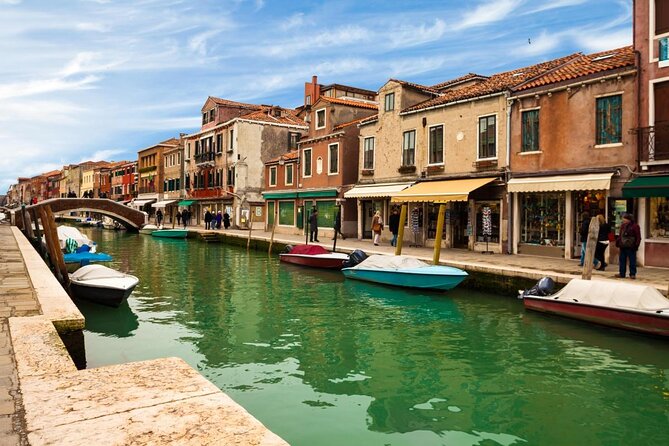
- Private water taxi between islands keeps the day smooth and time-efficient.
- Murano glassmaking at an artistic workshop (often with a hands-on try-out, not just a quick demo).
- Burano lace and local rhythm, including time for snacks like bussolà and the esse biscuits.
- Torcello’s quiet, surreal atmosphere plus major mosaics at Santa Maria Assunta.
- A guide who tailors the day so you can move at your group’s pace.
A smooth lagoon day starts with private water taxi logic

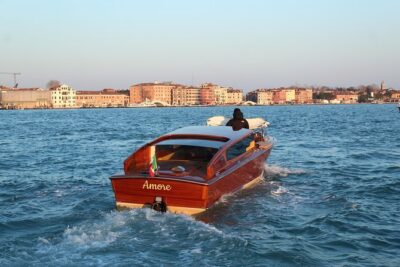
Venice is beautiful, but moving around can be a chore. This tour tackles that head-on by using private transportation by water taxi so you’re not waiting on public schedules or squeezing into crowded lines.
You’ll start at 10:30am, with pickup offered from your hotel, seaport, airport, train station, or another agreed location. Then the real advantage kicks in: you cruise between the islands in comfort, with time to actually take in the views.
Most of the day is guided, but you’re not locked into a factory-style march. The guide can adjust the pace for your group, which matters when you’re walking slowly to see details (mosaics, house colors, workshop work) instead of just ticking boxes.
You can also read our reviews of more boat tours in Venice

Murano’s mosaics and a glass atelier you can feel in your hands
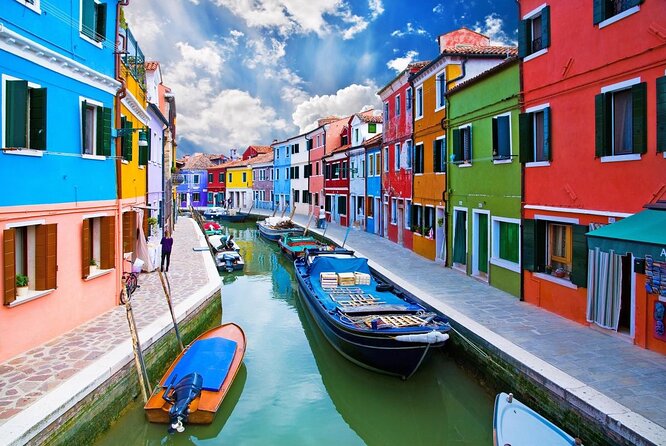
Murano is where most people go for glass—but this stop is designed to feel more like visiting an art studio than watching a show.
The morning walk: Campo San Stefano, San Pietro Martire, and the canal bridge
You begin with the old Murano city center, including Campo San Stefano and its characteristic clock tower. Then you head toward the Renaissance church of San Pietro Martire, described as a treasure chest of paintings by Veronese and Bellini.
Crossing the bridge over Murano’s Grand Canal is part of the experience too. It’s an easy moment, but it helps you understand Murano as a real town with recognizable landmarks, not a theme-park island.
Basilica di Santa Maria e Donato: Romanesque mosaics with serious wow power
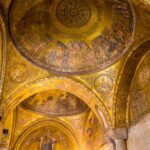
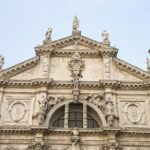
Next comes one of the big cultural anchors of the day: the Basilica of Santa Maria and Donato. Its famous 11th-century floor mosaics are the kind of thing you have to see slowly to appreciate—figures of animals, birds, mythological creatures, and symbols whose meanings aren’t always obvious at first glance.
This is also where you get the architectural context: the basilica is considered one of the best examples of Romanesque architecture in the lagoon. Even if you’re not a “cathedral person,” the mosaics tend to win people over because they’re visual, playful, and old in a very tangible way.
The glass atelier experience: art-level craftsmanship, not just a demo
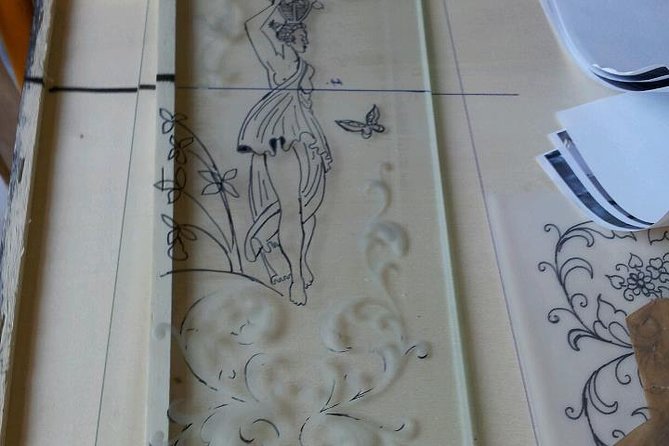
Murano’s glass stop is a highlight across the board. In the way this tour is described and experienced, it’s not a mass-attraction setup. The aim is to take you to an artistic workshop environment where you can see the craft process at a level that feels alive and current.
What I think makes this special is that you’re likely to go beyond passive watching. In one family’s experience, everyone got a turn at glass blowing, and the same tour also allowed kids (ages 7 and 18) to blow their own glass. So even though the day is structured, it can still feel hands-on.
You’ll also have time in the showroom to browse and shop if you want. The tone here is important: you’re not rushed, and buying is optional.
Time on Murano: about 2 hours, including the basilica visit and the atelier time.
Possible drawback to plan around: if glass is your #1 interest, Murano can feel a little short on paper. The tour is designed as a three-island day, so you may need to be ready to treat Murano as “the big hit,” not “the whole deep dive.”
You can also read our reviews of more private tours in Venice


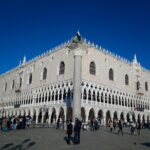
Burano: colorful houses, lace-making, and the right kind of quiet
Burano can feel like a miniature Venice—but quieter, with streets that don’t constantly squeeze you.
This stop begins with a real sense of place: bright-painted tiny houses, a famously leaning bell tower, and a village-like pace shaped by fishing and tourism. The best part is that you walk through Burano’s calmer lanes and squares, where the island doesn’t feel staged.
What you learn while you walk the side streets
A good guide can make Burano feel like a story, not a postcard. Here, the guide explains the meaning behind the fisherman’s houses as you move through the island step by step.
And yes, the colors really are the star. But the tour’s value is in how the colors connect to work, families, and tradition—so you’re not just staring, you’re also understanding.
The lace factor: watching someone sew is different than shopping
Burano lace is famous, but watching lace-making live is on another level. During this tour, you might have the chance to meet an artisan demonstrating the craft, including a moment where one tour participant specifically watched Emilia sew lace.
The tour also gives you the background: lace started as a way for Burano’s women to support families when men were fishing or when hunting seasons were rough. Later, in the 16th century, lace gained status thanks to the support of the Doge’s wife and queens—turning domestic work into something closer to formal art.
Then the story turns dramatic. Lace production declined toward the end of the Serenissima, and it was in danger of disappearing. The knowledge survived through the one lace-maker left on the island—exactly the kind of human detail that makes the craft feel urgent and real.
Food break options: lunch, gelato, or biscuits
Lunch is not automatically included. But the itinerary is built so you get a proper meal opportunity, and the guide can steer you to a good local restaurant.
If you want snacks, Burano is perfect for it. The tour description specifically mentions bussolà and the esse biscuits—classic island treats. In practice, this tour also works as a “pace your day” experience, so you can do lunch first or slow down for coffee and gelato depending on your energy.
Time on Burano: about 2 hours.
Possible drawback to plan around: this island can be your favorite, and it’s also easy to wish you had more than 2 hours. The tour tries to balance all three islands, so Burano is meant to be satisfying rather than unlimited.
Torcello: the lagoon’s quiet power and the big mosaics at Santa Maria Assunta
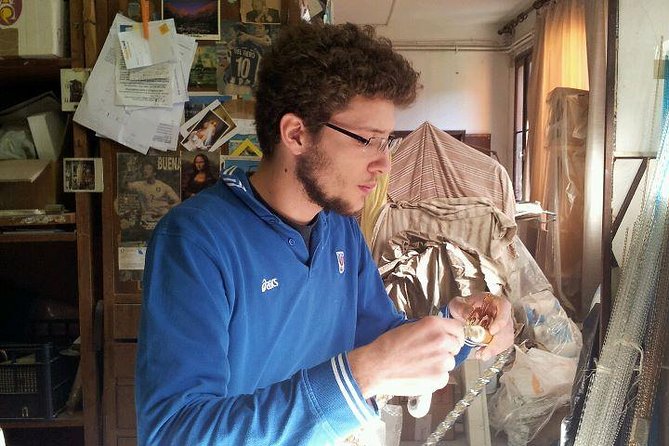
Torcello is often left out of shorter itineraries, and that’s exactly why this tour puts it in the middle of the day.
The island’s look is rustic and at times almost desolate. That surprises people who expected another colorful Burano-style stop. But the silence is the point. Torcello feels like the lagoon’s paused moment—space to think, watch, and notice.
The backstory: from refuge to commercial hub
Torcello was once a major port and commercial capital in the lagoon, but the island you see today is a leftover shadow of that past. The tour explains how people likely fled mainland invasions after the fall of the Roman Empire—especially refugees from Altino—seeking safety in lagoon swamps.
Then comes the strategic part: Torcello sat between worlds, with influence from both the Byzantine East and the Roman–Barbarian West. That helped turn it into a thriving commercial center.
Walk to the “mysterious” Devil’s Bridge and through the ruins
Your stroll follows quiet streets still paved in brick or gravel, with traces of buildings and churches replaced by wilderness. You’ll encounter the mysterious Devil’s Bridge and walk through ruins of the older city center.
The atmosphere matters here. Even if you don’t memorize every historical detail, the setting teaches it. You see why people gradually abandoned Torcello in favor of Venice and why only certain sacred structures remain.
Basilica Santa Maria Assunta: oldest church in the lagoon
The star moment is the Basilica of Santa Maria Assunta, described as the oldest church in the lagoon. The basilica is known for extraordinary mosaics (including a Last Judgment mosaic theme), and it’s the kind of art that rewards slowing down.
One important planning note: the tour data says entrance ticket for the Santa Maria Assunta complex is not included, even though admission is listed as included for some stops. So if you’re budgeting, set aside money for the Torcello church complex ticket.
Santa Fosca and local landmarks, plus the Hemingway connection
You’ll also see Santa Fosca church, plus Palazzo del Podestà and Palazzo dell’Archivio. If you’re the type who likes small legend details, the tour also references Attila’s throne.
And there’s a modern twist: Torcello is described as a favorite refuge of Ernest Hemingway. Whether you’re a Hemingway fan or not, it helps you see Torcello as more than “ancient ruins.” It’s been inspiring writers and artists long after its commercial peak.
Time on Torcello: about 1 hour.
Possible drawback to plan around: Torcello is short by design. If you love wandering slowly and reading inscriptions, you might wish you could stretch this stop. Still, for many people, that one hour is exactly the right dose of quiet before returning to Venice.
What the guide and boat feel like on the ground
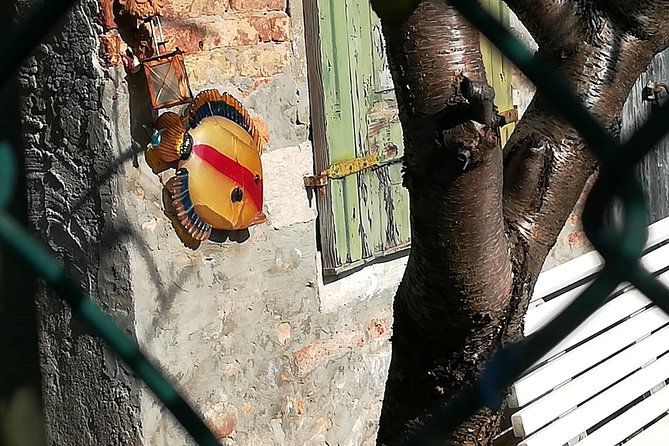
This is where the tour earns its high marks.
The guiding is led by Nadia (often mentioned by name in experiences shared by tour participants). What seems to work is the mix of storytelling and flexibility: she’s not just reciting facts, she’s guiding you through what to notice and how the islands connect.
And the boat experience tends to be part of the charm, too. One group noted that even with grey weather, the boats were comfortable and warm—so you’re not stuck shivering on the water.
There’s also a practical advantage to private routing: the guide can coordinate the timing and movement to get better angles and calmer walking windows. In one experience, Nadia had the boat driver navigate to provide better views and camera-friendly perspectives around Venice while heading back.
Tickets, lunch, and what you should budget
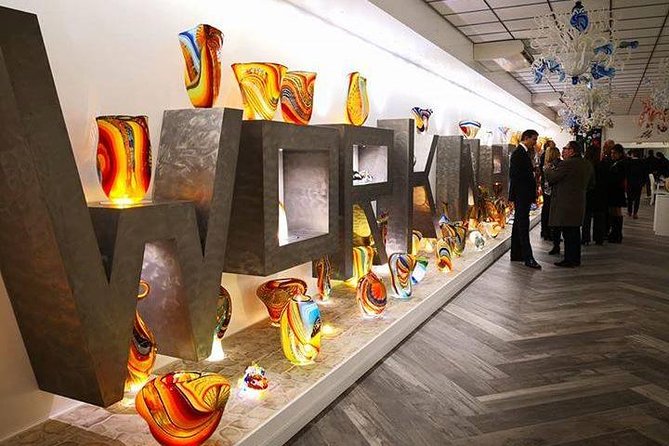
Here’s the part that helps you avoid surprise costs.
- Price: $1,392.28 per group (up to 6 people).
That means you’re paying for a private setup—boat transfers, guide time, and a smooth island-hopping plan. For six people, the per-person cost drops a lot compared with paying separately for public options or fragmented tours.
- Lunch: not included.
You’ll have time to eat on Burano, but you should plan to pay for your meal.
- Torcello church complex ticket: listed as not included.
Even with other admissions included, the Santa Maria Assunta complex may require an additional ticket on the day.
- Other entrances: Murano and Burano stop descriptions include admission tickets, but always confirm what’s covered for the specific church complex when you book.
My advice: before you go, decide what you’ll spend during the day—lunch plus any Torcello complex ticket—and treat the rest as the “already paid for” part of the day.
Price and value: does a private island tour make sense?
At first glance, $1,392.28 per group sounds steep. But here’s the math behind why it can work well.
You’re not just buying a guide. You’re buying:
- Private water taxi transfers between three islands
- A paced itinerary that reduces wasted transit time
- Admission coverage for key sights (with the Torcello complex called out separately)
- Time to shop at artisan workshops without feeling rushed
For couples or small families, the value often comes from comfort and quality. You avoid the “everyone together, everyone stressed” feeling that crowds create. And the craft experiences—glassmaking and lace-making—are exactly the kind of activities that feel better when you can slow down and ask questions.
For larger groups up to 6, it becomes even easier to justify. You’re basically paying for one premium day out, not six separate tickets and multiple transfers.
One caution: if you’re the kind of traveler who only wants views and doesn’t care about crafts, mosaics, or artisan time, you’ll get less value from the cost. This tour is best for people who want art with context and history you can actually see.
Who should book this Murano, Burano, Torcello tour?
This tour fits best if you:
- Want less crowd time and more unhurried walking
- Love craft work (glass and lace) and want to see it done properly
- Prefer a guide to help you choose the right moments to stop, look, and ask questions
- Are traveling with kids who might enjoy hands-on parts (some experiences include trying glass blowing)
It may not be the best match if you:
- Only care about quick photo stops and don’t want to pay for private transport
- Want to spend the entire day in just one island (because it’s a three-island plan)
Weather also matters less than you might expect. Reviews suggest the boat comfort holds up even when skies aren’t perfect.
Should you book it?
Yes—if you’re aiming for an authentic-feeling lagoon day, not just a checklist. The combination of private water taxi comfort, artisan craft time, and Torcello’s quiet atmosphere is a strong “Venice trifecta.”
I’d book this when:
- you have a limited number of days in Venice,
- you want a guide-led plan with room for pacing,
- and you care about seeing how things are made and preserved.
I’d skip it (or compare alternatives) when:
- you’re mostly after photo snapshots,
- you’re trying to keep costs ultra-low,
- or you’re willing to trade comfort for flexibility.
If you want, tell me your group size and travel dates, and I can help you sanity-check whether the per-group price makes sense for your situation and how to plan lunch and any expected Torcello ticket cost.
FAQ
How long is the private Murano, Burano, Torcello boat tour?
It runs for about 6 hours and 7 minutes (approx.).
What’s the group size for this private tour?
It’s a private tour for only your group, up to 6 people.
Does the tour include pickup?
Yes. Pickup is offered from your hotel, seaport, airport, train station, or other location based on your needs.
Is lunch included?
No. Lunch is not included in the price.
Are tickets included for the sights?
Admission tickets are listed as included for Murano and Burano stops, and for the Torcello stop generally, but the entrance ticket to the Santa Maria Assunta complex is specifically listed as not included.
Is there any extra access fee in Venice?
On certain dates, if you’re staying outside Venice and visiting for the day, you may be required to pay a €5 access fee. Details and exemptions are available at https://cda.ve.it.