REVIEW · VENICE
Secret Venice, an unusual walk – Private Walking Tour
Book on Viator →Bookable on Viator
Venice has another side you can walk. I really like the small-group pace that leaves room for questions, and the way the guide ties street corners to big art and real Venetian life. If you want a pure postcard-hunt with lots of time for photos, the tight 2-hour format may feel a bit fast.
This tour works because it’s guided like a conversation, not a lecture. I also love that you get pointed at specific places—markets, squares, and churches—so you don’t just see Venice, you understand why it looks the way it does. One thing to plan for: it requires good weather, so have a backup date in mind.
In This Review
- Key things to know before you go
- Why this Secret Venice walk feels different from the usual highlights
- The price and value: what $453.01 per group really buys you
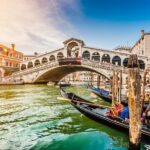
- Start at San Giacomo di Rialto: 1600 years of Venice in one stop
- Rialto’s markets: how merchants made the city work
- Rio Terà de le Carampane: the red light district story, explained carefully
- Campo San Polo: wells and altana—why Venice stores life above ground
- Campo San Toma: Carnival, masks, and what they meant
- Basilica di Santa Maria Gloriosa dei Frari: big church, big art connections
- Scuola Grande di San Rocco: a gorgeous finish to the stories
- Pace, group size, and how to get the most from the 2 hours
- Who should book this Secret Venice walk (and who might skip it)
- Should you book this tour?
- FAQ
- How long is the Secret Venice walking tour?
- Is this tour private?
- Where does the tour start and end?
- Is the tour offered in English?
- Are admission tickets included for the stops?
- What happens if the weather is poor or the minimum group size isn’t met?
Key things to know before you go
- A guide who handles the details: Expect a clear, organized walk with time to ask questions (and friendly humor).
- Art on its proper walls: You’ll learn how Titian and Tintoretto connect to the churches where their works belong.
- Stories Venice doesn’t advertise: Carnival, the former red light district area, and why Venice has so few wells all get explained in plain terms.
- Short stops, smart pacing: Each location is about 15 minutes, with the route built to keep moving and still feel thoughtful.
- Private group, capped small: It’s set up for your group only, with numbers kept low enough to hear well.
- End at San Rocco: Your walk finishes near the Scuola Grande di San Rocco, a great last stop for lingering.
Why this Secret Venice walk feels different from the usual highlights
Venice is easy to tour badly. You race from landmark to landmark, you take pictures, and you leave with a blur of domes and canals. This walk fights that problem by doing something simple: it connects a handful of places to the stories that explain them.
What makes it click is the mix of themes. One moment you’re near Rialto and learning how merchants shaped daily life. Next you’re hearing how Carnival masks mattered, and then you’re standing in a square with an explanation for wells and an architectural feature called an altana. It’s not random. It’s all aimed at getting you to read Venice like a local city—layer by layer.
Also, the experience is designed for real interaction. One guide I met standards high: Federico. People said he made sure everyone could hear him, kept the flow organized, and handled questions with care. Another name that comes up is Francisco—calm, friendly, and full of history, with a fun angle that made it feel more like a shared walk than a scripted tour.
You can also read our reviews of more walking tours in Venice
The price and value: what $453.01 per group really buys you
The cost is per group, not per person. That matters. If you book and keep the group size close to the small cap, the value usually feels stronger because you’re paying for a private, high-attention guide—plus a tight route that focuses on meaning, not just movement.
You’re also not paying for admissions as part of the stops on the route—each scheduled stop lists admission as free. So you’re not stacking extra costs on top of the tour price.
Two practical thoughts before you book:
- If your group is small, you may feel the price more, since it’s grouped pricing.
- If your group has a mix of interests, you’re in a good spot: history, art, and Venice’s social stories are all included in the same 2-hour loop.
Start at San Giacomo di Rialto: 1600 years of Venice in one stop
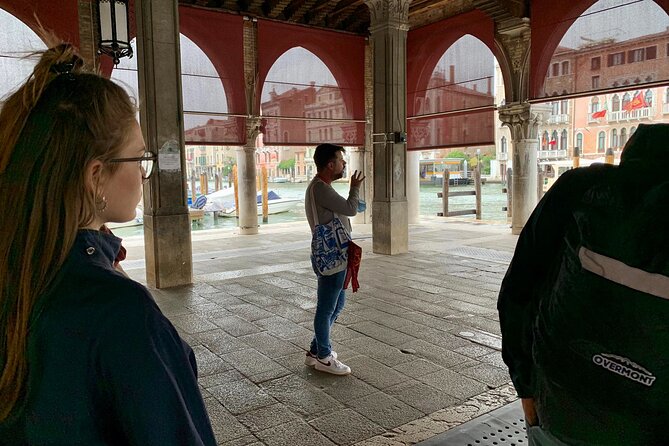
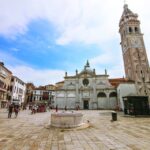
You begin at Campo San Giacomo di Rialto, in front of Chiesa di San Giacomo di Rialto. It’s a smart starting point because the guide uses the church area as a timeline marker. You’ll get an introduction to 1600 years of Venice and why this location matters—specifically, its connection to where Venice’s early funding began.
This first stop sets the tone. You’re not just learning names. You’re learning how Venice formed, how power and money shaped the city, and why certain places became anchors. Even if you’ve read about Venice before, this helps you see the city as a living system rather than a stack of postcards.
Tip: arriving a little early here helps. The square is where you’ll mentally tune in for the rest of the walk.
Rialto’s markets: how merchants made the city work
Next you move to Mercati di Rialto. This is where the tour shifts from “major story” to “how people actually lived.” You’ll get an overview of the market and what you need to know about Venetian merchants—the people who helped Venice function day after day.
The benefit for you is context. If you’ve walked through markets before, they can blur into colors and crowds. Here, you’re given a framework so you can look around and think: who sold what, who needed it, and why Rialto mattered beyond being a photo stop.
Drawback to note: the stop stays short—about 15 minutes—so you won’t be turning it into a shopping spree. If shopping is your priority, use this as a learning stop and do browsing after.
Rio Terà de le Carampane: the red light district story, explained carefully
Then you head to Rio Terà de le Carampane. This is one of those Venice side-stories you usually only hear in fragments. The walk puts it in order, with curiosities and street-level storytelling about the area that became tied to the former red light district.
What I like about this approach is how the guide treats the subject as part of Venice’s social history, not sensational gossip. You’re learning why neighborhoods developed reputations and how city geography intersects with human behavior.
It’s also a useful mental shift. Venice isn’t only churches and saints. It’s also commerce, privacy, and shadowed corners that the city carried for centuries.
You can also read our reviews of more private tours in Venice


Campo San Polo: wells and altana—why Venice stores life above ground
Campo San Polo is where the tour answers a question you’ve probably noticed the moment you start looking: where are the wells? You’ll hear why Venice has so few wells, plus an explanation of the altana.
This stop is valuable because it teaches you how to “see” Venice differently. Instead of wondering what’s missing, you learn what the city adapted to—how people handled water and how architecture evolved around that reality.
Possible consideration: this is more of a thinking stop than a scenic stop. If you’re someone who needs frequent wide-open views to stay engaged, you might enjoy the square’s explanation but want to add a short photo pause on your own.
Campo San Toma: Carnival, masks, and what they meant
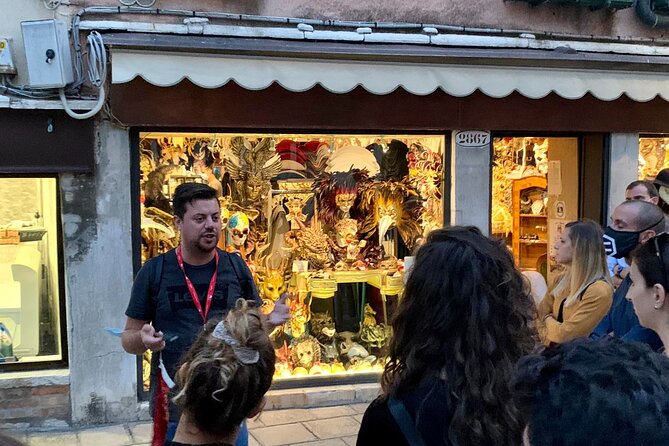
At Campo San Toma, the guide turns to Carnival and the importance of masks. This is one of the most fun sections because it shifts from architecture and economics into identity and performance.
You’ll get the context behind why masks mattered—socially and culturally—and how Carnival became a kind of temporary “rules reset” for Venice. One review also mentioned mask making to see, so if that’s included on your date, it’s the kind of detail that makes the whole topic feel hands-on instead of purely historical.
A practical note: Carnival talk pairs well with what you’ll likely see across Venice—mask shops, costume remnants, and the sense that the city loves ceremony. This stop helps you connect those visuals to meaning.
Basilica di Santa Maria Gloriosa dei Frari: big church, big art connections
Next comes the Basilica di Santa Maria Gloriosa dei Frari. This is described as one of the most important churches of Venice, and that checks out in how the guide frames it: the building becomes a gateway to understanding why major artists were placed where they were.
This is also where the tour’s art thread shows up more clearly. You’ll see works by Titian and Tintoretto and hear about them in the churches where they were painted for. That detail matters. It’s one thing to view famous art in a vacuum; it’s another to stand where it was intended, with the setting explained.
What to expect here:
- Less “look at the ceiling” and more “why it’s there”
- A clear explanation that connects art, patronage, and religious space
Time is limited, though. About 15 minutes means you’ll get the essentials—enough to enrich your later church visits, but not enough to become a full museum experience.
Scuola Grande di San Rocco: a gorgeous finish to the stories
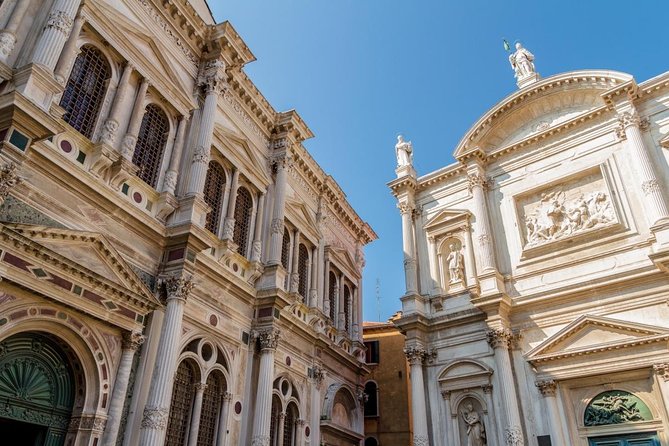
Your walk ends at Campo San Rocco, in front of the Scuola Grande di San Rocco. This is a strong finish because the Scuola is famous for how beautifully decorated it is, and the tour uses that impact to close the loop on what you’ve been learning.
Even if you’ve never studied Venetian institutions, you’ll leave with a better sense of how religious and civic spaces expressed power and taste. The guide’s explanation makes the decoration feel like information—not just ornament.
If you have extra time after the tour, this is a good place to linger. Being there at the end of the walk means you’ll likely notice details more than you would have at the beginning.
Pace, group size, and how to get the most from the 2 hours
This is about 2 hours, with roughly 15-minute blocks at each stop. That pacing keeps you moving through Venice without burning your day.
The small cap—set low enough to leave plenty of time for questions—changes the whole feel. You won’t be stuck listening to someone talk past you. You can ask what you’re curious about: why something looks the way it does, what a term means, or what to watch for next.
A couple more practical points that help:
- You get a mobile ticket, which is convenient in a city where paper tickets can vanish fast.
- It’s offered in English.
- It’s private, so only your group participates.
- It’s near public transportation, which makes it easier to fit into a day plan.
What to bring:
- Comfortable shoes for uneven ground.
- A light layer. Venice weather can shift quickly.
- If you’re sensitive to sun or rain, plan for it—this experience requires good weather.
Who should book this Secret Venice walk (and who might skip it)
This works especially well if you want:
- A guided walk that explains Venice’s logic, not just its highlights
- Art context tied to real buildings
- Stories that cover both the famous and the forgotten side of the city
- A small group where you can ask questions
It might be less ideal if you want:
- Long free time at each location
- A full museum-style viewing schedule
- A purely visual itinerary with minimal talking
If your group includes mixed interests—someone who loves art, someone who loves street stories, someone who just wants to understand the city—this tour is built for that balance.
Should you book this tour?
I’d book it if you like Venice as a puzzle you can solve. The value is in the connections: markets to meaning, squares to function, Carnival to identity, and churches to art in place.
I’d also book it if you care about how the guide talks. The strong signals from the experience are clear: Federico’s organization and attention to hearing and questions, Francisco’s friendly depth, and the fun tone that keeps history from feeling heavy.
If your schedule is tight and you mainly want “quick hits,” consider another option with longer stops. But if you’re aiming to leave Venice with more understanding than photos, this 2-hour walk is a smart, focused choice.
FAQ
How long is the Secret Venice walking tour?
It runs for about 2 hours.
Is this tour private?
Yes. It’s a private tour/activity, and only your group participates.
Where does the tour start and end?
It starts at Campo San Giacomo di Rialto (Campo S. Giacomo di Rialto, 30125 Venezia VE, Italy) and ends at Campo San Rocco (Campo S. Rocco, 30125 Venezia VE, Italy), in front of the Scuola Grande di San Rocco.
Is the tour offered in English?
Yes, it’s offered in English.
Are admission tickets included for the stops?
The stops listed on the route show admission ticket status as free.
What happens if the weather is poor or the minimum group size isn’t met?
The experience requires good weather. If it’s canceled due to poor weather, you’ll be offered a different date or a full refund. If it’s canceled because the minimum number of travelers isn’t met, you’ll be offered a different date/experience or a full refund.