REVIEW · VENICE
Byzantine Venice Walking Tour & Saint Mark’s Basilica
Book on Viator →Operated by Venice Events srl · Bookable on Viator
Venice moves fast, especially around St. Mark’s. This tour is interesting because it pairs skip-the-line entry to St Mark’s Basilica with headsets and a smart walk that helps you place the sights without getting lost.
Two things I really like: you get guided time inside the mosaics (including access to the upper level/terrace), and the route also threads through quieter Castello streets where Venice still feels like a neighborhood, not a theme park. The main drawback to watch for is that St. Mark’s can be closed due to flooding or special events, and crowd noise can make even good audio harder to catch.
Headsets mean you can keep moving without constantly stopping to listen up front.
St. Mark’s entry is included, saving you the hassle of figuring out timing and queues.
You also see Castello with calli, campi, bridges, and small-scale Venetian life beyond the main square.
Upper-level/terrace access is part of the experience, but some “extra” areas may cost more.
Small group size (max 20) helps the tour feel controlled compared with larger crowds.
It’s rain or shine, with possible delays if high tides affect the area.
In This Review
- Why this St Mark’s tour works for first-timers
- Price and value: paying for time, not just entry
- Before you go: what to wear and how headsets actually help
- Piazza San Marco: the clock tower and Doge’s Palace explained quickly
- Castello on foot: Campo Santa Maria Formosa and real Venice texture
- San Zanipolo (Santi Giovanni e Paolo): Doges, Colleoni, and big-canvas architecture
- Casa di Marco Polo and the Malibran Theatre: the city’s legends, not just the monuments
- Inside St. Mark’s Basilica: mosaics, marble floors, and the upper level
- What you’ll get in the basilica
- Pala d’Oro and other add-ons
- The crowd reality
- How to make the tour feel less rushed (and avoid extra fees surprises)
- Who should book this tour (and who might prefer something else)
- Should you book the Byzantine Venice Walking Tour & St. Mark’s Basilica?
- FAQ
- How long is the tour?
- Is entry to St. Mark’s Basilica included?
- Are headsets provided?
- Does the tour include access to the upper level?
- Are there extra fees once you arrive?
- What route does the tour cover besides St. Mark’s?
- How big is the group?
- What rules apply inside the basilica?
- What if it rains or the basilica is closed?
Why this St Mark’s tour works for first-timers
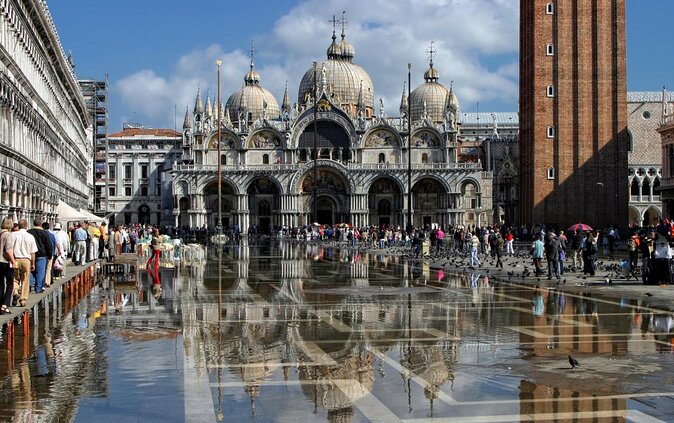
If you’re seeing Venice for the first time, St. Mark’s Square can feel like information overload: huge buildings, nonstop foot traffic, pigeons in formation, and tour groups appearing and vanishing like magic tricks. This tour tries to solve that problem in a practical way. You don’t just get dropped at the basilica door and sent off with a map. You get context first, then access inside, and then a short walk that helps you understand where things sit in relation to each other.
I also like that the tour is built around movement. With the audio system, you can keep walking at a human pace and still catch explanations about what you’re seeing—mosaics, marble floors, the Doge’s Palace story, and the landmark details that most people rush past.
And yes, St. Mark’s is the star here. But the best value is that you leave with a mental picture of the whole area, not just a pile of photos.
Price and value: paying for time, not just entry
At $85.22 per person for about 2 hours 30 minutes, this isn’t a bargain-basement add-on. It’s priced like a “make your day easier” product.
Here’s how it adds up:
- The big cost driver is St. Mark’s access plus guidance. The tour includes basilica entry, and it’s built to help you avoid the worst of the waiting around the cathedral.
- You’re paying for direction. Venice isn’t hard to visit, but it’s easy to waste time. A guide helps you hit the right spots in the right order, and headsets prevent the usual stop-and-start chaos.
- You’re also buying a short orientation walk. The Castello portion is not a throwaway detour. It’s a chance to see Venice beyond the postcard wall, which matters because it helps you plan the rest of your stay.
Keep in mind two pricing wrinkles that can affect your final spend: Pala d’Oro is an optional extra, and the Loggia dei Cavalli/museum space is also listed as not included. Those add-ons are what turn “included” into “included-but-not-everything.”
You can also read our reviews of more walking tours in Venice


Before you go: what to wear and how headsets actually help
This tour runs rain or shine, so you can plan on being outside at some point, even if your day starts with mist. The route is walk-based, and it includes time in and around major public spaces.
Inside St. Mark’s Basilica, you’ll want to be ready for rules that can feel strict if you show up casual:
- Shoulders and knees must be covered
- Backpacks aren’t allowed inside
That second point matters more than people think. If you carry a backpack, you’ll need to store it somewhere before you go in, which can create friction and delay.
One more practical note: the tour gives you a personal audio system and headset. In the best moments, it’s perfect—you can follow the guide’s explanations while you look up at the mosaics or down at the marble inlay. In the no-fun moments, crowd noise and equipment issues can reduce clarity. A couple of travelers had trouble hearing fully, including one issue where the headset setup wasn’t comfortable for conversation-level clarity. My takeaway: if you’re sensitive to audio quality, arriving a bit earlier so you can settle in your spot helps.
Piazza San Marco: the clock tower and Doge’s Palace explained quickly
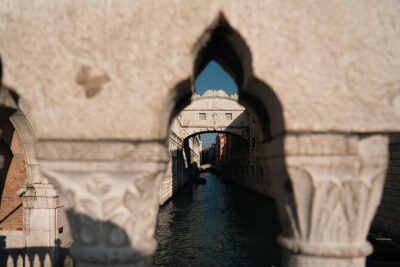
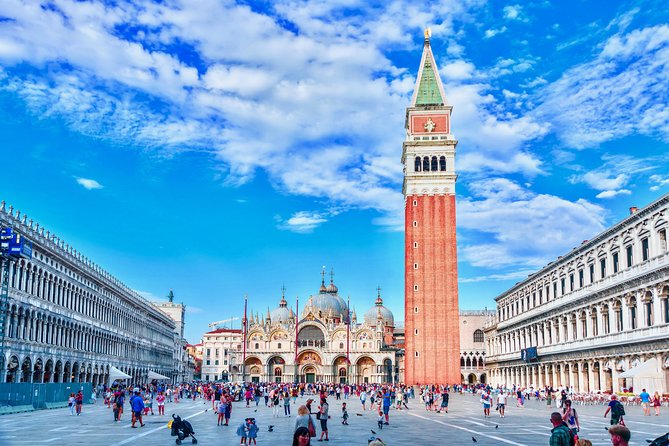
The tour begins at TU.RI.VE., near Calle larga de l’Ascension, and it starts with a historical introduction to Piazza San Marco. This is a smart opener because St. Mark’s Square is built like a stage. If you understand what you’re looking at—especially the power symbols—you can enjoy it instead of just tolerating it.
During the square portion, you’ll get a guided look at:
- St. Mark’s Basilica’s architectural role in Venice’s identity
- The Doge’s Palace, once the political center of the Republic of Venice
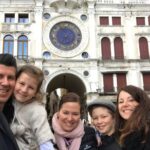
- The renaissance clock tower and the visual language of the area
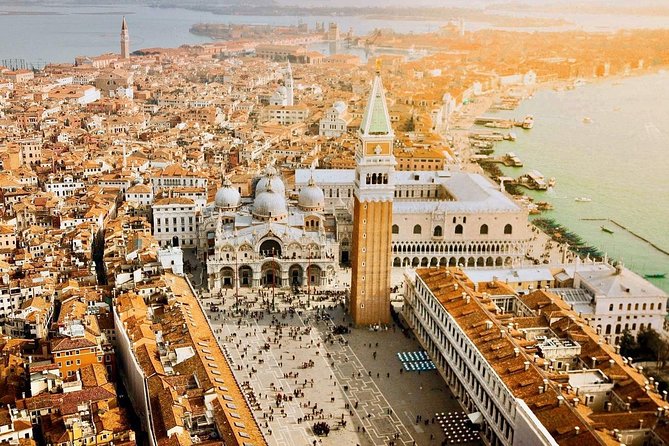
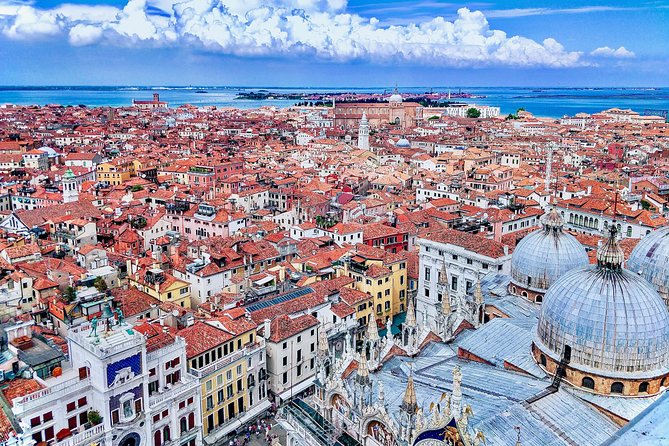
Even if you’ve already seen photos online, your first walk around Piazza San Marco often feels like you’re inside a museum of crowds. A guide helps you connect the landmarks into one story. You’ll also get a quick bird’s-eye level orientation to where you’ll be later, which makes the rest of the day easier.
Castello on foot: Campo Santa Maria Formosa and real Venice texture
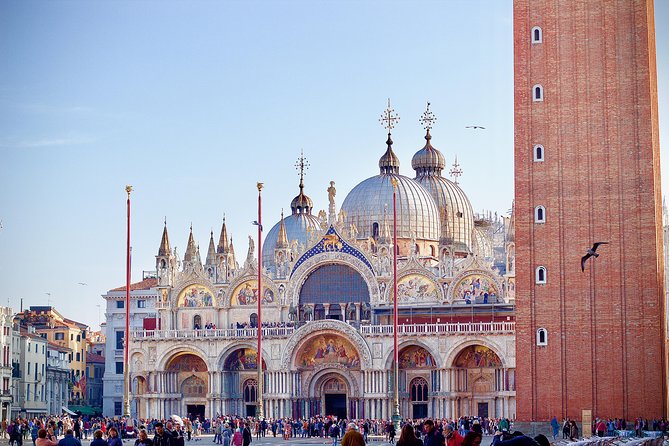
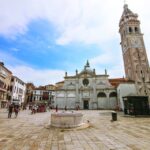
After the square, the tour moves into Castello, where the mood shifts from grand monument to local living. The route heads toward Campo Santa Maria Formosa, one of the larger campi in Venice, where the church dedicated to the Holy Virgin anchors the scene.
This part is valuable for two reasons.
First, you get a break from the constant pressure around St. Mark’s. The streets here are narrower, and the pace changes. You’ll pass through a maze of calli (narrow lanes), cross bridges, and see the way canals cut the city into workable little neighborhoods.
Second, you learn the geography by walking it. That’s how Venice stops feeling confusing. By the time you return toward St. Mark’s, you’ll understand how Castello links back to the main area.
A small caution: the walk is in weather, and Venice’s surfaces can be slick. If it’s wet or windy, give yourself time and keep an eye on footing.
San Zanipolo (Santi Giovanni e Paolo): Doges, Colleoni, and big-canvas architecture
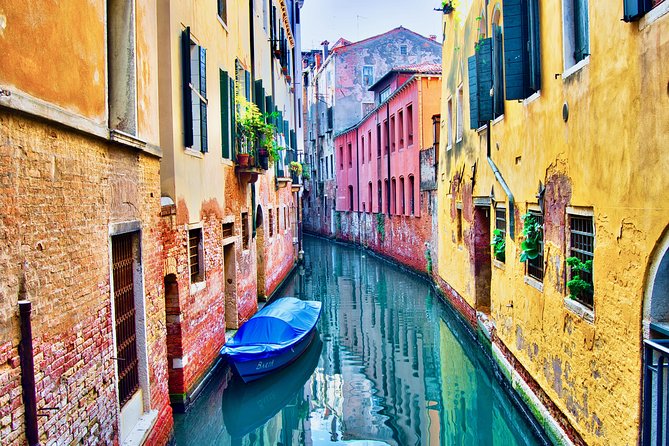
Next up is Basilica dei Santi Giovanni e Paolo, better known as San Zanipolo. This church is a standout because it’s the kind of building Venice does well: huge, confident, and packed with political and religious signals.
On this stop, you’ll see:
- Campo Santi Giovanni e Paolo, tied to the church complex
- The idea of the basilica as a resting place for several Doges
- The equestrian monument of Bartolomeo Colleoni, a famous work linked to a mercenary captain
This portion gives you a counterbalance to St. Mark’s. St. Mark’s is glitzy and imperial. San Zanipolo is powerful in a different way—more grounded, a little more “Venice as a working state,” with public identity written into stone and sculpture.




Casa di Marco Polo and the Malibran Theatre: the city’s legends, not just the monuments
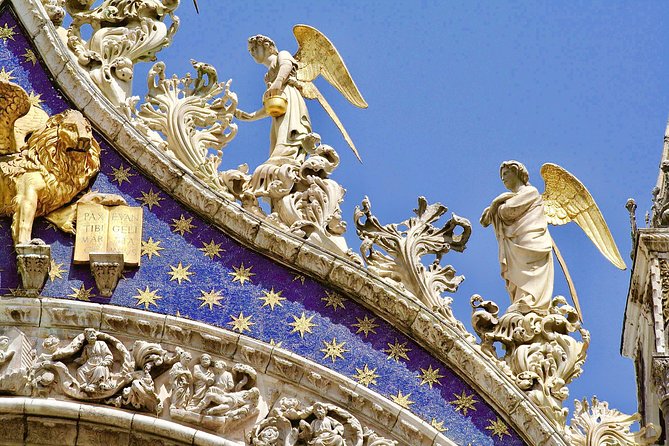
The itinerary then includes Casa di Marco Polo, described as the former residence of Marco Polo, a Venetian merchant who became one of the city’s best-known legends.
You’ll also pass by the Malibran theatre, which helps connect Venice’s identity to performance and civic culture, not only politics and religion. Even if you don’t go inside the theatre (it’s not listed as part of the stop in the tour details), the location matters because it gives you a sense of how the city’s “story” shows up in different buildings.
For a first visit, I love stops like this because they give you anchors for later exploration. Once you’ve heard the name, you start noticing the people and places behind Venice’s brand.
Inside St. Mark’s Basilica: mosaics, marble floors, and the upper level
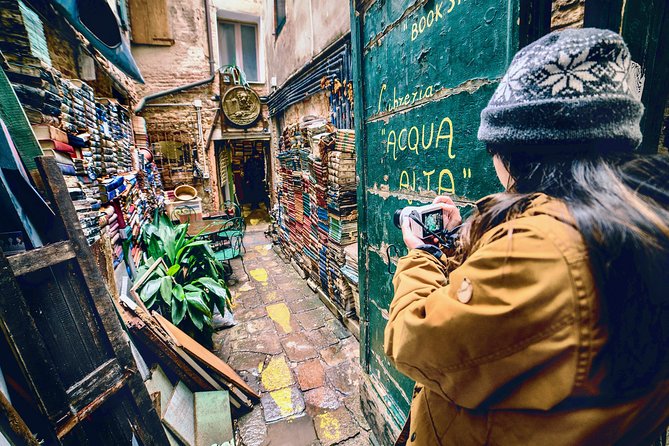
The tour returns to St. Mark’s Square and transitions into the basilica visit. This is where most of the value really concentrates.
What you’ll get in the basilica
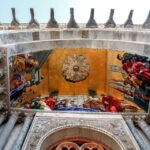
You’ll enter and enjoy a guided tour focused on the basilica’s Italo-Byzantine splendor:
- intricate mosaics and decorative surfaces
- marble inlay flooring
- St. Mark’s as a former private chapel for the Doge, with the idea that the architecture was designed to impress from inside as much as out
This is the part you don’t want to rush. St. Mark’s rewards slow looking, but on a guided time window you’ll still move steadily. Headsets help you catch the explanations without constantly craning your neck toward a guide.
Pala d’Oro and other add-ons
The Pala d’Oro (golden altar) is mentioned as an additional expense at €5.00 per person. Some travelers find that extra fee worth it because the visual impact is hard to recreate in photos. Others feel annoyed if they thought everything was included. My advice: if you care about the gilded altar, mentally budget for it now and don’t assume it’s folded into the base tour price.
Also, Museum and Loggia dei Cavalli on the 1st floor are listed as €14.00 per person. The tour summary also says you can access the basilica upper level, including the terrace, which can be a major payoff if you want a different view of the square area. Some people in practice want the “horses” or nearby upper-level elements, and those are typically where the extra tickets come in.
The crowd reality
St. Mark’s is crowded. Even with a group of no more than 20, you can hit congestion points. A couple of travelers had headset issues or couldn’t hear well because the basilica was noisy and packed. If you’re the type who gets frustrated by crowd sound, position matters: try to stand where you can hear your headset without your head turning constantly.
How to make the tour feel less rushed (and avoid extra fees surprises)
This experience can feel excellent when timing, audio, and pacing line up. It can feel frustrating when they don’t. Here’s how to stack the odds in your favor.
- Arrive early enough to check in smoothly. Check-in is required 15 minutes prior to the booked start time. St. Mark’s is already busy before the official crowds, and missing the check-in window can turn a short tour into an awkward scramble.
- Decide on add-ons before you get in the basilica. The tour lists €5 for Pala d’Oro and €14 for Loggia dei Cavalli/museum on the 1st floor. If you want those pieces, treat them as normal costs and enjoy the included mosaics without second-guessing.
- Bring the right clothing plan. Shoulders and knees covered. If your day includes switching outfits, don’t assume you’ll find time inside the schedule to fix it.
- Don’t assume you’ll have total control of your pace inside. A few people felt the tour moved quickly and they didn’t get enough time at certain spots. You can still do your own micro-breaks—pause for your own look at one mosaic panel or marble pattern—but don’t expect long lingering while everyone else keeps moving.
- If audio matters, choose your listening position. Headsets are provided, yet crowd noise and equipment problems do happen. Stand somewhere you can hear without fighting the sound level.
Also, for those who are sensitive to language, guides can vary. Some people described English that was hard to follow or that audio clarity wasn’t consistent. If English fluency is crucial for you, pick a departure time when you can arrive calmly and settle your spot.
Who should book this tour (and who might prefer something else)
This tour is best for:
- First-time visitors who want St. Mark’s context fast
- People who hate queue chaos and want headsets to keep moving
- Travelers who want both major monuments and a taste of everyday Venice in Castello
- Anyone planning to explore more Venice after the tour and wants an orientation map in their head
It might not be ideal if:
- You dislike structured time inside churches and prefer unguided wandering
- You strongly prefer perfect audio clarity over crowd sound
- You want every single basilica detail at a slow museum pace
One interesting detail from the experience stories: a guide named Iphigenia got standout praise for keeping the tour enjoyable and informative. That’s not something you can guarantee with every group, but it’s a good reminder that the guide quality can make a big difference in how satisfying the basilica time feels.
Should you book the Byzantine Venice Walking Tour & St. Mark’s Basilica?
I’d book it if your priority is efficient access to St. Mark’s plus a guided orientation that helps you understand where things fit in Venice. The headsets and small group size are real advantages, and the Castello walk gives you breathing room from the square’s crush.
I’d think twice if you’re trying to build a low-budget day and you hate surprises. There are optional paid pieces like the Pala d’Oro and the Loggia dei Cavalli/museum area, and St. Mark’s can close due to flooding or special events. If any of those risks would ruin your mood, you may want either a fully independent plan or a more flexible time window.
FAQ
How long is the tour?
It runs about 2 hours 30 minutes (approximately).
Is entry to St. Mark’s Basilica included?
Yes. Entry to St. Mark’s Basilica is included in the tour.
Are headsets provided?
Yes. You’ll receive a personal audio system and headset so you can follow along while you walk.
Does the tour include access to the upper level?
The tour includes access to the basilica’s upper level, including the terrace.
Are there extra fees once you arrive?
Some parts are not included. Pala d’Oro costs €5.00 per person, and Museum and Loggia dei Cavalli on the 1st floor costs €14.00 per person.
What route does the tour cover besides St. Mark’s?
You’ll walk St. Mark’s Square and into Castello, with stops including Campo Santa Maria Formosa, San Zanipolo (Santi Giovanni e Paolo), and Casa di Marco Polo.
How big is the group?
The tour has a maximum of 20 travelers.
What rules apply inside the basilica?
You must have shoulders and knees covered, and backpacks are not allowed inside.
What if it rains or the basilica is closed?
The tour operates rain or shine. St. Mark’s Basilica can be occasionally closed due to flooding or special events, so conditions may affect the visit.