REVIEW · VENICE
Venice Walking Tour and Gondola Ride
Book on Viator →Operated by ROMAETRAVEL · Bookable on Viator
Venice hits fast, then slows with a gondola. This classic Venice walking tour pairs the city’s big-ticket sights—St. Mark’s Square and the Doge’s Palace area—with a traditional gondola ride, plus stories about the Renaissance years as you move through lanes and footbridges. I especially like how the route mixes the headline spots with quieter side streets, and I like that you get the gondola as part of the same plan instead of booking it separately. One consideration: the walking can feel tight inside the crowds, so if you hate a brisk pace or you want lots of chatting time at each stop, you may feel rushed.
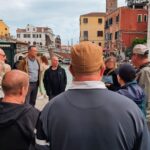
The small-group setup helps. Depending on the date, the tour is capped either at 14 or at a maximum of 8, so you should avoid the giant “wandering herd” problem. And the guiding gets praised in a very practical way—guides like Julian and Elisabeth are called out for being engaged and for keeping the group moving smoothly from the walking portion to the gondola dock.
Before you go, do one simple thing: plan for cobblestones and comfortable shoes. The itinerary hits places you may want to enter (with tickets not included), and some parts of St Mark’s can get busy, so you’ll be happier if your feet and patience are ready.
In This Review
- Key things to know before you go
- Why this Venice walking + gondola combo works
- The pacing reality: what the first part feels like
- Stop 1: Grand Canal views and why Venice is split in two
- Stop 2: Piazza San Marco and the layout that makes sense once you know it
- Stop 3: Campanile area and St Mark’s Basilica exterior context
- Stop 4: Torre dell’Orologio and a Renaissance moment in the middle of the square
- Stop 5: Ponte dei Sospiri (Bridge of Sighs) without the drama, just the design
- Stop 6: Rialto Bridge, the oldest main crossing
- Gondola ride: the payoff you’ll actually remember
- Stop 7: Doge’s Palace area and what you can choose to do inside
- Stop 8: Teatro La Fenice and the opera legacy in the streets
- Small group size: why it can change your whole experience
- Value check: is $185.38 a good deal?
- Who should book this tour
- Extra Venice logistics that actually matter
- Should you book the Venice Walking Tour and Gondola Ride?
- FAQ
- How long is the Venice walking tour with gondola included?
- Where does the tour start and where does it end?
- Is the gondola ride included in the price?
- Are tickets for places like St Mark’s Basilica or Doge’s Palace included?
- How big is the group?
- Can I cancel for free?
Key things to know before you go
- Gondola ride is built in: you don’t have to treat it as a separate booking problem.
- St Mark’s Square is the center of gravity: the tour anchors you where the city’s public and religious life meets.
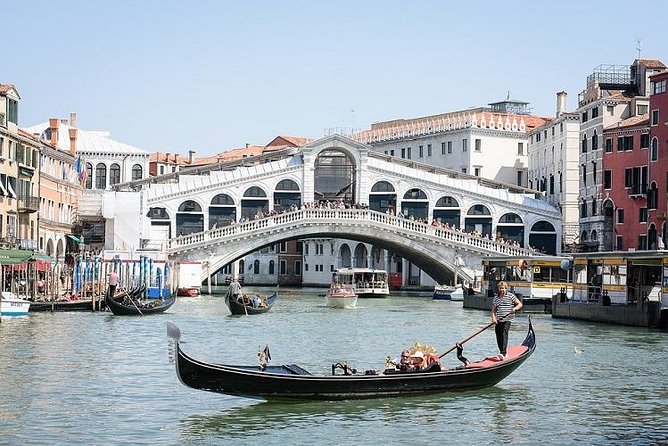
- Bridge photos come fast: you’ll pass by iconic bridges like Ponte dei Sospiri and Rialto Bridge on the way.
- Not all entries are included: you’ll need separate tickets if you want inside access to several major sights.
- Small group focus: you’re not stuck in a huge crowd if the cap holds for your date.
- Crowds shape the experience: you’ll move through the busiest areas, so good timing and listening matter.
Why this Venice walking + gondola combo works
If you’re a first-timer, Venice can feel like a magic trick where everything happens at once: canals, palazzi, alleyways, and then, suddenly, the grand squares. This tour is designed to give you structure fast. In about three hours, you get a clear sense of where the city’s power sat (St Mark’s), how the waterways split the city (Grand Canal), and why the bridges still matter as much as the buildings.
The best part is the pairing. A walking tour gives you context: why the city is laid out around water, how people crossed it, and what the Republic was trying to do with its architecture. Then the gondola gives you a slower, more visual payoff—especially when you’re ready to stop staring at maps and start looking at facades and canal curves.
The other big value point is that you’re not just doing “photo stops.” You’ll get commentary along the way that connects the sights you’re seeing to the people and politics behind them. Guides mentioned by name—Julian and Elisabeth—are praised for staying engaged and for getting everyone from stop to gondola without leaving anyone behind.
You can also read our reviews of more walking tours in Venice
The pacing reality: what the first part feels like
You start at Stazione di Venezia Santa Lucia, which is convenient if you’re arriving by train. But it also means you’ll do some real walking before you reach the gondola. One review called this out bluntly: the walking can take the first stretch of the tour, and with crowds around central sights, it can be harder to hear every word if you’re moving constantly.
So here’s the practical advice I’d give you:
- If you’re sensitive to noise, pick a moment to step slightly off to the side when you can and let the guide catch the group’s attention.
- Don’t plan on deep, long questions at every stop. Think “listen, absorb, and ask one good question” instead.
- If you’re traveling with someone who needs frequent breaks, consider building in extra time before or after the tour for sitting down—this experience doesn’t advertise long rest stops.
This doesn’t mean it’s bad. It just means you’ll get the best results if you match the tour’s rhythm.
Stop 1: Grand Canal views and why Venice is split in two
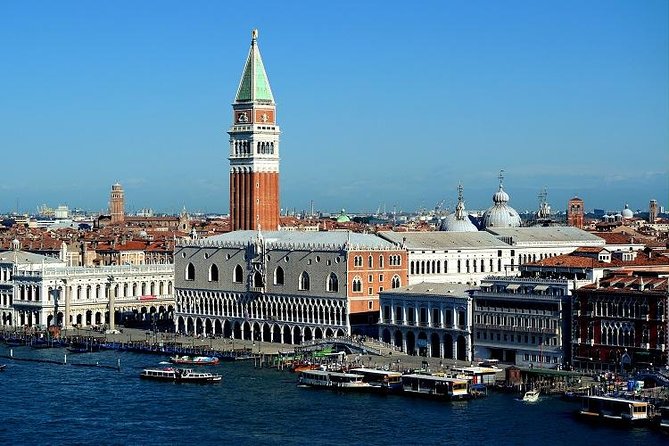
The Canal Grande is Venice’s main waterway—the closest thing the city has to a “big street.” The tour frames it as a central divider: Venice’s heart is split into two parts, with the city built following the river path. The canal runs roughly 3.8 km (2.4 miles) and makes a large reverse-S shape through the central districts (sestieri), with an average depth listed around 5 meters (16 feet).
Even if you’re not taking a gondola right here, this stop helps you orient quickly. You learn where the canal points: one end toward the lagoon near Santa Lucia railway station, and the other toward the basin at San Marco. Once that clicks, the rest of the tour feels less random—you start seeing why certain bridges and squares are where they are.
Stop 2: Piazza San Marco and the layout that makes sense once you know it
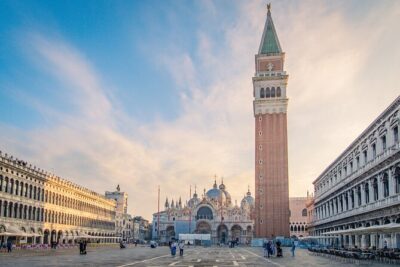
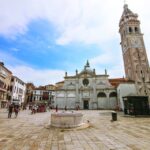
Next is Piazza San Marco (St Mark’s Square), the public and ceremonial center of Venice. The tour also explains a useful city rule: most open spaces in Venice are called campi (fields), while St Mark’s is a piazza. The Piazzetta extends toward the lagoon, and together the two spaces form the social, religious, and political hub.
You’ll feel the “center of gravity” here right away. This is where the Republic showed off power, faith, and wealth. And it’s also where your guide’s job gets easier—because the buildings basically tell their own story.
If you want a micro-tip: slow down for a minute and look across the square in sections. It’s easy to get swept up in the first glance, but the layout becomes clearer when you read it like a grid of landmarks.
Stop 3: Campanile area and St Mark’s Basilica exterior context
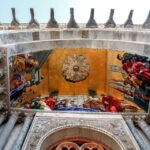
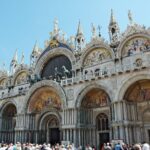
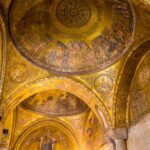
The itinerary then moves into the area around Campanile di San Marco and Basilica di San Marco. What’s helpful here is the framing: the Basilica’s structure dates to the latter part of the 11th century, and later work added the famous look, including a Gothic-leaning roofline on the main façade.
Entry to the Basilica is not included in the tour’s price. That means you’ll likely get time to appreciate the area and building details, but if you want to go inside, you’ll need your own ticket. This is actually a good setup for many people: you avoid decision fatigue mid-tour, and you can choose whether you want extra paid time based on your energy.


Stop 4: Torre dell’Orologio and a Renaissance moment in the middle of the square
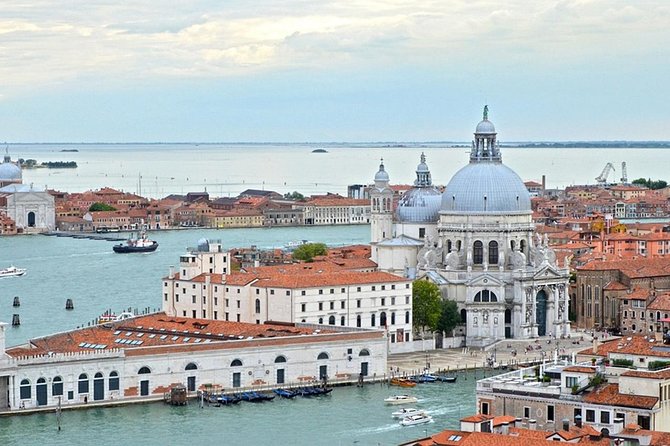
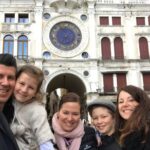
On the north side of Piazza San Marco, near the entrance to Merceria, you’ll see the Torre dell’Orologio—an early Renaissance clock tower. It’s described as a tower with the clock, plus lower adjoining buildings on each side, linked to Procuratie Vecchie.
Not everyone gets excited about clock towers. But in Venice, details like this matter because they’re the glue between monumental spaces and street-level life. You’re learning the city’s “how it works” layer, not just chasing postcards.
The clock tower entry is not included, so again: you’re mostly there to look and understand.
Stop 5: Ponte dei Sospiri (Bridge of Sighs) without the drama, just the design
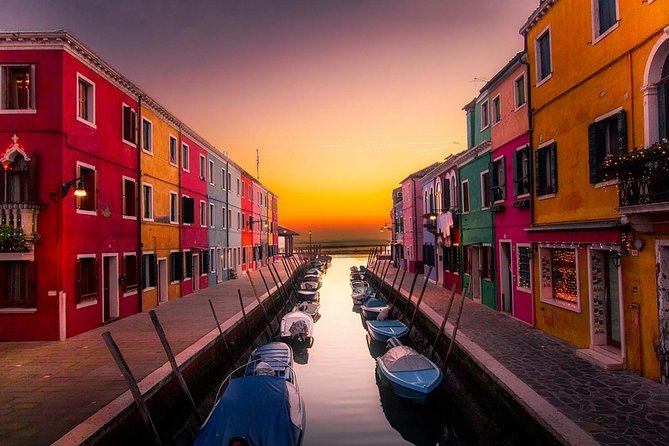
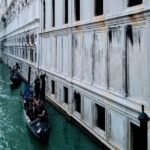
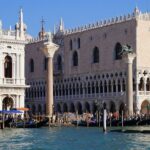
The Ponte dei Sospiri is one of the most distinctive bridges in Venice. It was built in 1602 using white Istrian stone, connecting Palazzo Ducale (Doge’s Palace) to Prigioni Nuove (the newer prisons). The bridge is also described as entirely covered, made of two wall-separated corridors that lead to and from the prison.
This is a perfect stop to stop rushing. The bridge has a built-in story even if you don’t love dark history. It’s a reminder that Venice wasn’t only pageantry—it had punishment, control, and tight separation between public power and private consequences.
Stop 6: Rialto Bridge, the oldest main crossing
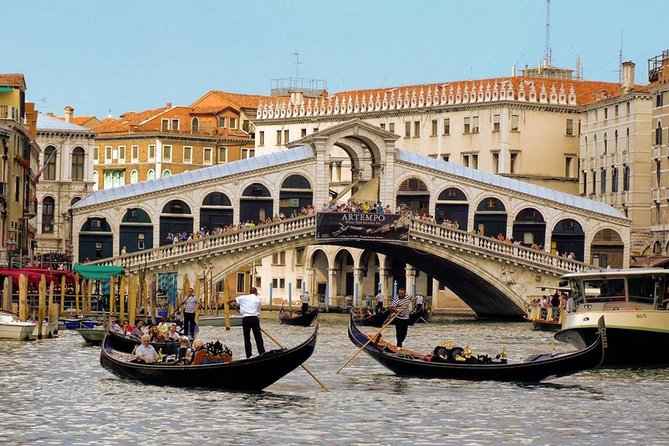
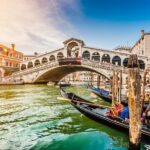
Then it’s Ponte di Rialto, one of the most photographed bridges for a reason. Venice has around 354 bridges, but Rialto is special because it’s the oldest of the four bridges spanning the Grand Canal. It connects the sestieri of San Marco and San Polo and has been rebuilt multiple times.
The tour notes the evolution: it started with designs using old ships, then a wooden structure, and the visible reconstruction dates to 1591. Even if you’ve seen photos, the scale and crowds can surprise you. This stop is a good place to get one classic picture, then step back and let the flow pass.
Gondola ride: the payoff you’ll actually remember
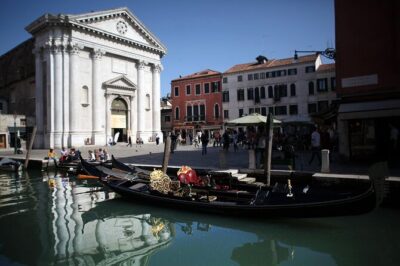
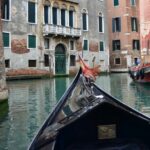
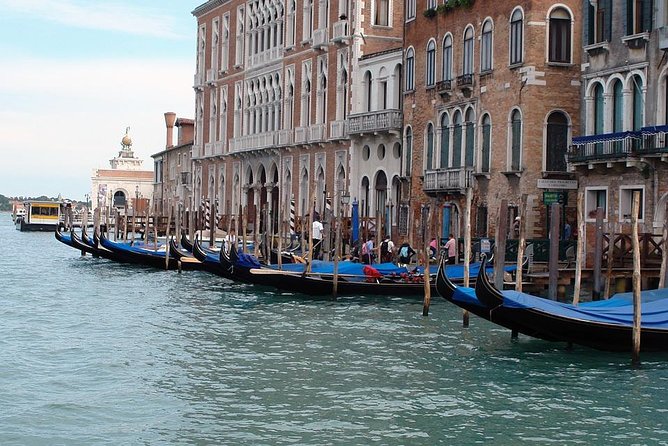
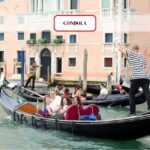
The gondola ride is the heart of why this tour is different from a plain walking tour. It’s described as a traditional Venetian gondola system and tied to a legacy said to be about 1,500 years old.
In real life, gondola experiences vary by dock timing and boat setup. One review mentioned missing a singing gondola feature and also noted microphone interference on the walking side of the day. The practical message: this is a sightseeing gondola, not a guaranteed entertainment package.
What matters most for you: the gondola is included in the same plan, and the guide is expected to help you get to the gondola and back to finish the tour. Guides like Julian were specifically praised for making that transition work smoothly.
If you can, bring a simple expectation: you’re paying for time on the water with a human guide telling the city story while you watch the facades slide by.
Stop 7: Doge’s Palace area and what you can choose to do inside
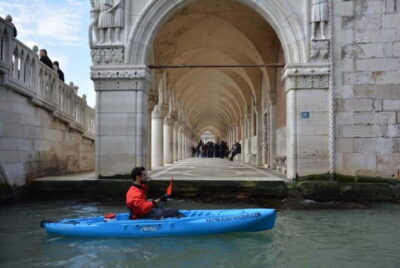
You’ll then reach Doge’s Palace, a Venetian Gothic landmark and former residence of the Doge, the supreme authority of the Venetian Republic. Today it’s a museum, opened in 1923, and it’s part of the Fondazione Musei Civici di Venezia, listed as one of 11 museums run by the foundation.
Entry to Doge’s Palace is not included. That means you’ll probably get guided context and time to look around, but if you want the full interior experience, you’ll need to buy tickets separately.
This is where your travel style matters. If you like reading architecture and learning the political purpose of spaces, the tour context is a great match even if you don’t enter. If you want the full museum experience, plan extra time and budget for entry.
Stop 8: Teatro La Fenice and the opera legacy in the streets
The last stop is Teatro La Fenice, one of Venice’s major opera houses. It’s described as a landmark in the history of Italian theatre, with many famous operatic premieres in the 19th century. The names connected to those premieres include Rossini, Bellini, Donizetti, and Verdi—all major figures in the bel canto era.
Entry isn’t included. So think of this as a cultural “bookmark” for where opera fits in Venice’s public life—not as a ticketed theatre tour. Still, it’s a strong ending because it widens the story beyond politics and into performance.
Small group size: why it can change your whole experience
This tour is built around a small group, and that’s not just a marketing point. When you move through St Mark’s and bridge areas, crowd pressure can make or break your ability to listen and look.
The cap appears as either maximum 14 or maximum 8 depending on the listing details. Either way, the key is that you should be able to keep track of the guide without sprinting through the crowd.
Still, pace issues show up in the real world. One criticism described it as a running tour with not enough explanation when the group had to move quickly. So if you like a slower, more conversational pace, go in with patience—and consider timing your expectations so the gondola becomes your “slow down” moment.
Value check: is $185.38 a good deal?
For $185.38 per person, you get a guided walking tour, plus a traditional gondola ride, in about three hours, with a mobile ticket. Entry fees for big indoor stops like St Mark’s Basilica, the clock tower, and Doge’s Palace are not included, so you’re paying for guiding and the gondola portion—not a museum pass.
Is it worth it? For many people, yes—because Venice gondola pricing can add up fast if you try to assemble everything on your own. Here, the value is the routing plus the “make sure you get to the gondola dock and back” support.
Where you can lose value is if you’re hoping to spend long hours inside museums without additional ticket costs, or if you’re the type who needs frequent stops. This tour is designed for movement and context, not for long indoor time at multiple paid sites.
Who should book this tour
This is a strong pick if:
- You’re seeing Venice for the first time and want a ready-made route through the must-see highlights.
- You want a gondola ride without turning your day into a logistics puzzle.
- You like history stories tied to what you’re walking past (St Mark’s, Doge’s Palace, prisons, bridges).
It may be less ideal if:
- You’re very sensitive to walking fast through crowds.
- You need a slow pace with lots of time to sit and ask questions at every stop.
- You want all major attractions fully included with zero extra ticket purchases.
Extra Venice logistics that actually matter
Two things can affect your day.
1) Comfort and shoes: cobblestones and constant movement are part of the deal. Wear shoes that handle uneven ground.
2) Venice access fee on some dates: if you’re coming in from outside Venice for a day trip, you may have to pay a €5 access fee on certain dates. Check the city’s official guidance at cda.ve.it.
If you plan for these upfront, the tour tends to feel smoother.
Should you book the Venice Walking Tour and Gondola Ride?
I’d book it if you want a structured first look at Venice’s power center and a gondola ride in one compact window. The strongest reason is simple: the tour gives you walking context around St Mark’s and the Grand Canal area, then rewards you with time on the water without making you solve gondola logistics alone.
Skip it—or at least adjust expectations—if you’re prone to frustration with crowds or if you’re hoping for a slow, sit-down, no-rush style day. This experience is built for flow.
If you do book, set yourself up for success: arrive early at Santa Lucia, wear comfortable shoes, and treat the walking as your explanation phase. The gondola ride is where you switch into watch-and-enjoy mode.
FAQ
How long is the Venice walking tour with gondola included?
It runs for about 3 hours.
Where does the tour start and where does it end?
The tour starts at Stazione di Venezia Santa Lucia in Venice and ends back at the same meeting point.
Is the gondola ride included in the price?
Yes. A traditional gondola ride is included as part of the tour.
Are tickets for places like St Mark’s Basilica or Doge’s Palace included?
No. The tour includes guided time at several major sights, but entry tickets are not included for places marked as not included, such as St Mark’s Basilica area, the Clock Tower, and Doge’s Palace.
How big is the group?
The tour is described as small group limited (up to 14 people), and the operator also lists a maximum of 8 travelers.
Can I cancel for free?
Yes. Free cancellation is available up to 24 hours in advance for a full refund. If you cancel less than 24 hours before the start time, the amount paid is not refunded.