REVIEW · VENICE
two-hour walk from Rialto to San Marco between history, traditions and art
Book on Viator →Operated by Tour Leader in Venice · Bookable on Viator
Venice can be studied on a map. This walk is where it clicks. From Rialto you cross the Grand Canal bridge, hop into landmark Venice corners, and end at St Mark’s Basilica with skip-the-line entry. I love two things most: a local guide who tells stories with real passion for the city, and a route that layers traditions + art + history without feeling like a checklist. One drawback to plan for: St Mark’s has strict dress and bag rules (covered shoulders and knees, no big bags, and no photos inside), so arriving unprepared can slow you down.
This is also a great “use-your-time” option if you only have a short visit. The whole experience runs about 2 hours, you get a mobile ticket, and it’s a private tour so it’s just your group. Since this is outdoors most of the way, good weather matters—bring a light layer even in mild months.
In This Review
- Key takeaways before you go
- Rialto to San Marco in Two Hours: why this route hits different
- From Rialto market to Fondaco dei Tedeschi: commerce becomes story
- Marco Polo’s neighborhood feeling: where you slow down and look
- Campo San Giovanni e Paolo and the Gothic-school vibe
- Libreria Acqua Alta: a water-smart Venice stop
- Piazza San Marco and St Mark’s Basilica: the rules you must plan for
- Bartolomeo Colleoni statue and the San Giovanni e Paolo area break
- What you’re paying for: $139.93 and how the value adds up
- Private group + small practical comforts that matter
- Who this walk is best for (and who should skip it)
- Should you book this Rialto to San Marco walk?
- FAQ
- How long is the walk from Rialto to St Mark’s?
- Where do we start and where does it end?
- Is this tour private?
- Do I need to pay for entry to the Basilica di San Marco?
- What should I wear to enter St Mark’s Basilica?
- Are photos or videos allowed inside the basilica?
- What if bad weather cancels the tour?
Key takeaways before you go
- Rialto to San Marco, tightly stitched together: you move through commerce, churches, and art without long gaps.
- Grand Canal crossing plus Fondaco dei Tedeschi: a fast hit of Venice’s merchant past.
- Libreria Acqua Alta stop: a memorable, photo-worthy detour tied to Venice’s relationship with water.
- St Mark’s Basilica entry with rules you must follow: cover up, ditch the big bag, and forget photos inside.
- Colleoni statue + San Giovanni e Paolo area: a 15th-century monument stop with a built-in breather.
- Top-rated local guidance: the guide’s English and use of visual aids (a binder) come up again and again.
Rialto to San Marco in Two Hours: why this route hits different
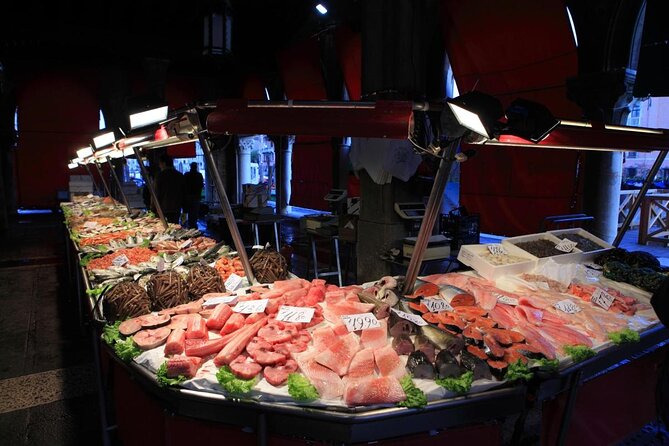
A two-hour Venice walk can go two ways: either you see a lot, or you understand what you’re looking at. This one does both. You start in the market zone and end in Piazza San Marco, but the real value is how the guide links the places—commerce leads to power, power leads to art, and art shows up in the details of everyday Venice.
I also like the pace. It’s short enough to feel doable on a tight schedule, but long enough for stops to make sense. You’re not just rushing from postcard to postcard; you’re learning why these spots matter in how Venice became Venice.
And yes, the guide matters here. Past groups emphasize that the leader is Venice-born, speaks excellent English, and brings a lot of structure to the stories—one reason the time tends to fly by.
You can also read our reviews of more walking tours in Venice


From Rialto market to Fondaco dei Tedeschi: commerce becomes story
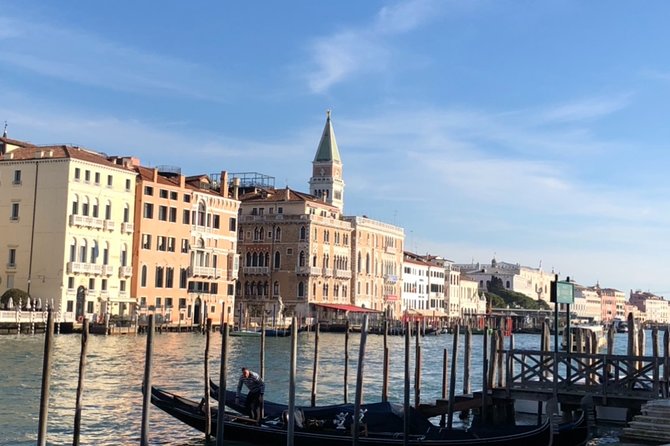
The experience begins at Rialto, near the famous market area. It’s a smart start because Rialto isn’t a single landmark—it’s a whole system: trading routes, wealth, and the daily rhythm of people moving goods and money.
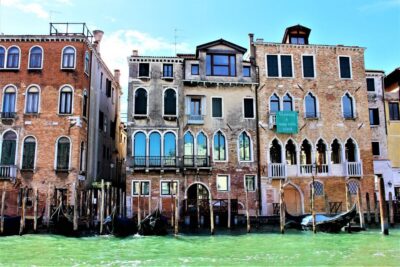
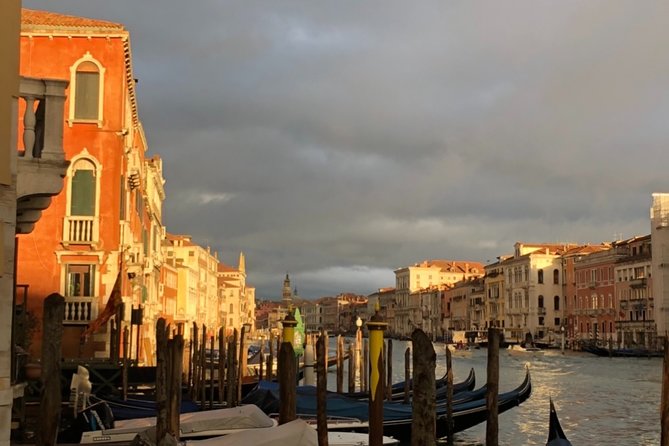
From there, you cross the historic bridge over the Grand Canal. It’s a quick visual lesson in scale. Venice’s “main street” isn’t a road; it’s the waterway, and the Grand Canal makes that obvious.
Then comes the Fondaco dei Tedeschi interior visit. Even if you think you know Venice already, this stop helps you connect the dots between the city’s merchant life and the buildings that grew around it. It’s the kind of place where architecture feels like a record of how the city functioned.
Marco Polo’s neighborhood feeling: where you slow down and look
After the Fondaco area, the walk moves toward the spaces associated with Marco Polo’s life. You’re not just passing by a name; you’re seeing the kind of neighborhood scale that makes Venice feel personal. Streets here don’t behave like grids, so your “view” comes from corners, bridges, and sudden openings toward water.
One of the best parts of a guide-led walk is exactly this: someone helps you notice what you’d otherwise miss. You get pointers on traditions and art in the way you move, not just what you stand and read.
Campo San Giovanni e Paolo and the Gothic-school vibe
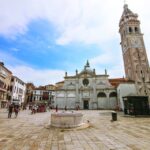
Campo San Giovanni e Paolo appears on the route as you head toward the San Marco end of the city. This area is useful because it shows a side of Venice that feels grounded and civic, not only ceremonial.
In the larger route, you also see the Gothic church of San Giovanni e Paolo (and the nearby large school in the same zone). It’s a helpful counterpoint to the more famous, museum-like atmosphere around Piazza San Marco. You get a clearer sense that Venice’s identity isn’t one style—it’s layered.
Libreria Acqua Alta: a water-smart Venice stop
One of the stops that really sticks is the library called Acqua alta. The route brings you there partway through the walk, before Piazza San Marco.
Why it matters: Acqua alta is Venice’s reality, not a tourist theme. A library that turns that problem into a setting captures the city’s practical creativity—how Venetians adapt, joke, and solve. If you care about how a place thinks as well as how it looks, this is the moment.
It also breaks the rhythm in a good way. You get a change of pace before the final push to the basilica and the busiest square in Venice.
You can also read our reviews of more historical tours in Venice




Piazza San Marco and St Mark’s Basilica: the rules you must plan for
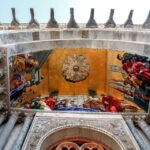
Eventually, you arrive in Piazza San Marco, where the guide helps you take on the basilica visit. This is where skip-the-line access matters most—Piazza San Marco is packed, and queues can eat your time.
A big practical heads-up: St Mark’s has strict entry requirements. Shoulders must be covered with a scarf, and legs must be covered up to the knee. You also can’t bring backpacks or large bags inside.
Another important point: inside the basilica, you won’t be able to take photographs or make videos. That’s not a minor detail here; it changes how you experience the space. You’ll rely on what your eyes catch in the moment and what the guide points out.
About the ticket: the information you’re given is a little mixed. One section notes skip-the-line and an admission ticket is included, but another clearly says the tour price does not include basilica entrance tickets and you must pay either in advance or on the spot. I’d plan for a separate basilica fee so you aren’t caught off guard.
Bartolomeo Colleoni statue and the San Giovanni e Paolo area break
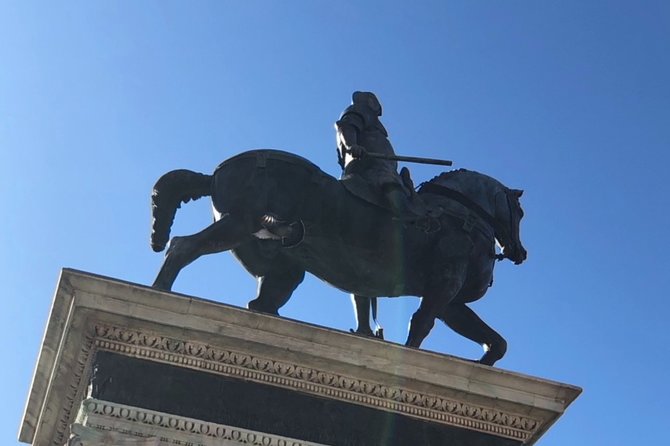
Not every stop here is about churches and interiors. You also see the equestrian statue of Bartolomeo Colleoni, a famous mercenary monument from the 15th century. It connects military power to artistic expression, and it’s tied to Venice’s political reach—Colleoni fought for Venice and Milan.
This portion of the walk also acts like a breather. You’ll have a chance for a short break (about 10 minutes) in the area. That matters because Venice walking adds up fast, especially if your day already includes other sights.
In the same zone, you can admire San Giovanni e Paolo again in context, which helps you build a mental map. The area is also associated with a large school of San Marco, adding another layer to what Venice “invested” in besides monuments.
What you’re paying for: $139.93 and how the value adds up
At $139.93 per person for roughly two hours, this isn’t the cheapest way to cover Venice. But it’s also not trying to sell you volume. The value is mostly in three places:
- Time-saving at St Mark’s: skip-the-line access can be worth a lot on a busy day.
- A local guide who explains: multiple comments point to strong English and a guide who uses visual aids (like a binder) to make architecture and history easier to understand.
- A smarter route: instead of only hitting the most obvious sights, the walk includes places such as Fondaco dei Tedeschi interiors and Acqua alta—stops that feel like part of Venice’s living culture, not only its postcard face.
There are also a couple of potential cost add-ons to factor in. The basilica entrance ticket may not be included in the base price, depending on how your booking handles it. You might also pay a day-tripper access fee on certain dates if you’re staying outside Venice—check the city’s official site linked in your booking details for the exact rules and exemptions.
Bottom line: you’re paying for guidance and structure. If you enjoy having someone translate the city’s “why” while you walk, this makes sense.
Private group + small practical comforts that matter
This is a private tour/activity, meaning only your group participates. That’s not just a nice-to-have. In Venice, small differences in pace and questions can make the difference between a frustrating day and a smooth one.
You’ll also get a mobile ticket, plus confirmation at booking. The meeting point is at Rialto (30125 Venezia VE), and you finish at St Mark’s Basilica in Piazza San Marco (328, 30124 Venezia VE). It’s helpful that the start is near public transportation, which makes it easier to “drop in” even if you’re switching between water buses and walking.
One note from past experiences: some groups report ending the tour with a small snack and spritz. That may not be part of every schedule, but it’s a nice detail to look out for when the day allows it.
Who this walk is best for (and who should skip it)
This works especially well if:
- you want a fast, guided overview that still feels meaningful
- you care about art and architecture but don’t want to read everything alone
- you’re visiting for the first time (or the second time, when you’re ready for the city beyond the top few stops)
- you’re traveling with kids who need the story told in a way that holds attention for a couple hours
You might want a different option if:
- you hate walking in short bursts all day (this route is mostly on foot)
- you’re not willing to follow St Mark’s dress rules and bag restrictions
- you don’t want any extra ticket payments beyond the base tour price
Should you book this Rialto to San Marco walk?
If your Venice time is limited, this booking is a strong choice. It’s short, private, and built around the kind of connections that make the city feel coherent—Rialto commerce, Venetian power, Gothic and civic corners, then the big final moment in St Mark’s.
I’d book it if you’ll take the basilica requirements seriously. Pack a scarf for your shoulders, and plan for no big bags. Also, budget for the basilica entrance ticket even if the listing is a bit unclear—better to show up ready than to scramble at the last second.
If you want Venice translated while you walk, this is one of the most practical ways to do it in two hours. A city like this rewards attention, and this route is designed for it.
FAQ
How long is the walk from Rialto to St Mark’s?
The tour is listed at about 2 hours.
Where do we start and where does it end?
You start in Rialto (30125 Venezia VE, Italy) and end at St Mark’s Basilica in Piazza San Marco (P.za San Marco, 328, 30124 Venezia VE, Italy).
Is this tour private?
Yes. It’s a private tour/activity, meaning only your group participates.
Do I need to pay for entry to the Basilica di San Marco?
The information provided indicates that the tour price does not include basilica entrance tickets, and you must pay either in advance or on the spot. At the same time, the basilica visit includes skip-the-line access, so plan for the entrance fee.
What should I wear to enter St Mark’s Basilica?
Your shoulders must be covered with a scarf, and your legs must be covered up to the knee.
Are photos or videos allowed inside the basilica?
No. You won’t be able to take photographs or make videos inside St Mark’s Basilica.
What if bad weather cancels the tour?
The experience requires good weather. If it’s canceled due to poor weather, you’ll be offered a different date or a full refund. You can also cancel up to 24 hours in advance for a full refund.