REVIEW · VENICE
Off the Beaten Path Walk in Venice
Book on Viator →Operated by deTourist Venice Valerio Coppo · Bookable on Viator
Two hours in Venice, off the main grid. This walk steers you into Dorsoduro’s quieter corners with canals, churches, and squares that feel lived-in, not stage-set. I especially liked the small-group pace, and how the guide (Valerio Coppo) reads the room and adjusts the route to your interests. The only real drawback is simple: you’re walking most of the time, so plan for steady steps and comfort shoes.
What makes it click is the mix of big-name Venice and the sidestreets between the postcards. You start near Ca’ Foscari and end near Punta della Dogana with views across the Giudecca Canal, plus stops that connect art, local routine, and even pop-culture moments. If you’re chasing only the absolute headline sights like San Marco, this tour won’t do that for you, and you may find it feels intentionally sideways—in the best way.
In This Review
- Key takeaways before you go
- Why Dorsoduro Feels Like the Real Venice
- Price and What You Actually Get for $92.92
- Start at Campiello dei Squelini: The Meeting Point That Sets the Tone
- Stop 1: Campiello dei Squelini and the View Into Ca’ Foscari’s World
- Stop 2: Ca’ Cappello and Venetian Gothic Details at Ca’ Foscari
- Stop 3: Inside San Pantalon for the World’s Largest Canvas
- Stop 4: Campo Santa Margherita and the Social Side of Venice
- Stop 5: Campo San Barnaba, Indiana Jones, and a Canal-Edge Moment
- Stops 6 and 7: Zattere Promenade Views, Molino Stucky, and Giudecca Canal Light
- Stop 8: Squero di San Trovaso and the Ongoing Craft of Gondolas
- Stop 9: Punta della Dogana and the Fortune Goddess Over the Water
- Who This Tour Is Best For (and Who Might Skip)
- Practical Tips to Make It Work Smoothly
- Quick Balance Check: What You Get vs. What You Don’t
- Should You Book This Off-the-Beaten-Path Venice Walk?
- FAQ
- How long is the Off the Beaten Path Walk in Venice?
- What does the tour cost?
- What language is the tour in?
- How large is the group?
- Where do I meet the guide?
- Is hotel pickup available?
- Is there a ticket or admission fee for the stops?
- What about the €5 access fee on some dates?
- What is the cancellation policy?
Key takeaways before you go
- A guide-led off-grid route through Dorsoduro instead of the usual rush to the top attractions
- Ca’ Foscari Venetian Gothic exterior shots plus context on university life in historic walls
- San Pantalon ceiling painting and a Banksy reflection you can actually spot on the street
- Zattere/Giudecca Canal views along a long promenade with 19th-century industrial architecture
- Squero di San Trovaso for a close look at gondola craftsmanship in working canals
- End at Punta della Dogana where customs-era buildings and baroque details share space
Why Dorsoduro Feels Like the Real Venice
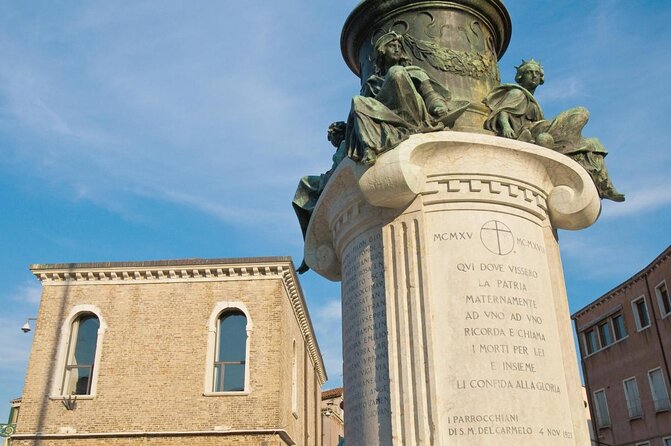
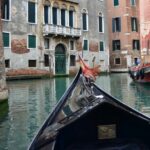
Venice is easy to visit badly. You can sprint from one crowd magnet to the next and never hear the city’s quieter rhythm. This walk is built to do the opposite, focusing on the parts of Venice that most people only glance at from bridges.
Most of the route lives in Dorsoduro, a neighborhood known for art, students, and local daily life. You’ll spend real time in campi and along canals, which means you get the views and the context for what you’re looking at.
You can also read our reviews of more walking tours in Venice
Price and What You Actually Get for $92.92
At $92.92 per person for about 2 hours, you’re paying for two things: a licensed guide and a route designed to avoid dead time. You’re not just buying entrance tickets or “a map with narration.” The stops are the point, and the guide’s job is to connect them in a way that makes the city make sense fast.
Also worth noticing: it’s capped at a maximum of 15 travelers. That’s small enough for questions, and big enough that you don’t feel like you’re on a private lecture. You’ll also see group discounts listed, and the tour is offered in English with a mobile ticket.
The walk is built around sites with admission ticket free at each stop (based on the provided info), so your cost stays predictable. If you’re trying to get the most value out of a limited Venice window, this is a strong option: you get a guided, coherent route without paying extra at every stop.
Start at Campiello dei Squelini: The Meeting Point That Sets the Tone
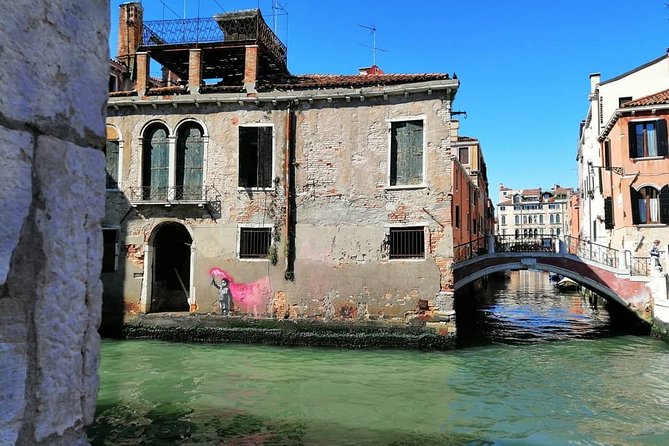
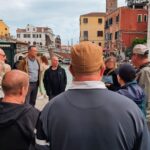
You meet at Campiello dei Squelini in Dorsoduro, under the trees. That matters more than it sounds. Starting in a campiello keeps the group together and makes it easier for you to orient yourself before you’re pulled onto narrower streets.
Pickup is possible, but only if you booked the private group option. If you didn’t, plan to meet your guide at the general start location. The tour notes that you’re near public transportation, which is helpful if you’re coming from elsewhere in Venice.
The tour uses a mobile ticket, and you should receive confirmation at booking time. Service animals are allowed as well, so you can plan without surprises on that front.
Stop 1: Campiello dei Squelini and the View Into Ca’ Foscari’s World
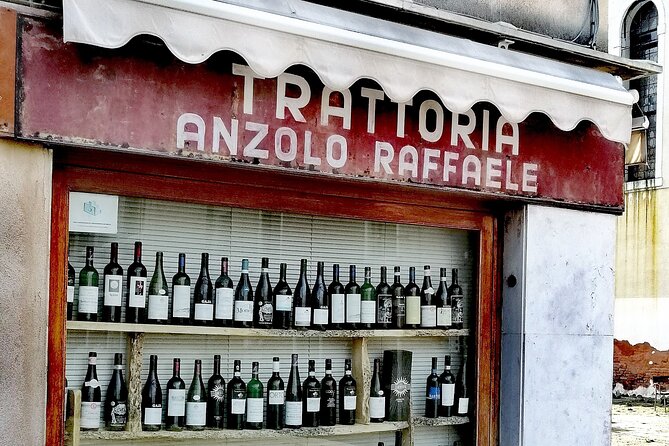
The walk begins in a charming campiello near Ca’ Foscari, with the Venice University headquarters inside a gothic palace on the Grand Canal. Even before you hit the deeper sidestreets, you’re getting placed in the city’s visual logic: stone, water, and architecture that never stays put.
From here, you explore Dorsoduro’s quieter feel—art around you, but also everyday life. This is a neighborhood where students and locals mix, so the mood isn’t purely tourist-clean.
Practical note: the stop is brief (about 15 minutes on the provided schedule), so don’t expect a long standstill for photos. Think of it as a setup—enough time to understand what you’re seeing and why it matters.
Stop 2: Ca’ Cappello and Venetian Gothic Details at Ca’ Foscari
Next up is passing by Ca’ Foscari itself—its Venetian Gothic style is the kind of architecture you can’t appreciate from a distance alone. You’ll see the stonework and those intricate details that make this palace more than a pretty façade.
Ca’ Foscari connects the city’s past to present-day life because it’s still used by the university today. That’s the key value here: you’re not just looking at old stone. You’re watching history function.
This is one of those stops where the guide’s storytelling pays off. When someone explains what you’re seeing, the building stops being a background postcard and becomes a place with a purpose.

Stop 3: Inside San Pantalon for the World’s Largest Canvas
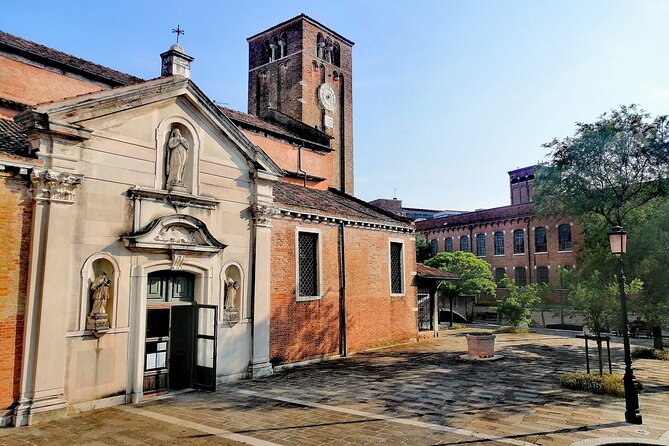
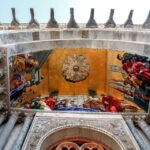
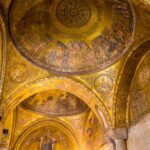
This is the stop that tends to make people pause mid-walk. You’ll visit the Church of San Pantalon, famous for having the largest painting on canvas in the world, covering the ceiling. It’s the kind of visual you can’t really “get” unless you look up and let your eyes adjust.
Right outside, the tour also points you toward Venice’s only Banksy graffito—reflected in the canal waters. That combo is what I like most about this route: it refuses to treat Venice like a museum warehouse. It puts modern street art next to centuries-old religious art, and somehow it feels natural.
One thing to consider: churches can be dim and busy even in quieter areas. Give yourself a moment to settle your eyes, and keep your phone brightness reasonable if you’re photographing.
Stop 4: Campo Santa Margherita and the Social Side of Venice
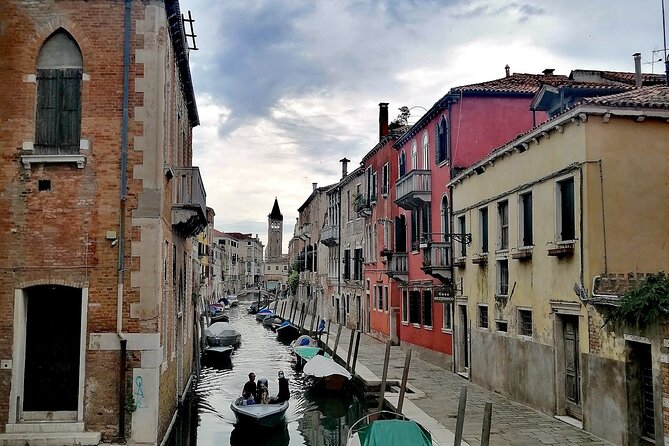
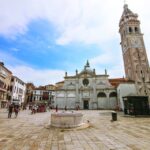
Campo Santa Margherita is one of Venice’s better-known squares—still, it tends to feel different when you arrive with context. This one is especially tied to evening energy, with cafés and outdoor seating that pull in locals and students.
Even if you’re not there at night, you’ll learn how the square works as a social stage: open space, surrounding buildings, and the canal-side rhythm that changes the mood as the day progresses.
The stop is shorter (about 10 minutes on the schedule), so think of it as a quick read of how Venice gathers people. Then you move on before the group fatigue hits.
Stop 5: Campo San Barnaba, Indiana Jones, and a Canal-Edge Moment
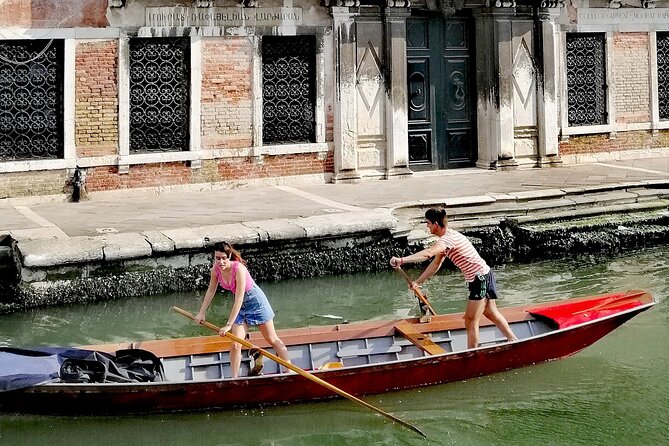
Campo San Barnaba has that sleepy, timeless quality that makes it feel like a film set that forgot about crowds. It’s known for its church and for an iconic Indiana Jones scene from The Last Crusade.
There’s also a Katharine Hepburn connection—this is the area tied to the moment where she famously fell into the water. It’s a perfect example of how Venice keeps recycling meaning: a place you’d normally treat as scenery becomes part of pop-culture memory.
You’ll also get a canal view from here, which is useful because it gives you a sense of scale. Venice isn’t flat; it’s layered. Seeing the waterline from a campo helps you understand how the city “sits” in space.
Stops 6 and 7: Zattere Promenade Views, Molino Stucky, and Giudecca Canal Light
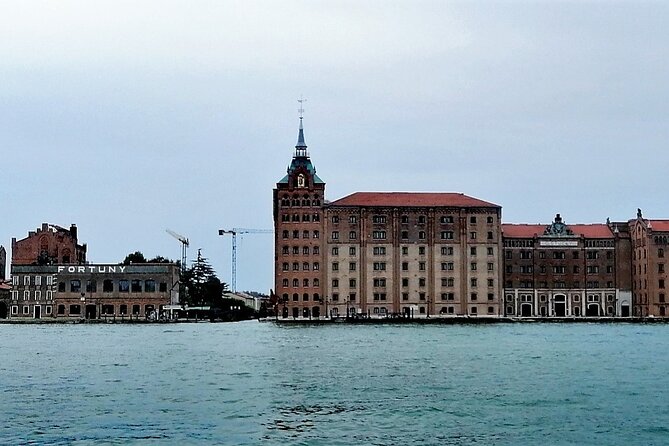
Then the route shifts into proper waterfront mode along Fondamenta Zattere. This area is tied to Venice’s maritime past, and the walk helps you connect the old work of steamers and terminals with what’s there now.
One highlight is the Molino Stucky building—an old flour mill transformed into a luxury hotel. Even if you don’t plan to step inside, you’ll appreciate the industrial architecture kept visible instead of erased. It’s a good reminder that Venice’s evolution didn’t stop at gondolas and palazzi.
From there, you walk a wide stretch of the fondamenta. This is where the provided background details really help. The Zattere name links to the rafts that carried wood, and earlier paving dates show how long this corridor has been in use. You’re basically strolling along an infrastructure story.
And the view is practical as well as pretty. The Giudecca Canal gives you wide angles that feel different from the tight lanes of central Venice. If you’ve been stuck behind crowds all morning, this stretch helps you breathe.
Stop 8: Squero di San Trovaso and the Ongoing Craft of Gondolas
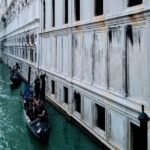
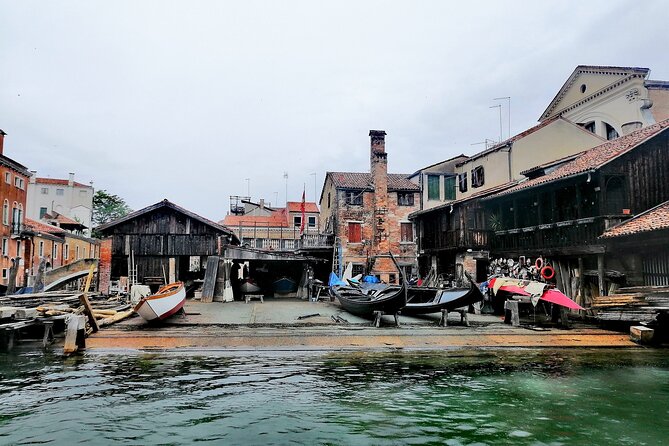
Now comes one of the most “you’re really in Venice” parts of the walk: Squero San Trovaso, a gondola boatyard. This is where traditional gondola craftsmanship happens in a small, canal-side space.
The value isn’t just that it looks picturesque. It’s that you’re seeing a working craft tradition rather than a staged show. The setting along the canals makes the experience feel intimate, with the sights and sounds of woodwork and gentle water movement.
This stop is short (about 5 minutes listed), so treat it like a quick but meaningful connection point. Look closely while you’re there, and don’t spend all your time filming if others are behind you.
Stop 9: Punta della Dogana and the Fortune Goddess Over the Water
The walk finishes at Punta della Dogana in Dorsoduro, and the tour description makes it clear this is a scenic landing spot. This tip of land is where the Grand Canal and the Giudecca Canal meet—so the setting is dramatic even in daylight.
You’ll stroll by a museum housed in an old customs building, then admire a baroque church and explore the Patriarchal Seminary of Venice. That cluster of uses in one area is a big part of what makes Venice feel layered: commerce, religion, learning—all in close reach.
And then there’s the highlight detail: the striking statue of the Fortune Goddess. It’s the kind of landmark you might not notice on your own, but with the guide’s pointing, it becomes a memorable “last image” for the day.
Who This Tour Is Best For (and Who Might Skip)
This is a great fit if you want Venice with fewer crowds and more texture. I’d especially recommend it if you like architecture, art details, and small moments—like ceiling paintings you have to look up at, or a canal reflection that only makes sense when you’re standing where the guide leads you.
It’s also good for first-timers who already feel a bit overwhelmed. The route gives you a coherent “other side of Venice” in a controlled 2-hour timeframe.
If your whole trip is built around bucket-list landmarks you’ve already mapped—San Marco nonstop, Rialto every hour—you might feel this route goes too far off your planned path. The tour is flexible, though, so if you want to steer it toward specific districts (like Cannaregio or Castello), ask early.
Practical Tips to Make It Work Smoothly
A few things can make or break a walking tour like this:
- Wear comfortable shoes. Venice surfaces can be uneven, and you’re on your feet for the full experience.
- Keep your camera ready but don’t block your guide. Short stops mean you’ll want quick, thoughtful shots.
- Plan your energy. It’s relaxed in pace and small in group size, but you’ll still be walking through real streets, not sidewalks.
- Bring curiosity. The best moments come from paying attention—up at church ceilings, toward canal reflections, and across water at the final stop.
Also, this tour books far in advance on average (about 122 days). If your dates are firm, don’t treat it like a last-minute add-on.
Quick Balance Check: What You Get vs. What You Don’t
What you get is a guided route that helps you read Venice like a local—quiet quarters, art-and-architecture context, and maritime views that add variety to the usual itinerary.
What you don’t get is a checklist sprint through the most famous monuments. This walk is for people who want a Venice day that feels personal and specific, not just photographed.
That’s why it earns its top marks: the guide’s personality and the way the route adapts to your interests matter as much as the sights.
Should You Book This Off-the-Beaten-Path Venice Walk?
If you’re looking for Venice that feels quieter and more real, I’d book it. The price makes sense for what you’re buying: a licensed guide, a small group (max 15), and a route that mixes Ca’ Foscari, San Pantalon, the Zattere promenade, a working gondola boatyard, and a strong finishing viewpoint at Punta della Dogana.
Do it especially if you enjoy architecture details and you like being shown exactly what to notice. Just make sure you’re comfortable with a steady walk for about 2 hours, and you’ll have a day that’s easier on the feet and better on the memories.
FAQ
How long is the Off the Beaten Path Walk in Venice?
It’s listed as about 2 hours.
What does the tour cost?
The price is $92.92 per person.
What language is the tour in?
The tour is offered in English.
How large is the group?
The maximum group size is 15 travelers.
Where do I meet the guide?
You meet in Campiello dei Squelini, 30123 Venezia VE, Italy, under the trees.
Is hotel pickup available?
Pickup is offered on request only for the private group option. Shared tour guests meet at the general meeting point.
Is there a ticket or admission fee for the stops?
The schedule lists admission ticket free for each stop.
What about the €5 access fee on some dates?
For certain dates, day visitors staying outside Venice may need to pay a €5 access fee. The details and exemptions are provided via https://cda.ve.it
What is the cancellation policy?
You can cancel for a full refund up to 24 hours before the experience starts.