REVIEW · VENICE
Murano: In Depth Glass Factory Guided Tour
Book on GetYourGuide →Operated by Wave Murano Glass - Factory, Tours and Experiences · Bookable on GetYourGuide
Murano glass-making is oddly calming to watch. I love the fact you see real masters shaping glass right in front of you, and I love the step-by-step factory walkthrough that explains what each room does. One key consideration: the tour is English only, so plan for that.
This is not one of those “look at a showroom” stops. You’ll get a focused, small-group visit (limited to 8) that runs about 50 minutes, and you’ll stand close enough to understand what’s happening—without the push to buy anything. The meeting point is in the company’s gallery, and you’ll be led to the factory after check-in.
In This Review
- The Big Idea: A Real Murano Workshop, Not a Showroom Play
- Key Things You’ll Notice Right Away
- Batch Room: From Sand and Chemicals to Glass-Ready Mix
- Hotshop: The 1400°C Heat Where Glass Turns Into Form
- Coldsop: Cutting, Drilling, Flattening, and Polishing in Plain Sight
- You Get Close, Ask Questions, and Stay Unrushed
- Where the Tour Actually Starts (And Why It Matters)
- Price and Value: Why $34 Feels Reasonable Here
- Who This Works Best For (And Who Should Skip It)
- A Quick Game Plan Before You Go
- Should You Book This Murano Glass Factory Tour?
- FAQ
- How long is the Murano in depth glass factory guided tour?
- How much does it cost?
- What is the group size?
- Is the tour guided in English?
- Where do I meet for the tour?
- What should I bring and wear?
- Are sandals or flip-flops allowed?
- What’s included in the tour?
- Is it okay to go if I have mobility limitations or epilepsy?
- What’s the cancellation policy and can I pay later?
The Big Idea: A Real Murano Workshop, Not a Showroom Play
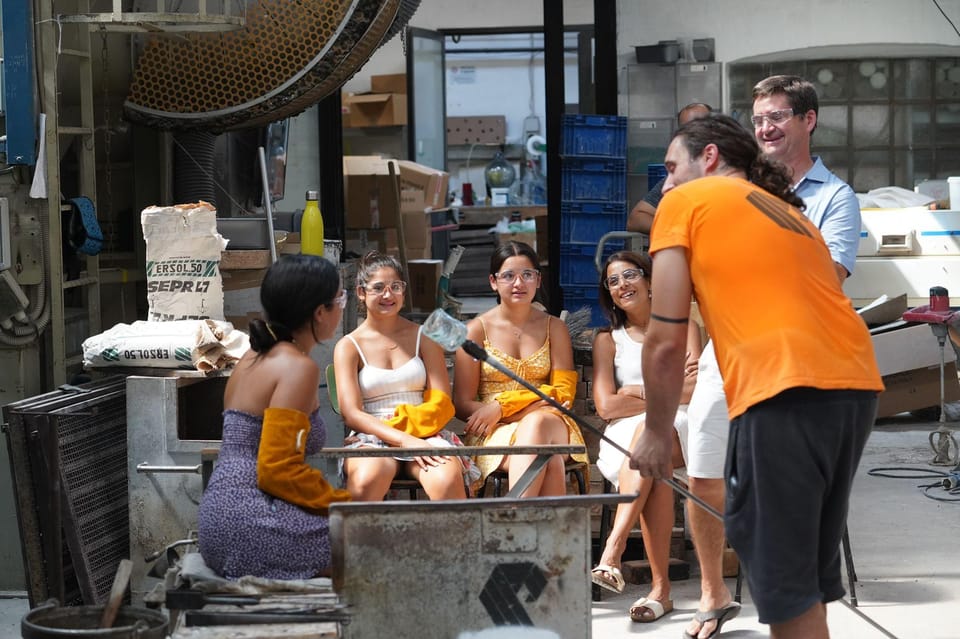
If your goal is to understand Murano glass beyond photos, this tour fits the bill. You’re taken through the process in the same order production happens: materials mixed, glass heated, then shaped and finished.
What makes it satisfying is that you don’t just hear general history. You get a practical look at how glass is made—from sand and chemicals to a finished piece that’s actually cut and polished.
Key Things You’ll Notice Right Away
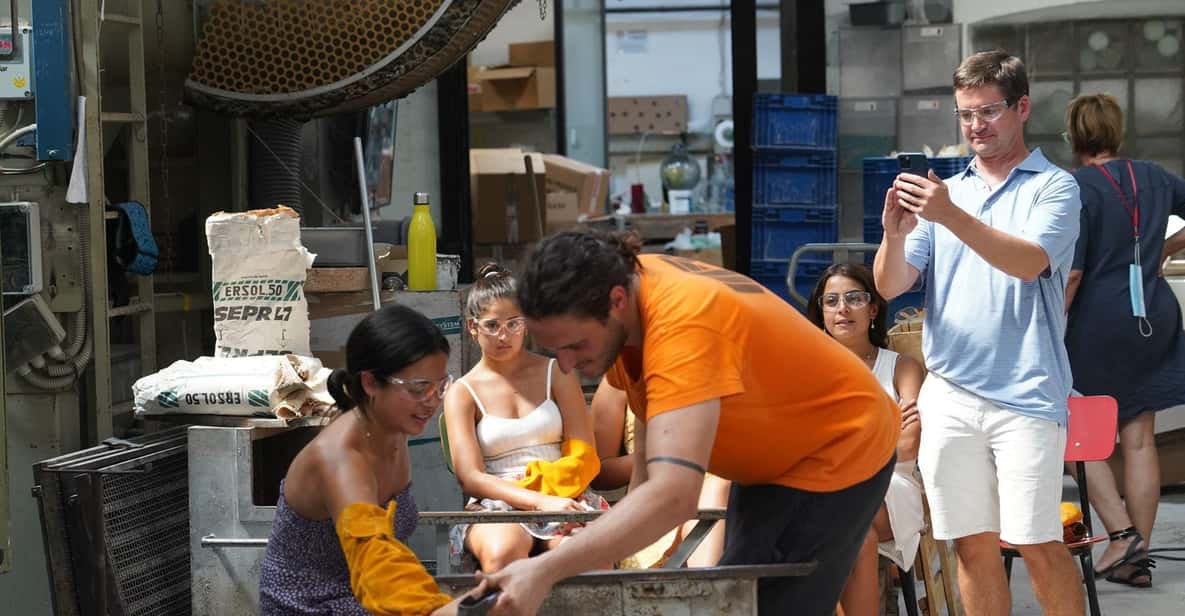
- Masters shaping glass live so you can watch the hands and the timing, not just finished products
- Three production areas: batch room, hotshop, and coldshop
- A clear, guided explanation of tools and what’s happening at each stage
- Small group size (max 8) so questions don’t get swallowed by the crowd
- Safety glasses included—you’re prepared for a closer look
You can also read our reviews of more guided tours in Venice
Batch Room: From Sand and Chemicals to Glass-Ready Mix
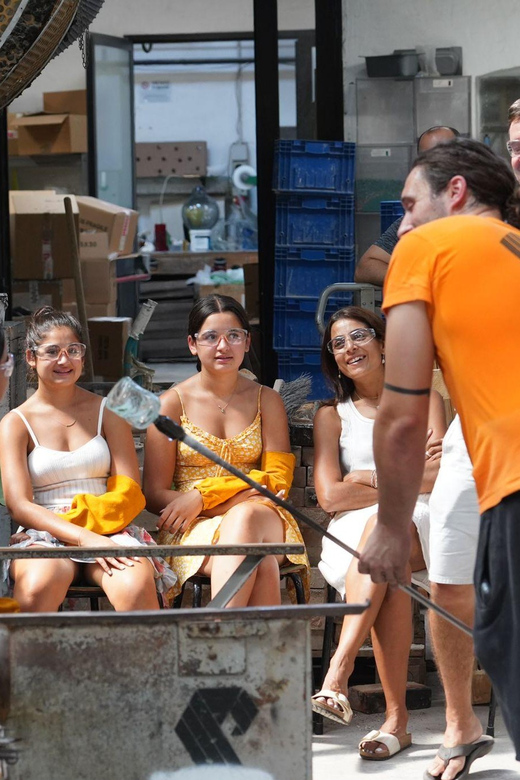
The tour starts in the batch room, the place where the raw ingredients become a glass-making mixture. This matters because it’s where the final “personality” of the glass begins. It’s not just sand thrown into a furnace and hoped for the best.
In this room, you’ll hear how sand and other chemicals are mixed to obtain a blend that will melt into glass once it’s charged into a very hot furnace. You’ll also learn about the furnace heat level—around 1400°C—which helps you understand why this step can’t be rushed. At that temperature, control comes from preparation and consistency, not guesswork.
Practical take: if you like watching people do hands-on work, this is the first “aha” moment. The batch room explains that glass starts long before anyone blows anything.
Hotshop: The 1400°C Heat Where Glass Turns Into Form
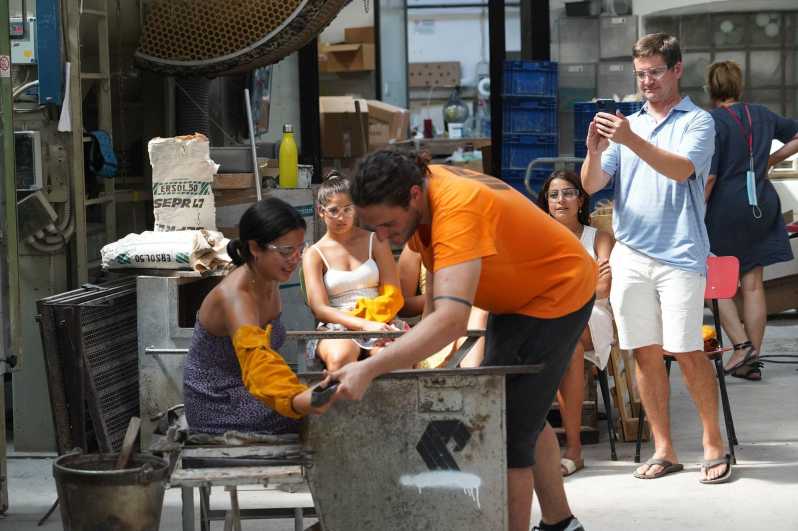
Then you move into the hotshop, where the temperature and the pace change. This is where the tour earns its wow factor, because it’s the step most people imagine when they think of Murano: heat, tools, and glass becoming something three-dimensional.
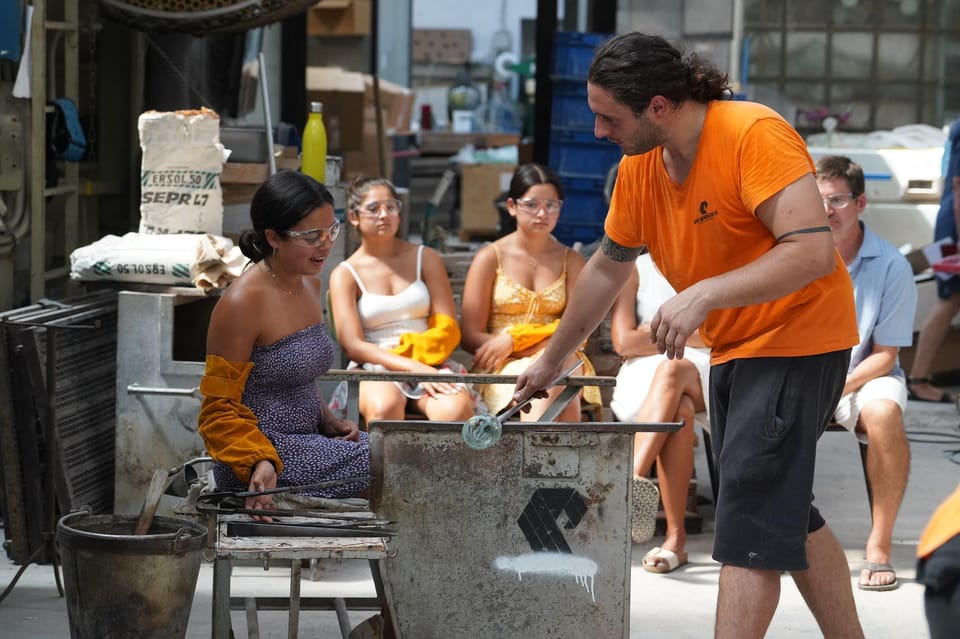
Here, you’ll get an overview of how furnaces work and how molten glass is handled. The explanation covers how the material goes from chemical mix to molten glass, plus what the glass masters use while working. You’ll see the tools used in the process and learn what they’re for, which makes it easier to follow what you’re watching.
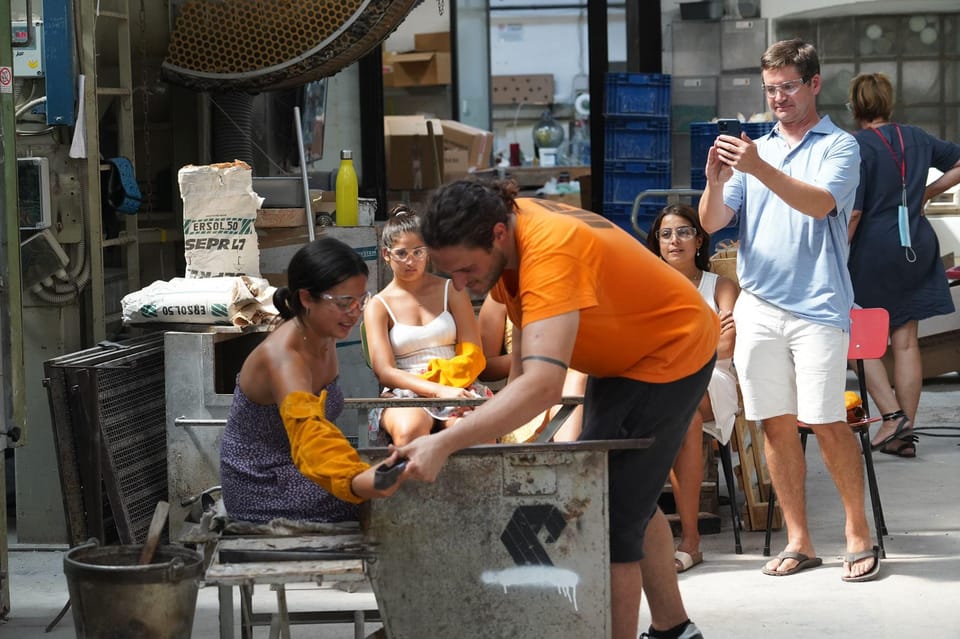
This is also where the live aspect really pays off. Being close enough to see the process helps you understand that glassblowing is part craft, part timing, and part steady control—especially when the material is cooling even as they work.
One small reality check: because heat and tools are involved, the experience is about observing and learning, not touching. That’s normal, and honestly it keeps the tour safer and more focused.
Coldsop: Cutting, Drilling, Flattening, and Polishing in Plain Sight
The last production stop is the coldshop. This is where the magic shifts from hot forming to shaping and finishing. If the hotshop is about getting the glass into a basic form, the coldshop is about turning that form into a refined object.
In the coldshop, you’ll see machines used to carve, drill, cut, flatten, and polish glass. Even if you’ve never seen a workshop like this before, you’ll start to notice how “detail” is a separate skill set from “creation.” It’s one thing to blow glass into a shape. It’s another to cut it cleanly, drill precisely, flatten evenly, and polish so the surface looks right from every angle.
This section also helps you connect what you’re seeing back to what you learned earlier. The glass starts with preparation, becomes molten and malleable, and then gets finished into something you’d actually want to own.
If you’re the type of traveler who buys books or watches process videos at home, this is the part that will keep you looking around even after the tour ends.
You Get Close, Ask Questions, and Stay Unrushed
One of the best values here is the format. The group is capped at 8 participants, and the visit is 50 minutes. That’s a sweet spot: long enough to make sense of the workflow, short enough that it doesn’t drag like a museum lecture.
The guide is live and in English, and the walkthrough is professional and step-by-step across all areas of the factory. That structure helps you follow the process without feeling lost. It also means your questions can land—especially on how different cooling stages and shaping steps work together.
A practical plus: you’re not on a “forced shopping route.” The experience is designed as a tour, not a sales script.



Where the Tour Actually Starts (And Why It Matters)
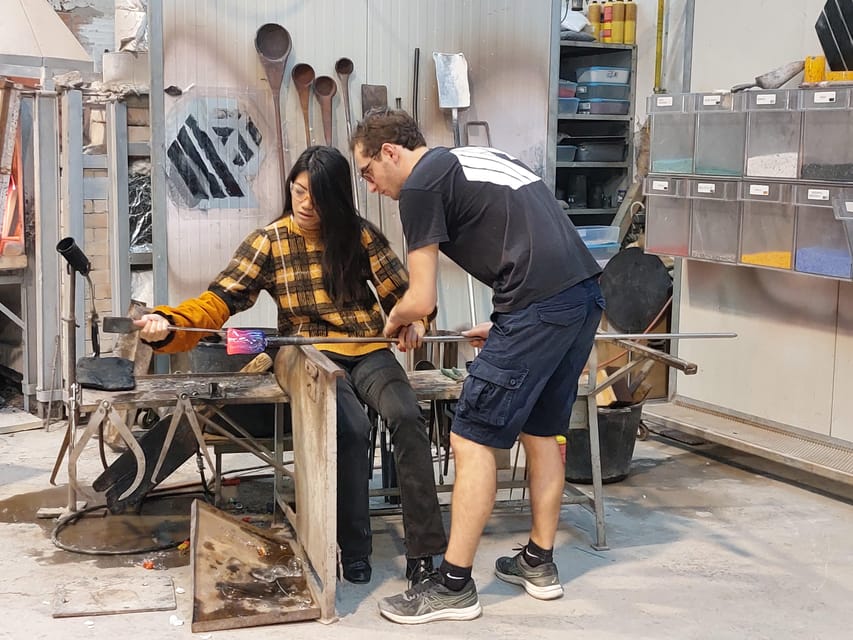
The meeting point is not inside the factory. You meet in the company’s gallery first for check-in, and then you’re led to the workshop afterward.
This matters for two reasons:
1) You’ll want to arrive a bit early to get checked in without stress. They ask for arrival about 5 minutes before the start time.
2) From Venice, travel time can be longer than people expect—sometimes around 50 minutes depending on where you are—so don’t schedule yourself like you’re hopping across town.
Plan to get there calmly, because the experience works best when you’re ready to pay attention from the first room.
Price and Value: Why $34 Feels Reasonable Here
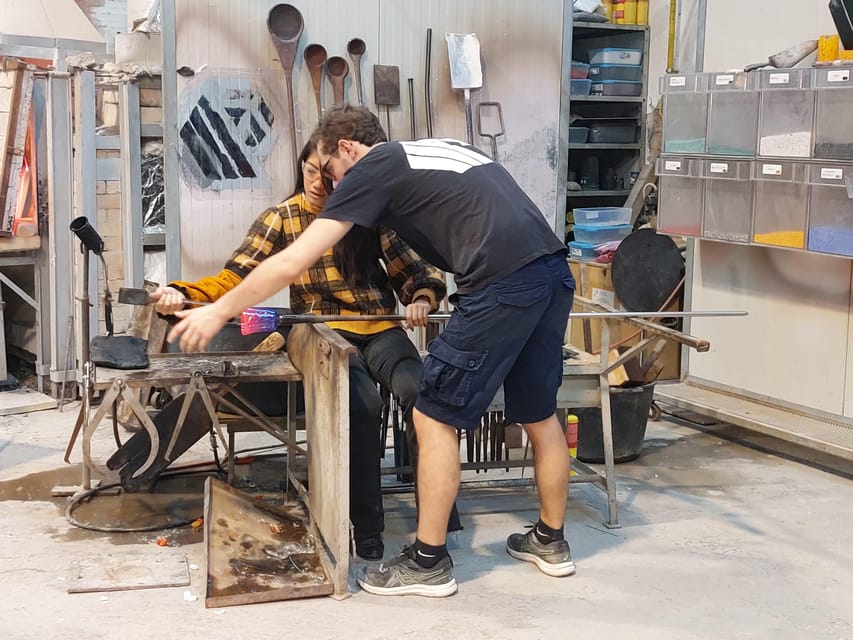
At $34 per person for a 50-minute guided tour, you’re paying for something specific: real factory areas, a guided walk through the production process, and the chance to see glass masters working up close.
This isn’t the kind of ticket you buy for a vague introduction. The tour is organized around the production sequence—batch room, hotshop, coldshop—and includes safety glasses. With only 8 people in the group, it also avoids the “drive-by viewing” feeling you get with larger tours.
If your travel goal is understanding craft and process, this pricing is in the “fair for what you get” category. If you only want a quick photo stop, you’ll likely find it more satisfying to skip and spend your time elsewhere. But if you want Murano glass to make sense, the cost matches the content.
Who This Works Best For (And Who Should Skip It)
This is a strong fit for:
- You if you’re curious about how things are made—especially process-heavy crafts
- You if you want close-up viewing without a hard sell to buy
- You if you like structured tours with clear room-to-room explanations
- You if you’re traveling in a small group and want time for questions
It’s not suitable for:
- People with mobility impairments
- Wheelchair users
- People with epilepsy
- People with a cold
Also remember the clothing rules: you’ll want comfortable, closed-toe shoes. Sandals and flip-flops are not allowed.
Finally, since the tour is only led in English, this is best if you’re comfortable following spoken instruction that’s moving at a real working pace.
A Quick Game Plan Before You Go
Here’s how to set yourself up for a smooth experience:
- Wear closed-toe shoes you can stand in comfortably
- Plan extra time for getting from Venice to Murano
- Arrive at the gallery check-in point a few minutes early
- Skip alcohol/drugs before the tour (they’re not allowed during the experience)
Once you’re there, let the room order do the work. Start with the batch room, let the hotshop explain the heat, and use the coldshop to connect finished detail back to the earlier steps.
Should You Book This Murano Glass Factory Tour?
I’d book it if you want the real process: sand and chemicals becoming glass, heat turning it molten, and machines finishing it into something precise. The small group size, close viewing, and clear room-by-room explanation are the big reasons this tour feels worth it.
I wouldn’t book it if English-only tours are a problem for you, or if you need accessibility support (mobility impairments, wheelchair users, and people with epilepsy aren’t suitable). If you’re chasing a relaxed, wandering art stroll, this is more focused and practical—less “gallery browsing,” more “factory in action.”
If that matches your travel style, this is one of the best ways to understand Murano glass without getting trapped in the usual tourist rhythm.
FAQ
How long is the Murano in depth glass factory guided tour?
The tour lasts about 50 minutes.
How much does it cost?
It costs $34 per person.
What is the group size?
The tour is a small group limited to 8 participants.
Is the tour guided in English?
Yes. The tour is only led in English.
Where do I meet for the tour?
You meet in the company gallery for check-in. The tour is not in the factory at the meeting point, and you’ll be led there afterwards.
What should I bring and wear?
Bring comfortable shoes and wear closed-toe shoes.
Are sandals or flip-flops allowed?
No. Sandals or flip-flops are not allowed.
What’s included in the tour?
Safety glasses are included for all participants.
Is it okay to go if I have mobility limitations or epilepsy?
No. The tour is not suitable for people with mobility impairments, wheelchair users, or people with epilepsy. It is also listed as not suitable for people with a cold.
What’s the cancellation policy and can I pay later?
There is free cancellation up to 24 hours in advance for a full refund. You can also reserve now and pay later to keep your travel plans flexible.