REVIEW · VENICE
Secrets of Venice Carnival and Life of Casanova Tour
Book on GetYourGuide →Operated by Venice Events srl · Bookable on GetYourGuide
Casanova and Carnival street life make a sharp combo. This 2-hour walk led by an English guide in Venetian costume pairs Casanova’s love-and-luck stories with what you can really see during Venice Carnival, including mask traditions and period costumes. I especially like how the tour grounds big 18th-century personalities in real places (like where Casanova lived and where Giorgio Baffo played matchmaker) and how you get practical detail on how masks are made. One possible drawback: if the group is large and it rains, the narrow calle can make it harder to hear every word.
I also like that the ending isn’t an afterthought. You finish at a café near St Mark’s area for a hot cappuccino and a Carnival-only pastry called frittelle, which is exactly the kind of sweet reset Venice does best. Just note it’s not built for wheelchair access, and oversize luggage isn’t allowed.
In This Review
- Key things I’d circle before you go
- How Casanova’s love life fits Venice Carnival so well
- Meeting at Teatro La Fenice: a guided walk that starts with mood
- The first streets: San Samuele and the two houses that anchor the story
- Palazzo Contarini del Bovolo: a stop that adds architecture to the drama
- Carnival masks: what they meant, and what you learn about making them
- 17th-century costumes and the Grand Ball world
- The Ridotto and Venice’s pleasure economy
- The cappuccino and frittelle finish at Le Café Venezia
- Price and value for an $88, 2-hour Carnival walk
- Logistics to consider: group size, weather, and how not to lose track
- Who should book this Secrets of Venice Carnival and Life of Casanova tour
- Should you book? My practical call
- FAQ
- How long is the Secrets of Venice Carnival and Life of Casanova tour?
- Where do I meet for the tour?
- Is the tour guided in English?
- What is included in the price?
- Where does the tour end?
- Is it okay to wear a costume or mask?
- Is the tour suitable for wheelchair users?
- Are oversize bags allowed?
- Does the tour include anything related to skipping lines?
- Is free cancellation available?
Key things I’d circle before you go
- Casanova’s Venice, told through real streets near La Fenice and the San Samuele area
- Carnival mask history plus how masks are made
- Passage-by stories: Casanova’s house and Giorgio Baffo’s home tied to “worldly pleasures”
- 17th-century costumes and private-palace Grand Ball culture
- A warm finish: cappuccino and Venetian frittella in a local café about 10 minutes from St Mark’s Square
How Casanova’s love life fits Venice Carnival so well
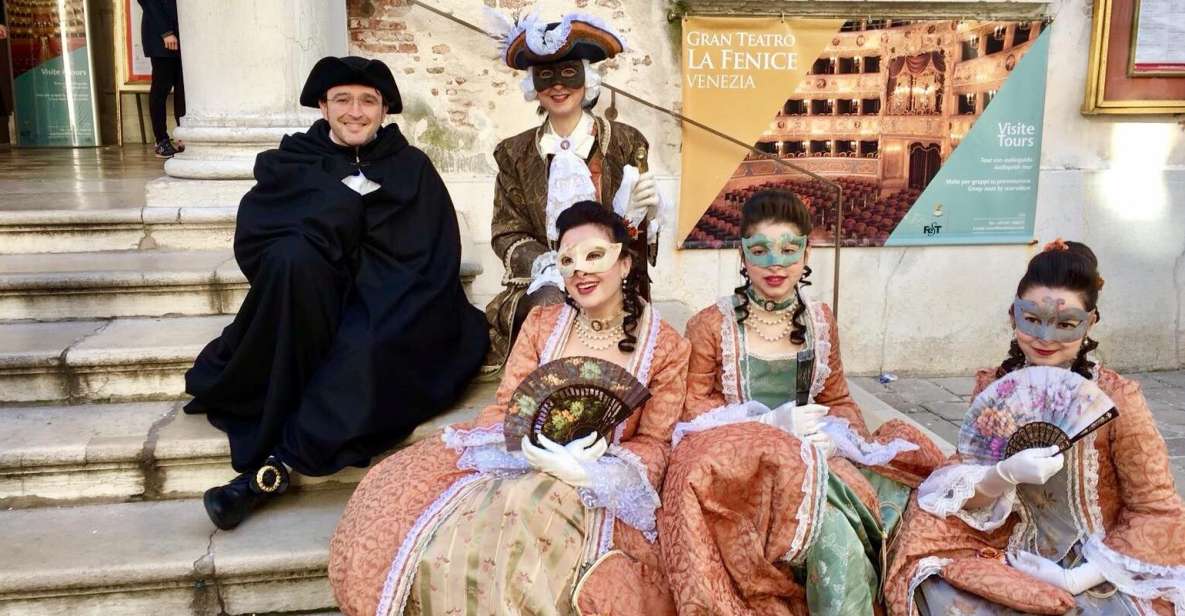
Venice Carnival isn’t just costumes and photos. It’s also a time when identities blur on purpose, and that theme connects perfectly to Giacomo Casanova. You’ll be walking with the idea that Venice gave him the stage for charm, schemes, and social climbing, then using the Carnival lens to explain why masks mattered.
What makes this tour feel different from a standard “Venice highlights” stroll is the angle: it links the theater of Carnival to the theater of Casanova’s era. That means you’re not only hearing what people wore—you learn why they hid, what happened in the city’s pleasure spaces, and how the rules of polite society were bent for entertainment.
Also, the tone helps. Based on how guides have been described, the best sessions lean on humor and brisk storytelling. If you get someone like Sergio (often called The Swiss), you can expect a guide who keeps the group moving and the facts landing without sounding like a lecture.
You can also read our reviews of more tours and experiences in Venice.


Meeting at Teatro La Fenice: a guided walk that starts with mood
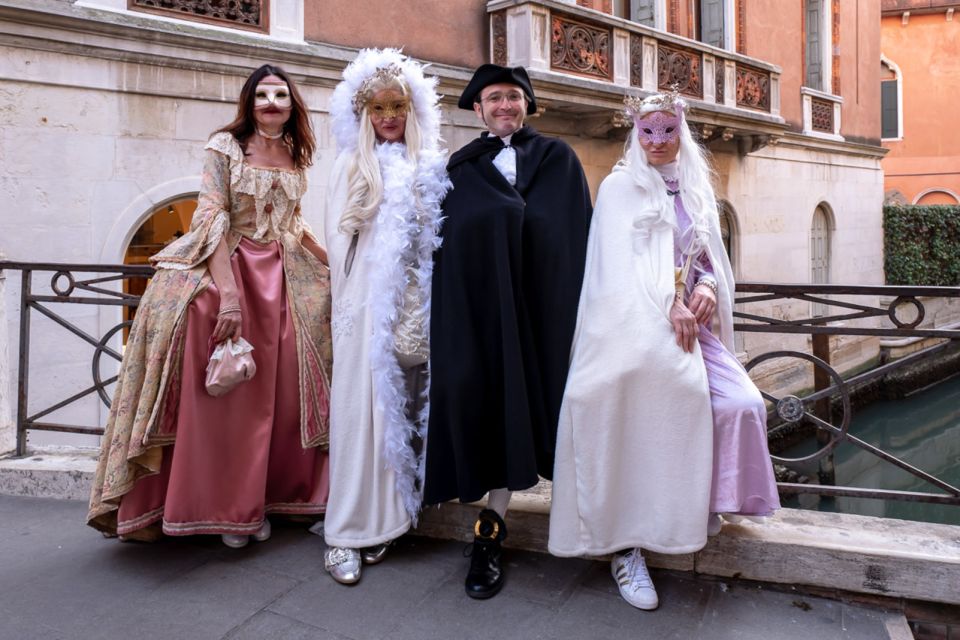
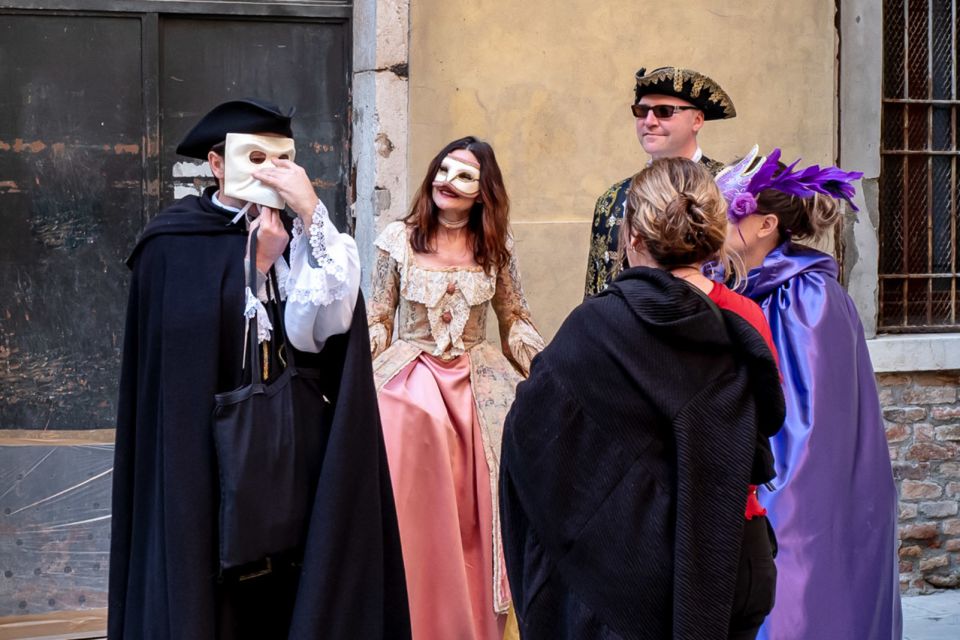
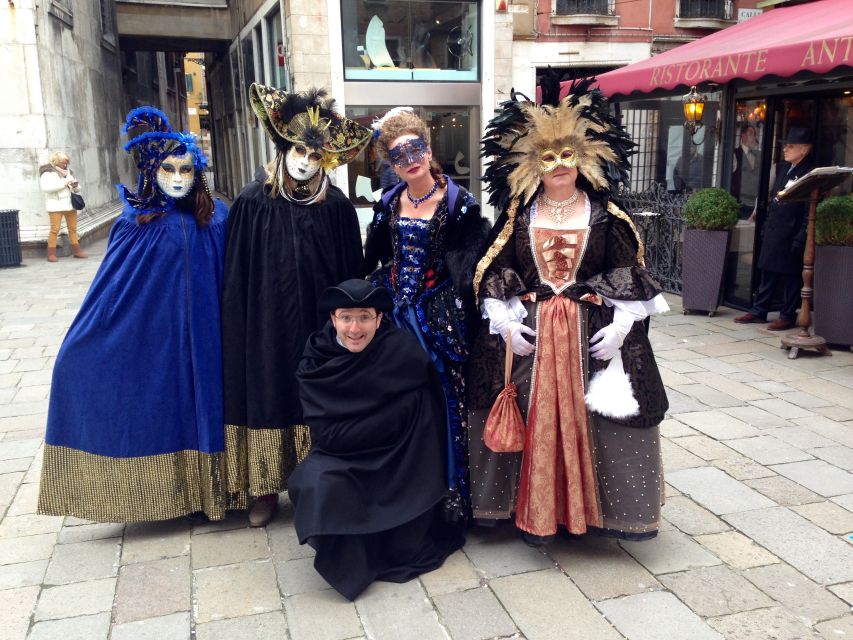
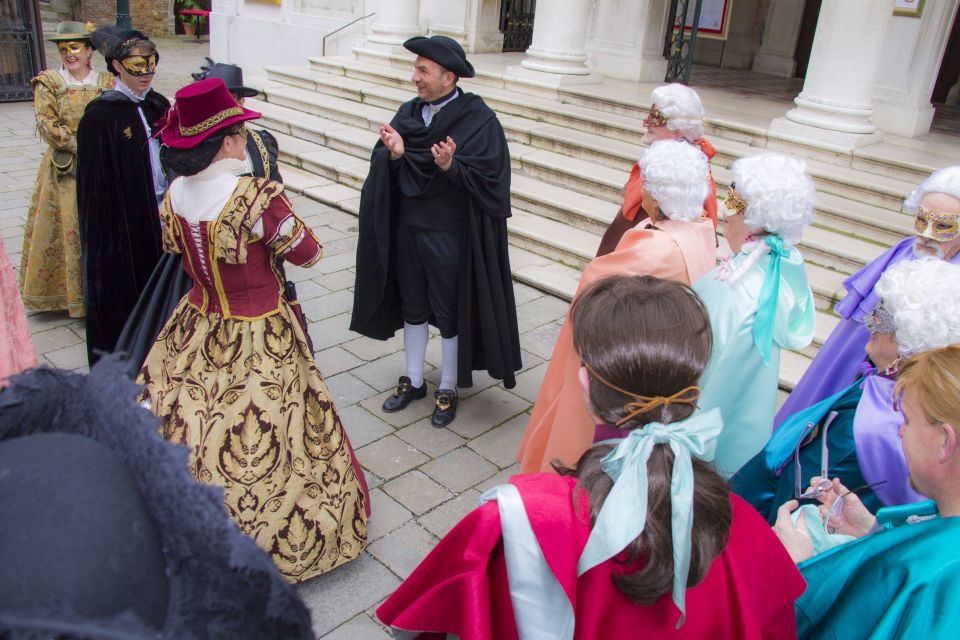
You meet in Campo della Fenice, right in front of Teatro la Fenice. It’s easy to spot, because the guide comes dressed for Carnival. If you’re looking for a quick way to get into the spirit, this is it: the tour doesn’t start after you’ve decided you’re in a “costume mood.” It starts in costume.
If you’re arriving from St Mark’s Square, the directions are detailed: pass under the arches near the Correr museum, continue along the salisaza San Moisè, cross the bridge near the Hotel Bauer area, then head along calle larga XXII Marzo. Turn onto calle della Vesta, cross the small bridge, and look for the well in Campo della Fenice. Look for the sign with the tour name.
Practical tip: bring a warm layer even if the sun is out. Venice streets get damp fast, and Carnival crowds mean you’re often standing still at listening stops.
The first streets: San Samuele and the two houses that anchor the story
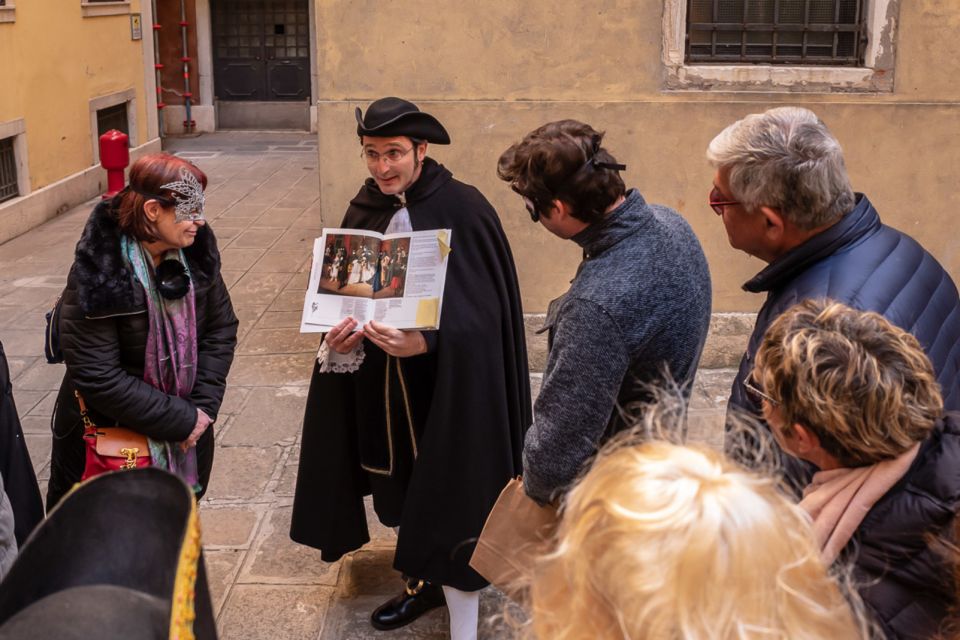
As you walk, you’re not just following directions—you’re moving through Casanova’s social map. The route takes you through narrow calle that pass his home area in San Samuele, then to the house of Giorgio Baffo, the poet who introduced a young Casanova to the city’s worldly pleasures.
That matters because Casanova is famous enough that people expect vague “Casanova vibes.” This tour is different: you’re given specific place points and told why those connections mattered. Even if you know only a little about him, you’ll start recognizing how Venice’s neighborhoods acted like stages for different kinds of people.
You’ll also hear about courtesans and how they helped keep the city’s social calendar rolling. That’s a key part of understanding Venice in that era: the romance wasn’t only private. It was part of the city’s entertainment ecosystem.
Palazzo Contarini del Bovolo: a stop that adds architecture to the drama
One of the notable stops along the walk is Palazzo Contarini del Bovolo. Even if you don’t go inside, it’s a great “Venice you can’t fake” kind of location: ornate, historic, and tied to the idea of display—who goes where, who’s seen, and who has access.
For this kind of tour, architecture isn’t decoration. It’s context. You’re listening for the story behind the stone: private spaces, public prestige, and why the city worked so well for social games.
If you’re traveling with someone who likes photos, this is also a good place to slow down and frame the scene. The tour’s focus on costumes and pleasure culture means your camera will find a reason to turn on.
Carnival masks: what they meant, and what you learn about making them
Masks are the center of gravity for Venice Carnival, and this tour treats them that way. You’ll learn the history of Venetian masks—especially the idea that they could hide identity. In practical terms, that’s how Venice could host flirtation, performance, and mischief without everyone needing to be “accountable” in the usual way.
You’ll also learn about the traditions of the Carnival and—this is the part I’d highlight—how masks are made. That shifts the experience from “cool costume” to “craft with a purpose.”
Why that matters for your enjoyment: when you understand what’s behind a mask, you’ll look at people’s costumes differently. Even if you’re mostly there for sightseeing, you’ll walk away with a better sense of what the mask is doing socially, not just visually.

17th-century costumes and the Grand Ball world
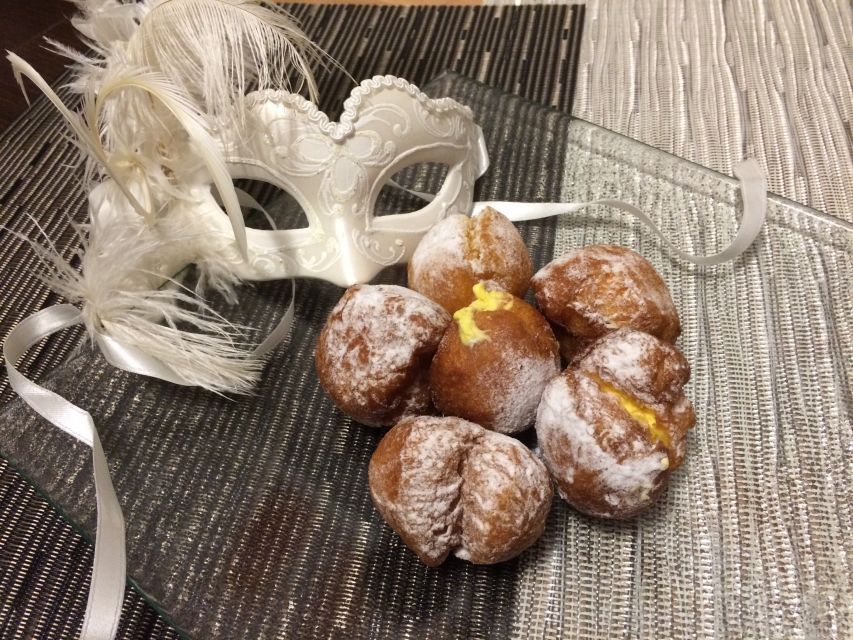
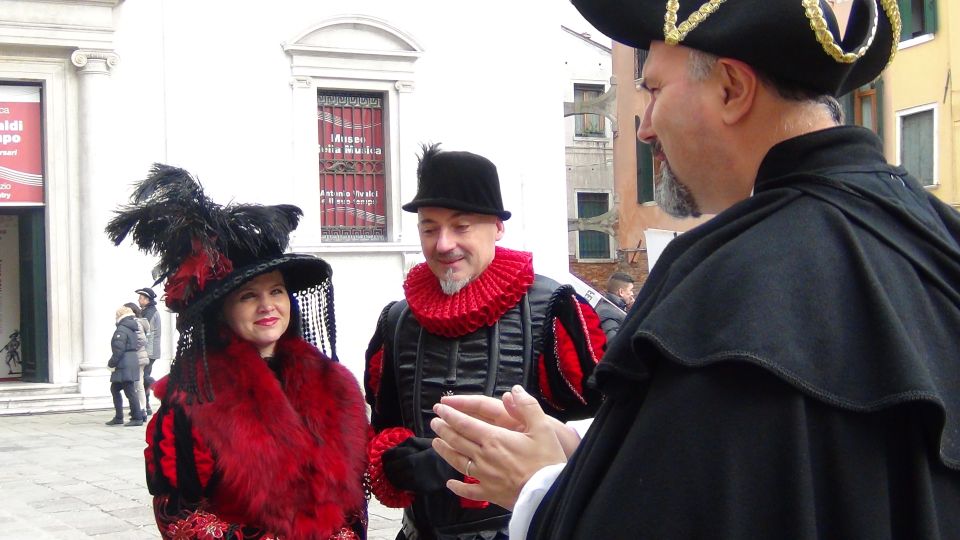
You’ll see references to flamboyant, elegant costumes from the 17th century, the kind designed for streets and spectacle. And you’ll hear how people attended Grand Balls in private palaces—Venice’s version of exclusivity, performed for entertainment.
This is where the tour turns from history into atmosphere. Venice Carnival can feel chaotic if you only see street scenes. With the stories provided, you start sorting what you’re looking at: street parades, social ceremonies, and the costume logic behind each.
If your ideal Venice day includes a bit of theater—people dressed like characters, walking like they’re in a scene—this portion will fit you well.
The Ridotto and Venice’s pleasure economy
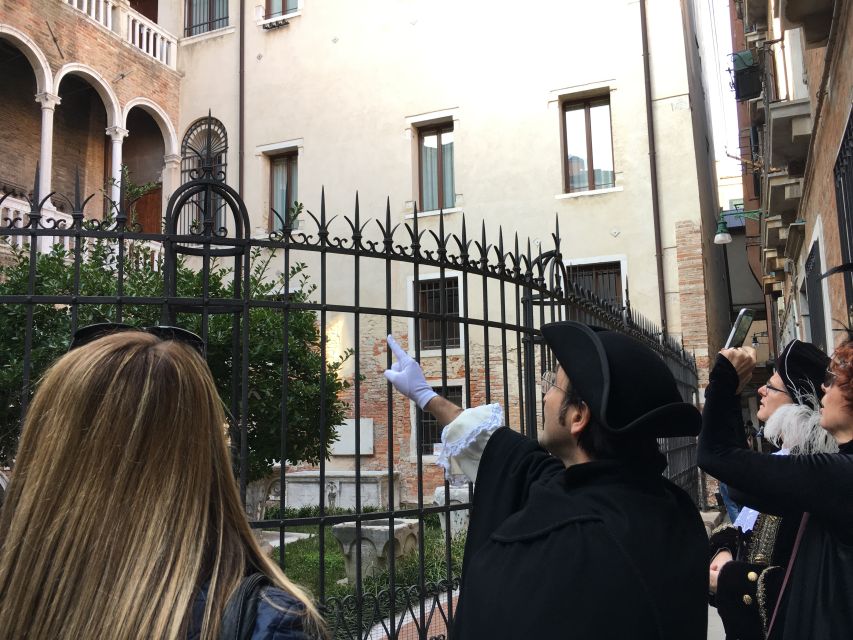
Another key thread: the Ridotto, described as the first casino in Venice, where Casanova would have met members of the Venetian aristocracy. Hearing this on the street, in the flow of your walk, helps you understand how pleasure spaces worked in that era.
It’s not just “men gambled.” It’s that these venues were social hubs. They created a structured environment for display, conversation, and risk. When you pair that with what you learn about masks and anonymity, you get a clearer picture of why Carnival and Casanova belonged to the same Venice story.
You’ll also hear about people like courtesans and how they contributed to the city’s animated social rhythm—again tying the famous name to the everyday mechanics of Venice life.
The cappuccino and frittelle finish at Le Café Venezia
The tour ends at Le Café Venezia, roughly a 10-minute walk from St Mark’s Square. This is the smart move: you’re done with the walking story, you’ve soaked up the atmosphere, and now you warm up with something local.
You’ll have a hot cappuccino and a Venetian Carnival cake called frittelle. The best part is timing: it’s a pastry made during the Carnival period, so it feels like a true seasonal finish rather than a random snack stop.
Also, this café ending gives you a chance to reset before you head back out into crowds. If you like a little conversation after the main walking segment, the end time tends to allow for it, since the guide is there and the group can settle.
Price and value for an $88, 2-hour Carnival walk
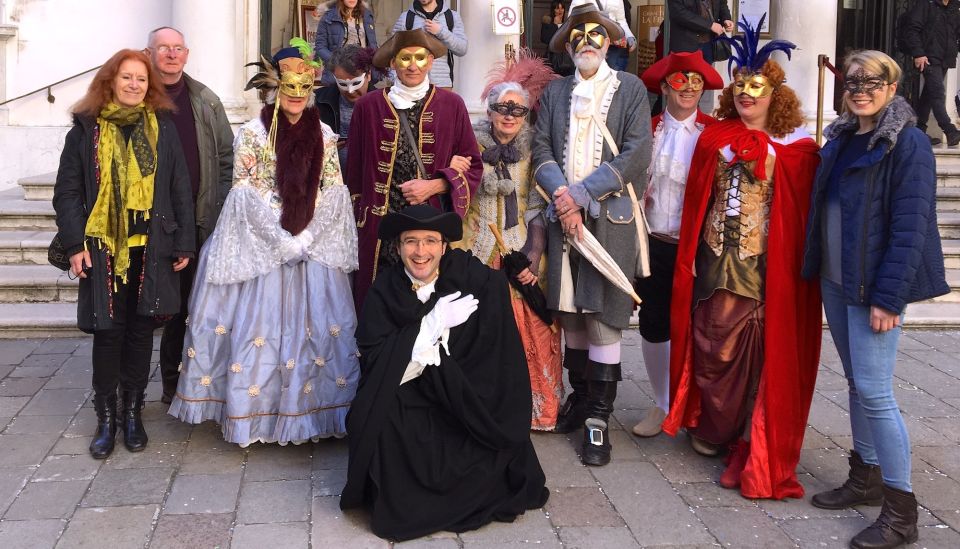
At $88 per person for about 2 hours, you’re paying for three things at once: an English-speaking guide in Carnival costume, a guided walking route that ties together Casanova and Carnival traditions, and food included (cappuccino plus frittelle).
That’s meaningful value because you’re not paying separately for the storytelling or the seasonal snack. In a city like Venice, even a short guided walk with a strong theme can cost more if it doesn’t include refreshments.
Here’s the real value question to ask yourself: do you want a themed Venice experience with context, or do you mainly want a flexible wander? If you want structure—Casanova, masks, and where these stories took place—this price is easier to justify.
Logistics to consider: group size, weather, and how not to lose track
This is a walking tour through narrow streets, so you should expect regular stopping and standing. If the group is on the larger side, you may find that hearing is tougher—especially in rain when umbrellas rustle and damp air deadens sound.
If you’re sensitive to audio, pick a position near the guide when you can. Wear a warm jacket. If rain hits, keep your hood or umbrella close so it doesn’t block the view or your ability to listen.
End-of-tour note: the tour finishes at the café, not at your exact starting doorstep. That’s normal for a “point A to point B” walk, but it’s worth keeping in mind so you don’t plan on using the finish spot as your only departure point.
Who should book this Secrets of Venice Carnival and Life of Casanova tour
Book it if:
- You like Venice Carnival but want more than costume photos
- You’re a Casanova fan, or you want an easy entry point to his era
- You want mask history and craft details, not just basic background
- You enjoy guided walks that use backstreets instead of only the main squares
Skip it if:
- You need wheelchair access (it isn’t suitable)
- You’re traveling with oversize luggage
- You hate standing and listening in small-to-medium crowds
This tour works great for couples, friends, and solo travelers who want a curated story while still walking like a local.
Should you book? My practical call
If you’re choosing one Venice Carnival-themed walk, this is a solid pick because it ties together Casanova, Venice masks, and Carnival street culture in a way that feels coherent. The included cappuccino and frittelle make the ending feel genuinely Venetian, and the guides have a strong track record for humor and keeping people engaged.
I’d book it if you’re comfortable walking and listening for about 2 hours, and you’re up for narrow calle and occasional standing. If you’re coming during bad weather or with hearing concerns, dress for warmth and position yourself well near the guide. Otherwise, you’ll get a fun, story-driven Venice day with a warm finish near St Mark’s.
FAQ
How long is the Secrets of Venice Carnival and Life of Casanova tour?
The tour duration is 2 hours.
Where do I meet for the tour?
Meet in Campo della Fenice, in front of Teatro la Fenice. Look for the guide with the tour sign.
Is the tour guided in English?
Yes, it’s an English-speaking live tour guide.
What is included in the price?
You get an English-speaking guide dressed in Carnival costume, plus a cappuccino and frittella in a local coffee shop.
Where does the tour end?
The tour ends at Le Café Venezia, about a 10-minute walk from St Mark’s Square.
Is it okay to wear a costume or mask?
Yes. The information encourages guests to come in Carnival costume or a cape with a mask for fun and photos.
Is the tour suitable for wheelchair users?
No. It’s not suitable for wheelchair users.
Are oversize bags allowed?
Oversize luggage is not allowed.
Does the tour include anything related to skipping lines?
The activity description states skip the ticket line.
Is free cancellation available?
Yes. You can cancel up to 24 hours in advance for a full refund.