REVIEW · VENICE
Verona Guided Tour from Venice by Train
Book on Viator →Operated by Amigo Tours Spain · Bookable on Viator
Verona feels close, but you must leave early. I like that the price includes train tickets from Venice and back, so you skip the schedule brainwork. I also love the guided walking tour that hits the key Roman and medieval sights in a sensible route, then gives you time to wander. The main drawback is that the day runs tight, so if you want extra monument entry time, you’ll need to choose carefully.
Starting from Venice Santa Lucia at 6:45 am, you’ll ride north, meet your guide near Verona Porta Nuova, and learn as you walk. The tour uses a mobile ticket, keeps groups to a maximum of 30, and runs with an English/Spanish guide team. If you hate early alarms, plan a calm breakfast the night before.
In This Review
- Key points at a glance
- Why Verona from Venice feels like the right kind of shortcut
- Getting there by train: early start, low stress
- Porta Nuova to Porta Borsari: the Roman gate that explains the city
- Arena di Verona and Piazza Bra: where the city turns Roman big
- The only Roman bridge left: Ponte Pietra over the Adige
- Piazza delle Erbe: the center where layers overlap
- Free time in Verona: how to use it without rushing
- Price and value: $79.79 that’s only a bargain if you value guidance
- Language, guide style, and what to do if you want more narrative
- Who should book this Verona day trip (and who should skip it)
- Should you book this Verona guided day trip from Venice?
- FAQ
- What time does the tour start in Venice?
- How long is the Verona guided day trip?
- What is included in the price?
- What languages are the guides?
- Do I get a mobile ticket?
- Is there an extra Venice access fee on some dates?
- Is free cancellation available?
Key points at a glance
- Return trains are included, which makes a Verona day feel effortless from Venice.
- You get a guided loop through the center instead of aimless wandering or map fumbling.
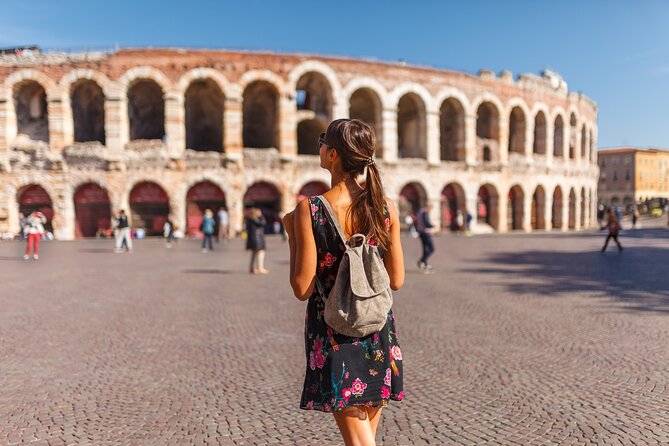
- Arena di Verona and Piazza Bra give you big-scale Roman atmosphere without needing a car.
- Porta Borsari and Ponte Pietra offer the kind of details you’d miss on your own.
- Free time is real, but it’s still a day-trip pace—plan your must-dos first.
Why Verona from Venice feels like the right kind of shortcut
Verona is one of those Italian cities that feels compact when you’re there, but it can be a pain to organize when you’re basing yourself in Venice. This day trip is built for that exact problem. You handle one simple move (train), and then you get a guided walk that organizes the “what to see” part for you.
Two things make it especially appealing. First, you’re not paying extra just to move around—the trains are included. Second, the guide focuses you on the center’s standout Roman and historic stops, so you don’t waste your limited hours guessing which streets are worth your time.
The trade-off is time. You won’t have a full slow-day in Verona. You’ll be on a schedule, and monument entry beyond the included stops is not part of the price, so you’ll want to decide what you’d rather spend money on (or skip).
You can also read our reviews of more guided tours in Venice

Getting there by train: early start, low stress
The trip starts at 6:45 am from Stazione di Santa Lucia in Venice. That early meeting time is not subtle. If you’re used to Venice mornings where everything starts a little later, this day trip will feel like you’re “cheating the sun.” Still, there’s a payoff: you arrive early enough to walk the city center before it gets crowded.
From your perspective, the win is simplicity. The tour provides the train tickets, so you don’t have to wrestle with timetables, seat types, or ticket validation. You also don’t have to add extra transportation costs on top of the tour price.
Once you’re in Verona, you’ll meet at Stazione Ferroviaria Verona Porta Nuova (the tour notes it has been renovated after being built in the 1910s). Then you’ll walk up toward the center. This little transition matters because it sets the tone: you’re not stepping out and immediately hunting for your bearings. Someone is guiding that first “orientation” stretch.
A small heads-up: one review noted that the overview-style walking tour can feel like a route with a script instead of a conversation. That’s not guaranteed, but it’s a useful reminder. If you have questions, ask them. Guides tend to respond well when you show interest.
Porta Nuova to Porta Borsari: the Roman gate that explains the city
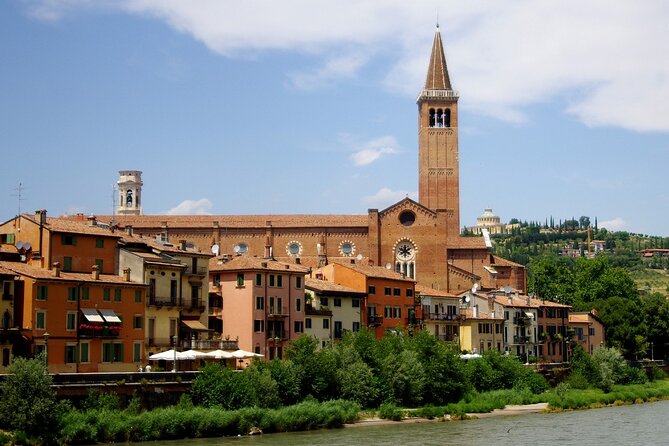
After meeting near Porta Nuova, you’ll begin the guided part of the day with roughly an hour of walking in the center. This is where the tour’s value shows up. Verona’s best parts are not far from one another, but they can be confusing to place without context.
One of the highlights is Porta Borsari, the old gate in the city walls. The construction dates back to the 1st century AD, and the name ties to soldiers who collected tariffs at the entrance—borsari. That kind of detail turns a “wow, an old gate” moment into a story about how the city worked.
Here’s why I think this stop is worth including on a day trip: it connects layers. You’re seeing Roman infrastructure, but you’re also starting to understand how Verona developed into the medieval city you picture from guidebooks and Shakespeare references. Even if you don’t love Roman stuff, the gate gives you a clean anchor point for the rest of the walk.
Arena di Verona and Piazza Bra: where the city turns Roman big
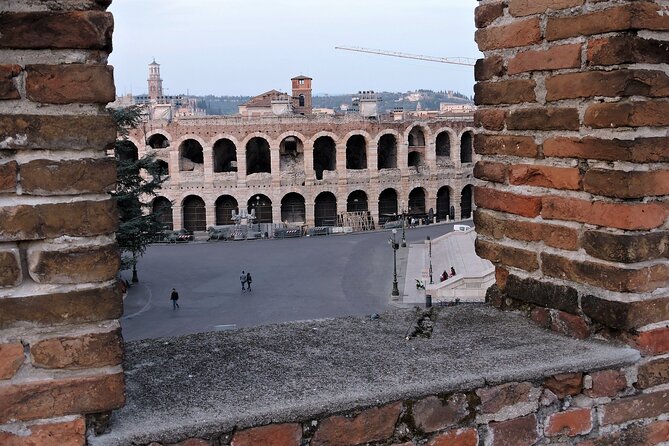
Next up is the ancient Roman amphitheater, known for today’s performances. The tour highlights that it holds about 22,000 spectators and that it’s used for operas and concerts. Even if you don’t buy a separate ticket to go inside, the scale lands fast. You can stand there and feel how central this structure is to the city’s identity.
Then you move into Piazza Bra, which the tour describes as one of the largest squares in Italy. It also notes that it wasn’t treated as a square until the first half of the 16th century. Today, it’s the social center, with bars and restaurants nearby.
This combo works well on a guided day trip because the guide can connect the dots between the Roman monument and the modern gathering space around it. You’re not just ticking off “amphitheater” and “square.” You’re seeing how Verona uses its ancient bones for everyday life.
One practical tip: take a moment to locate where you’d head if you were doing this on your own later. Piazza Bra is a good “mental map” spot. After that, your time in Verona starts feeling less like chaos and more like a controlled wander.
The only Roman bridge left: Ponte Pietra over the Adige
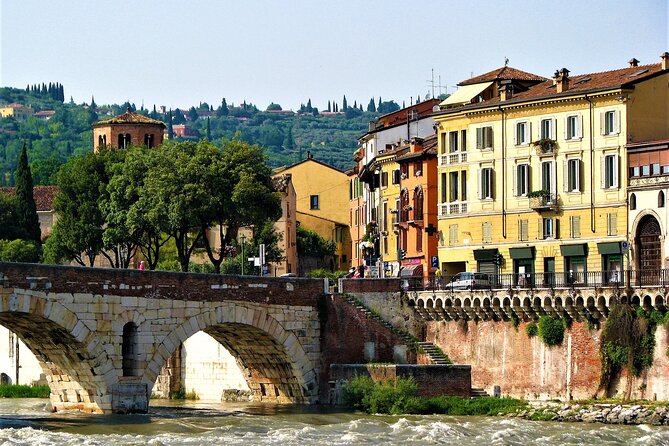
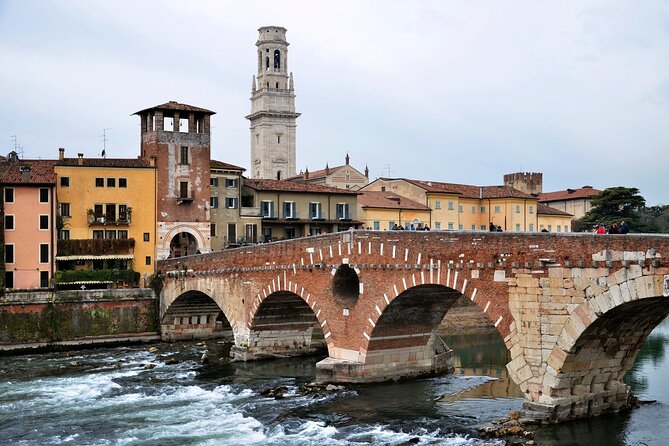
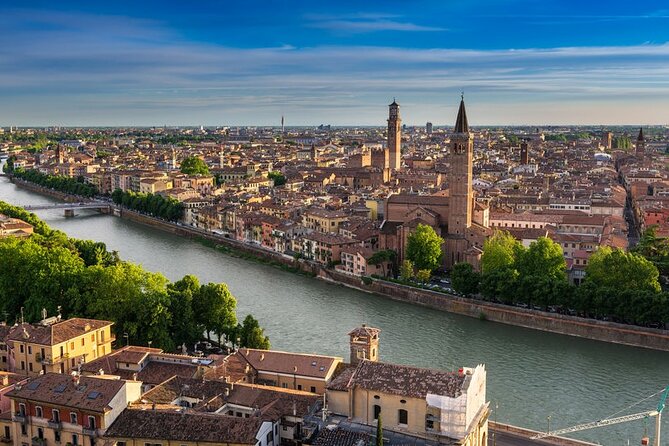
The tour also includes Ponte Pietra, described as the only Roman bridge left in the city, with five arches. It connects the city center with the opposite shore, where the Castle of San Pietro is located.
This is a great stop for a day trip because it gives you a perspective shift. Up to this point, you’re mostly inside the city’s historic core. A bridge forces you to look both directions—into the city streets and back toward the Adige River.
If you like taking photos or just watching how locals move through a place, this is a good moment to slow down. You’ll have a sense of the river’s role in Verona’s layout right away.
Piazza delle Erbe: the center where layers overlap
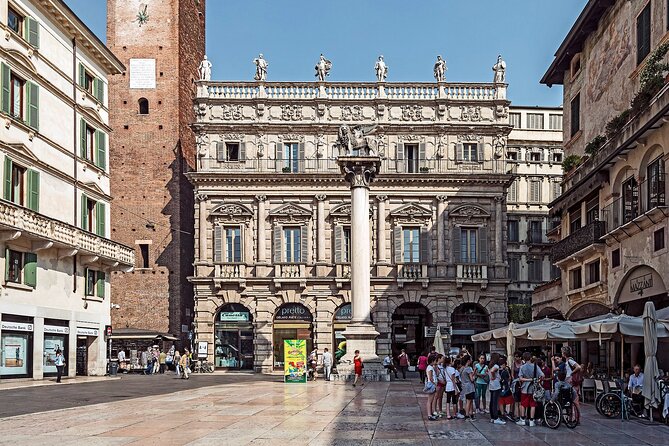
The tour’s last major spotlight is Piazza delle Erbe. The details here matter. The tour describes the square’s architectural legacy as mixed—Roman, Baroque, and medieval buildings—and it notes that the Roman forum used to be here.
That’s a key point. A square like this isn’t only scenery. It’s where different eras literally share the same ground. If you’re spending only a day in Verona, you want at least one place where you can see the city’s layers without hopping between far-off neighborhoods. Piazza delle Erbe is built for that.
Also, this is where the day-trip rhythm changes. Earlier stops feel like “guided highlights.” Piazza delle Erbe and the surrounding streets are the moment you can steer your free time toward what you enjoy most—people-watching, a snack break, or a slow walk to reframe what you just learned.
Free time in Verona: how to use it without rushing
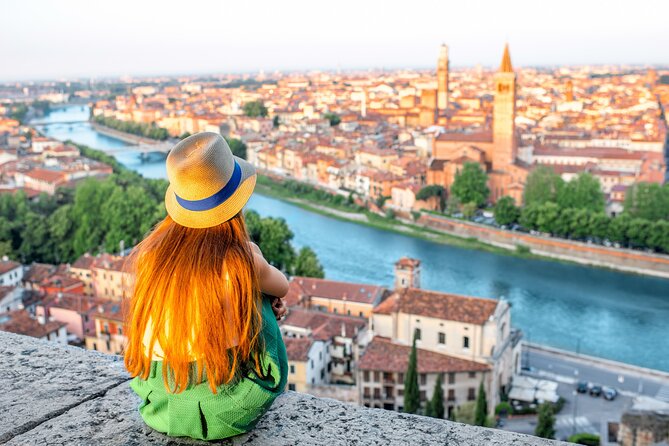
After the initial guided walk, you’re given time to spend as you prefer. The exact minutes can feel different depending on how the group moves and how the guide paces things, but the important reality is simple: you have enough time to see one or two extra things, not enough to “do everything.”
Here’s how I’d use it:
- Start with one personal goal. Maybe that’s another photo stop near what you just saw, or a café break in the center.
- Use Piazza Bra or Piazza delle Erbe as your base for wandering. The tour includes both, and they’re central enough that you won’t feel stuck.
- If you’re planning monument entry elsewhere, pick it now. The tour notes that entrances to other monuments are not included.
A past comment mentioned that the free time can be too short to visit something additional. That’s believable on an itinerary like this. So don’t assume you’ll be able to add a ticketed stop at random. Decide what matters most before you arrive.
Price and value: $79.79 that’s only a bargain if you value guidance
The price is $79.79 per person, and the tour includes train tickets round-trip plus a professional guided tour (English and Spanish). That changes the math. You’re not just paying for walking. You’re paying to outsource transportation planning and get a structured “see the best stuff” route.
What’s not included is important: entrances to any other monuments are not part of the price. That means if you want to pay for interior access, you should budget extra. If you’re the type who prefers viewpoints and street-level sightseeing, you can get more value out of this format because the included stops cover plenty of “look and learn” moments.
The tour is also set up for scale. It has a maximum of 30 travelers, which helps the group move without feeling like a packed bus stuck in old streets. It’s a sweet spot for many people: guided enough to be helpful, small enough that you can still ask questions.
One more value angle: this is booked about 122 days in advance on average. That doesn’t guarantee anything, but it’s a clue that the early train day-trip concept sells. If you’re traveling in peak season, booking ahead is a safe move.
Language, guide style, and what to do if you want more narrative
Your guide will run in English and Spanish. In one set of experiences, the guide team also managed help in Italian, which is a nice bonus when you’re traveling as a mixed-language group. Either way, the key is that you’re not stuck with silence or only written signage.
Now the balanced part. One review criticized the guide approach as mostly moving from place to place with a script and not much added narrative. That doesn’t mean all tours are like that, but it does mean you should show up prepared to get the most out of a guided day.
If you want richer storytelling, do this:
- Ask one question when you arrive near the first stop (Porta Borsari is a great opener).
- If you’re not sure where something fits, say so. Good guides adjust when someone asks.
- If you prefer freedom over structure, you may feel the walking pace more than others. In that case, save your top ticketed interest for a separate self-guided half-day later.
Who should book this Verona day trip (and who should skip it)
This tour is a strong match if you want:
- A fast, organized overview of Verona’s Roman and central highlights
- A day trip that feels manageable from Venice
- Guided context that helps you understand what you’re looking at
It’s also a good fit for people who like public-transport travel. The tour ends where it starts, and it returns you to Venice the same day.
You might want a different plan if you:
- Want lots of free time for ticketed museum-style visits
- Prefer ultra-detailed storytelling at each stop and don’t like “route” tours
- Are sensitive to early mornings. Starting at 6:45 am is the biggest hurdle.
Should you book this Verona guided day trip from Venice?
I’d book it if your goal is simple: see the core of Verona without building an itinerary from scratch. The included return trains make the biggest difference, and the included sights hit the themes Verona is famous for—Roman structures, the city center, and Shakespeare-adjacent atmosphere.
If you’re flexible and happy to treat free time as browsing time (not a full second tour), this works well. If you want a long, deep, slow Verona day with multiple interior tickets, then consider holding out for a longer stay or a different format that gives you more breathing room.
One final reality check: the day trips can be canceled in some situations due to logistics or minimum traveler requirements. The good news is that the tour offers free cancellation up to 24 hours in advance for a full refund, so you can book with less stress and adjust if plans change.
FAQ
What time does the tour start in Venice?
The tour starts at 6:45 am at Stazione di Santa Lucia in Venice.
How long is the Verona guided day trip?
It runs about 7 hours 30 minutes (approx.).
What is included in the price?
The price includes train tickets from Venice to Verona and back, plus a professional guided walking tour.
What languages are the guides?
The guided tour is offered in English and Spanish.
Do I get a mobile ticket?
Yes, you’ll receive a mobile ticket.
Is there an extra Venice access fee on some dates?
On certain dates, most travelers staying outside Venice who are visiting for the day may need to pay a €5 access fee. Details and exemptions are listed here: https://cda.ve.it
Is free cancellation available?
Yes. You can cancel up to 24 hours in advance for a full refund.