REVIEW · VENICE
Palladio. A wonderful live tale through time&soul, from Ve/Pd/Vr
Book on Viator →Operated by Palladian Routes · Bookable on Viator
One beautiful day, and suddenly Palladio makes sense. This private Venice-to-Vicenza trip turns Palladian architecture into a story you can actually follow across famous buildings, courtyards, and streets. I especially like how the day links big ideas (past, present, future) to specific places, not vague talking points, and how the guide keeps the mood human with a “live tale” style.
My second favorite part is the hands-on feel: you get to see the details up close, then slow down for standout moments like the Teatro Olimpico and the chance to ride to Villa La Rotonda by E-bike (when offered). The main drawback to think about is timing and ticket rules: Villa La Rotonda and Villa Foscari have entry excluded, and La Rotonda access depends on seasonal dates and the day of the week.
In This Review
- Key highlights worth booking
- Why this Palladio day trip feels different
- Price and what $612.81 per person buys you
- Getting there from Venice: pickup, vans, and timing
- Vicenza UNESCO core: Villa Chiericati to Palazzo Valmarana Braga
- Villa Chiericati, The Door of Time (no entry)
- Palazzo Valmarana Braga: private reception and fresco focus
- Piazza dei Signori and Basilica Palladiana: the city’s “living room”
- Piazza dei Signori: patrician salon views
- Basilica Palladiana: terraces + arcades + goldsmith craft
- The Loggia contrast: Vicenza and Venice
- Strada Maior and Palazzo Chiericati: architecture as daily life
- Strada Maior: “little Rome” vibes
- Museo Civico di Palazzo Chiericati: portraits of the men behind the architect
- Teatro Olimpico: the show that makes Palladio feel alive
- Contrà Porti: where history and Reformation-era ideas meet
- Palladio Museum: models that make villas understandable
- Private aperitif in the Palladians’ loggia: a calm, classy landing
- The big variable: Villa La Rotonda and Villa Foscari entry rules
- Villa La Rotonda by Andrea Palladio: “Temple of Man” (entry excluded)
- Villa Foscari: another Palladio stepping-stone (entry excluded)
- Return to Venice: choose faster or slower
- Who this tour suits best
- Should you book Palladian Routes?
- FAQ
- Do entrance fees for the stops come included in the tour price?
- Is lunch included?
- Does the tour include pickup in Venice?
- Is this tour private, and is it in English?
- Is there any extra Venice access fee I should know about?
- What if I need to cancel or change my booking?
Key highlights worth booking
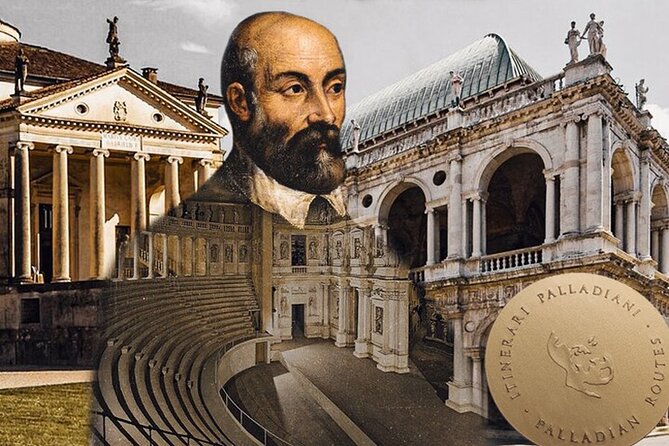
- A private group experience run in English, so you can ask questions instead of being swept along.
- UNESCO-heavy Vicenza, with multiple paid-entry stops built into one logical route.
- Teatro Olimpico with light-and-sound, a special way to see why Palladio’s “ancient ideal” mattered.
- Goldsmith craft below the terraces, via the Jewelery Museum in the Basilica Palladiana area.
- Private aperitif in a Palladian loggia, plus a small final Palladian gift.
- Villa La Rotonda access rules that can make or break the day, so plan around the dates.
Why this Palladio day trip feels different
Most tours show you buildings. This one shows you how those buildings connect. You start with a theatrical, metaphor-heavy stop at Villa Chiericati—The Door of Time—then you move into formal palaces, civic spaces, and theaters that explain why Palladio’s architecture spread so far. The tone is “ideas in motion,” from classical references to later cultures—so you’re not just memorizing facades.
You also get a very guided, director-led kind of narration. The day is described as an itinerant tale by the director of the Network of Owners of Palladio’s Villas, which fits the vibe: you’re hearing context tied directly to the sites you’re standing in front of.
You can also read our reviews of more tours and experiences in Venice.
Price and what $612.81 per person buys you
At $612.81 per person for about 8 hours, this isn’t a budget day out. But the value comes from three things you don’t always get together:
- Private transportation included (not just a shared bus).
- Multiple entrance fees are included for the places where access matters.
- A guided program that includes a private aperitif and an architectural experience at Teatro Olimpico.
That said, you should look closely at what’s not included. Lunch is not included, and Villa La Rotonda (entry excluded) plus Villa Foscari (entry excluded) can add extra costs depending on opening days and seasonal rules. If you’re hoping for every interior to be fully covered by the tour price, this might disappoint.
Getting there from Venice: pickup, vans, and timing
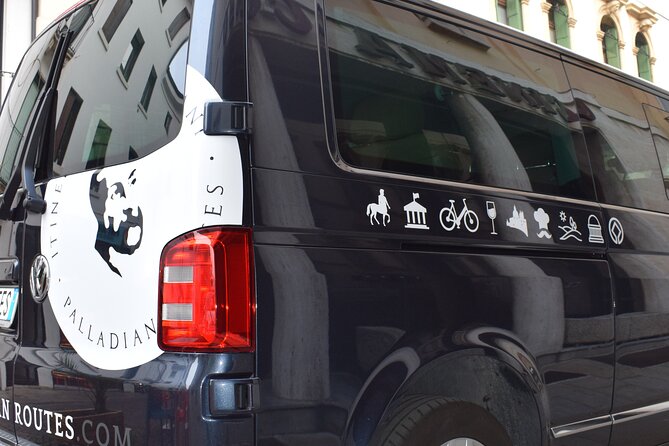
The day starts in Venice with pickup offered. Your transfer can be by private transportation, and there’s also an optional possibility of a water taxi transfer from your hotel in Venice for an extra cost (arrange it at least 3 days before).
Logistically, the route is designed to keep you moving efficiently through Vicenza. Expect a typical “one-day circuit” pace: short stops for orientation and photos, then longer time where you need it—especially at places with stair access, terraces, and museum rooms. The total duration is about 8 hours, so plan your morning and late afternoon to be flexible.
One more practical note: the tour uses a mobile ticket, which can simplify check-in. And because it’s a private tour/activity, only your group participates, which usually means fewer waits and less crowd pressure at entrances.
Vicenza UNESCO core: Villa Chiericati to Palazzo Valmarana Braga
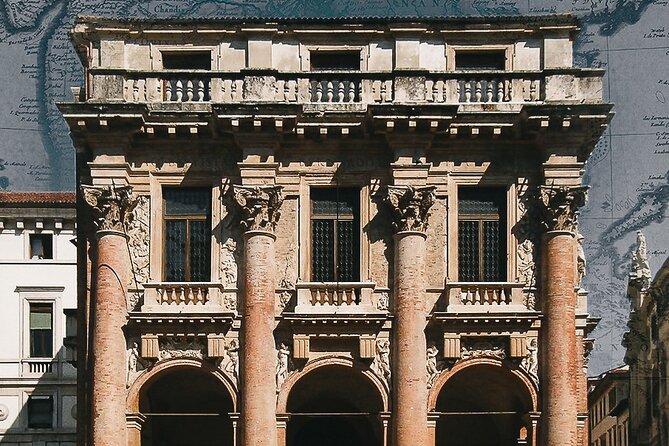
Villa Chiericati, The Door of Time (no entry)
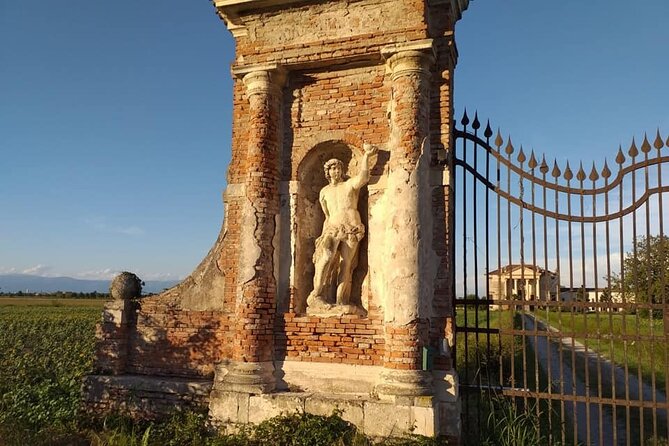
You begin with The Door of Time, but there’s an important catch: it’s listed as no entry, and the ticket isn’t included. Think of this first stop as a prologue. You’re meant to feel the building as a romantic ruin-like threshold—an opening into the day’s theme of time, ideas, and influence.
What you’ll enjoy: it sets the tone fast, and the “journey through time” framing makes the later architecture easier to read.
What to watch: since it’s outside (no entry), it won’t give you the same “inside artifacts” satisfaction as other stops.
Palazzo Valmarana Braga: private reception and fresco focus
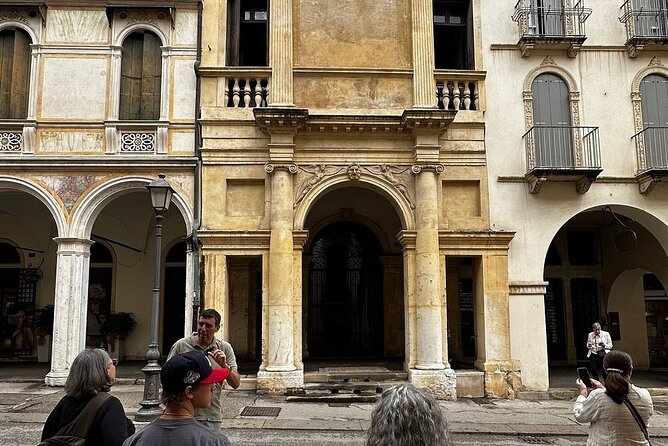
Next comes Palazzo Valmarana Braga—and this is one of the most explicitly “experience” stops. The program includes a welcome/private reception in one of the most beautiful palaces tied to the UNESCO Palladio villas network. You’re introduced to the heritage story in the context of the building itself.
Time is spent on visual anchors: the palace’s extraordinary facade, a Renaissance fresco with a cosmology on the ceiling of the Count’s study, and how Palladianism spread through the fabric of the region and beyond. You’re also given enough time for this to feel like a real moment, not a quick photo stop.
What you’ll enjoy: the combination of architecture + fresco + narrative, in a setting that feels like you’re allowed to linger.
Potential drawback: only 25 minutes here means you’ll want to choose what to focus on—facade first, then fresco, then ceiling details.
Piazza dei Signori and Basilica Palladiana: the city’s “living room”
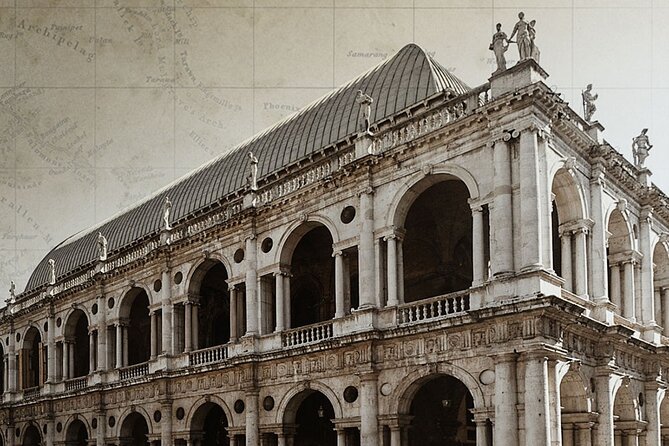
Vicenza’s center is where Palladio’s ideas meet everyday public life, and this part of the day is built around that.
Piazza dei Signori: patrician salon views
This stop is framed as Vicenza’s “living room,” with a relaxing pause and a view of the patrician square. Admission is free, and that’s a nice relief mid-day: you can breathe, look around, and reset.
What you’ll enjoy: the square’s role as a public stage. Even if you’re not an architecture nerd, you’ll understand why these civic spaces mattered.
Basilica Palladiana: terraces + arcades + goldsmith craft
Then you enter Basilica Palladiana. Entry is included, and the program takes you up to terraces for views back over Piazza dei Signori (and the square’s “cameo” effect), then down through the arcades.
On the lower level, you encounter a specific local craft story: Vicenza’s goldsmith tradition is represented by the Jewelery Museum, described as one-of-a-kind. It’s a good reminder that “Palladio day” isn’t only about grand villas. The same design thinking and cultural pride shows up in how people make objects, too.
What you’ll enjoy: seeing the city from height, then shifting into craft and museum space under the arcades.
Potential drawback: this stop can involve walking and stairs. If you have mobility issues, you’ll want to keep pace in mind for the terrace portions.
The Loggia contrast: Vicenza and Venice
Between stops, the program highlights a contrast moment—Venice is silent, but present—with a harmonious closeness at the loggia in front of the Basilica. This is essentially a visual/interpretive pause, linking the two water cities and their shared scenes.
It’s not a “ticket stop.” It’s more like a mental bookmark: you’ll likely find that after this, the day’s theme starts to click.
Strada Maior and Palazzo Chiericati: architecture as daily life
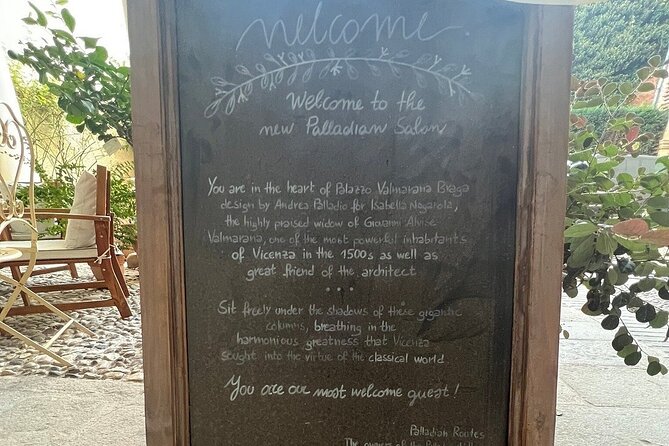
Strada Maior: “little Rome” vibes
Strada Maior is described as the main street in Vicenza, named for Andrea Palladio, and tied to the road connecting major Palladian works (UNESCO heritage). You get to admire historic shops and architecture acting as a backdrop to normal life.
If you like wandering with a purpose, this stop hits well. It’s the “walk and watch” phase where you see how architecture frames daily movement, not just tourist viewing.
What you’ll enjoy: a street-level sense of where the big ideas actually live in real time.
Museo Civico di Palazzo Chiericati: portraits of the men behind the architect
Then you enter Museo Civico di Palazzo Chiericati, a UNESCO site. Entry is included, and the palace facade is described as imposing, plus there’s a connection to the river landing place from Venice.
Inside, you focus on Venetian art pieces—Tintoretto, Veronese, Sansovino, and others—and on a very specific curatorial choice: the main floor portraits of the men who helped “create” the architect. That focus matters. It signals that architecture spreads because people fund, commission, and debate ideas—not only because one genius designs in isolation.
What you’ll enjoy: the way the museum connects patronage to style.
Teatro Olimpico: the show that makes Palladio feel alive
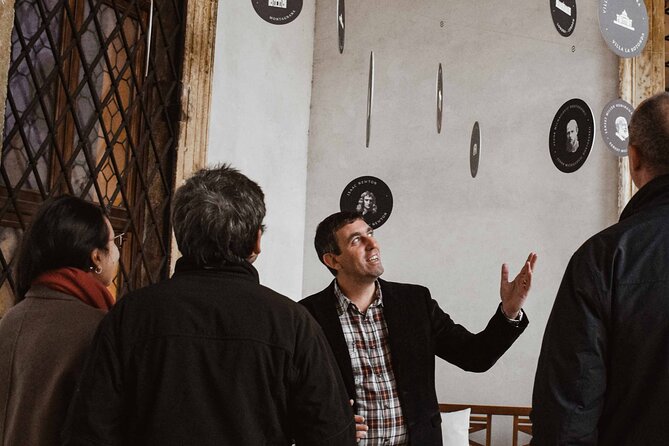
The highlight for many people is Teatro Olimpico. Entry is included, and the program includes an evocative light and sound show.
It’s also framed as a major “first” in theater history: the first covered theater in history (as described in the program notes), tied to Palladio’s pursuit of the ancient Greek ideal. Even if you don’t know your Greek terms, the space is designed for impact—and the show helps you understand what that impact meant.
What you’ll enjoy: atmosphere plus storytelling, not just visuals.
Potential drawback: show timing can compress your sense of pacing. If you’re the type who wants maximum time for slow observation, you’ll have to balance still-looking with letting the program run.
Contrà Porti: where history and Reformation-era ideas meet
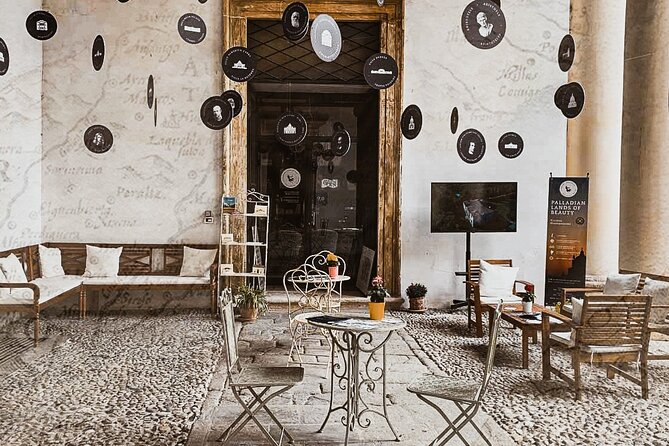
Next is Contrà Porti, described as one of Vicenza’s most aesthetically beautiful streets, with layers of history and cultures meeting in one line. The narrative focus here is specific: Vicenza sits at the northern end of the Renaissance world, but it also marks a southern end of the Reformation coming from the continent.
That sets up an interpretive idea: ancient and heresy come together, giving life to something never seen before (in the way the program frames it). It’s short—about 15 minutes—but it works because you’re already carrying the day’s theme.
What you’ll enjoy: a street that’s more than a corridor—it’s an idea in motion.
Palladio Museum: models that make villas understandable
At the Palladio Museum, entry is included. This is where the day turns practical. You get to observe wooden models and understand multiple facets of Palladio’s villa genius.
The museum approach matters because villas can look similar from far away. Models help you see proportion, placement, and how the parts relate. It’s one of those “oh, that’s why” stops.
You even get a possible added benefit: the museum can open outside standard opening hours for the group (as described in the program notes). That can mean fewer fights with time slots.
What you’ll enjoy: learning without needing to be an architect.
Private aperitif in the Palladians’ loggia: a calm, classy landing
After several hours of architecture, you finish with a social moment at a private aperitif in the Palladians’ loggia. Alcoholic beverages are included, and the location is described as magical, with quotes of the ancients and gigantic columns tied to virtues.
It’s not just a snack stop. The point is to let the day feel human: you’re in the right setting to talk about what you noticed, not just collect stamps in your itinerary.
You also receive a little final Palladian gift. It’s small, but it signals the day isn’t rushed to the exit.
The big variable: Villa La Rotonda and Villa Foscari entry rules
This is where you should read the fine print, because the most famous Palladio work isn’t automatically included.
Villa La Rotonda by Andrea Palladio: “Temple of Man” (entry excluded)
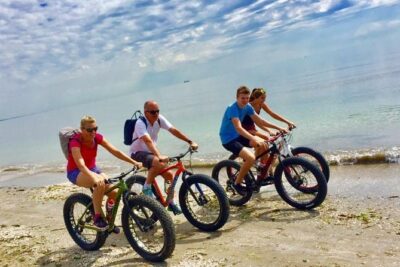
Villa La Rotonda is the star. The tour offers a way to reach it with an E-bike ride (listed as possible with comfortable ride and possible free use). You can also go by other means with the program’s transfer plan.
But entry is excluded, and access depends on dates:
- The villa has entry windows listed as until 10 December and starting from 11 March, excluding Mondays.
- From Tuesday to Thursday, entry to Villa La Rotonda is described as exclusive, because the villa is normally closed on these days.
- Mondays are excluded in the seasonal description.
So if you’re traveling outside those dates, you might still see the place area, but you may not get the interior experience you’re craving.
What you’ll enjoy if entry is available: the villa’s icon status stops being abstract and becomes real architecture—described as a timeless “temple” design.
Villa Foscari: another Palladio stepping-stone (entry excluded)
The day also includes Villa Foscari with an exterior stop in front of the first Palladio villa where a pronaos appears on the main facade instead of the loggia. Entry is excluded.
There’s also a possible option for you to access the villa interior on opening days, as an extra cost excluded from the program, and it may reduce the Vicenza program portion depending on your indication. In other words: you can sometimes trade time in Vicenza for time inside the villa, if the schedule allows.
Return to Venice: choose faster or slower
At the end of the UNESCO World Heritage Site of Vicenza portion, you have a choice: return to Venice more quickly or take it more slowly by taking the next train about an hour later.
This flexibility is useful if you want a relaxed evening instead of sprinting back to catch a tight departure.
The activity ends in a different location, so you’ll want to plan how you’ll get back where you’re staying. If you set up a water taxi transfer, you’ll already have part of the plan handled.
Who this tour suits best
This is a great pick if you like:
- Palladian architecture and want a guided story, not a self-guided checklist
- UNESCO places that feel connected, with cities and villas in dialogue
- A day that mixes exterior views with indoor art and craft moments
- Comfort: private transportation and short, purposeful museum and palace time
You might want to think twice if:
- You need everything to be fully included and ticketed. La Rotonda and Villa Foscari have entry excluded.
- You’re traveling only on dates when La Rotonda access is unlikely, since your interior time may depend on seasonal rules.
Should you book Palladian Routes?
I think you should book if your goal is a high-meaning architecture day where the guide does the hard work of turning buildings into ideas you can remember. The combination of private transport, UNESCO-focused Vicenza stops, Teatro Olimpico, and the chance for Villa La Rotonda (when access lines up) makes this feel like more than just sightseeing.
But I’d only book with full confidence if you’re comfortable checking the season/day rules for Villa La Rotonda and accepting that lunch and some villa entries may cost extra. If you’re okay with that trade-off, this is the kind of day that leaves you looking at symmetry and proportion differently for weeks.
FAQ
Do entrance fees for the stops come included in the tour price?
Entrance fees are included for several stops such as Palazzo Valmarana Braga, Basilica Palladiana, Teatro Olimpico, Museo Civico di Palazzo Chiericati, and the Palladio Museum. However, Villa Chiericati The Door of Time has no entry, and both Villa La Rotonda and Villa Foscari list entry excluded (so additional costs may apply depending on access).
Is lunch included?
No. Lunch is not included in the tour.
Does the tour include pickup in Venice?
Pickup is offered. The tour also notes you can possibly arrange a water taxi transfer from your hotel in Venice for an extra cost if you contact the provider at least 3 days before.
Is this tour private, and is it in English?
Yes. It’s a private tour/activity where only your group participates. It’s offered in English.
Is there any extra Venice access fee I should know about?
On certain dates, visitors staying outside Venice who plan to visit for the day may need to pay a €5 access fee. Check https://cda.ve.it for the specific days and exemptions.
What if I need to cancel or change my booking?
This experience is non-refundable and cannot be changed for any reason. If you cancel or ask for an amendment, the amount you paid will not be refunded.
If you tell me your travel month (and whether you’re staying inside or outside Venice), I can help you sanity-check how likely Villa La Rotonda entry is on your specific day.