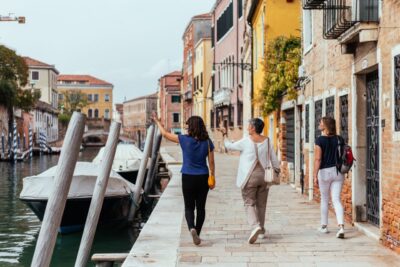
Venice, minus the crush. This small-group day trip lets you start in quieter Cannaregio lanes and the Venetian Jewish Ghetto, then ramp up to Rialto Bridge and Piazza San Marco. I also like the food rhythm built into the walk, including time for traditional cicchetti in an old-style bacaro and a chance to stop for espresso at a café that’s been using the same recipe for nearly a century. One thing to consider: the group can include different languages, so explanations may move a bit slower than you expect.
You’ll be picked up at the station area in Padua and go round trip by train, which is the easiest way to do Venice without playing ferry-or-bus Tetris all morning. The day runs about 7.5 hours and keeps you moving on foot through narrow calli, so plan for a steady walking pace.
A practical note: if you plan to go into church interiors, bring clothing that covers shoulders and legs. Otherwise you may have to watch from the outside or pass on certain stops, which is a shame when Venice gives you the chance.
In This Review
- Key things that make this Venice day trip worth it
- Padua-to-Venice by train: starting at 9:45 at Stazione FS
- Jewish Ghetto (Ghetto Ebraico) + Cannaregio: Venice that still feels lived-in
- San Polo’s small streets and bacari vibe
- Rialto Bridge and the Rialto Market area: architecture with a job to do
- Canal viewpoint plus cicchetti lunch: where the day cools down
- Piazza San Marco + Bridge of Sighs: the finish line (and the water factor)
- Ferry back to the station: a simple ending that beats last-minute scrambling
- Price and value for a 7.5-hour Venice day from Padua
- Practical tips so your day runs smoothly
- Who should book this tour (and who might skip it)
- Should you book Live Venice as a local from Padua?
- FAQ
- What time does the tour start?
- Where do I meet in Padua?
- How do we get to Venice from Padua, and how do we return?
- What are the main places the tour covers?
- Is Basilica di San Marco included in the tour?
- Are there any dress requirements?
- Is there an entrance fee for attractions?
- Is there an access fee for day visitors on certain dates?
- How many people are in the group, and is it walkable?
Key things that make this Venice day trip worth it
- Quiet neighborhoods first: Cannaregio and the Jewish Ghetto get you oriented with a calmer Venice before the big-name sights.
- Real local food stops: You’ll be guided to bacari-style cicchetti lunch and have time for a classic espresso stop.
- Rialto on your feet: You cross the Rialto Bridge and walk toward the Rialto Market area with context, not just photos.
- A view you don’t see from postcards: You’ll be taken to a hidden place viewpoint over the Grand Canal.
- San Marco, with the right focus: Piazza San Marco plus the Bridge of Sighs area, while keeping the Basilica of San Marco visit as optional (not included).
- Small group size: Maximum 10 travelers means less waiting and easier navigation in tight streets.
Padua-to-Venice by train: starting at 9:45 at Stazione FS
This is built as a true day trip. You meet at Stazione FS di Padova (Piazzale della Stazione, 1, 35131 Padova PD) at 9:45 am, then you go round trip by train so you don’t have to figure out transport on your own.
You’ll get a mobile ticket, and the tour includes a tour leader plus “Walk in Venice” guiding. The total time is about 7 hours 30 minutes, which is long enough to feel like a full day, but not so long that you’re cooked by evening.
You can also read our reviews of more tours and experiences in Venice.
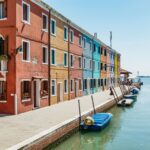
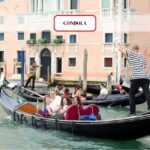

Jewish Ghetto (Ghetto Ebraico) + Cannaregio: Venice that still feels lived-in
The day opens with the Ghetto Ebraico stop, where you walk through the Venetian Jewish Ghetto. It’s a good first move because it gives you a historical and human scale of the city before you hit the postcard zones.
From there you move into Cannaregio, one of the neighborhoods that helps Venice feel like a place people actually live—not just a museum you walk through. You’ll be guided past key streets such as Strada Nova, the main corridor that connects Venice Santa Lucia station toward the Rialto area, and Lista di Spagna, which also draws young people for bars and meeting up.
I like this part of the route because it’s not just “look at buildings.” You get the street-life structure: shops, local commerce, and the sense of everyday Venice continuing beyond the main landmarks. You may also notice the north Cannaregio area around clubs and restaurants, specifically between the Jewish Ghetto and Fondamenta Nuove, which helps explain why this district has a more social energy than you might expect.
San Polo’s small streets and bacari vibe
Next you’ll shift into San Polo, the smallest of Venice’s six districts. The big idea here is the walking atmosphere: narrow lanes, lived-in corners, and a more relaxed feel as you go.
San Polo is also where Venice’s “bacari” culture starts to make more sense on foot. You’ll pass typical Venetian taverns that take the bacari name, and you’ll see how people build an evening around small bites and drinks.
The heart of the district is Campo San Polo, Venice’s largest square after Piazza San Marco, and it’s surrounded by palaces. This is one of those stops where you get both the human scale (a real neighborhood square) and the architectural framing (stately buildings around it), without needing museum tickets.
Rialto Bridge and the Rialto Market area: architecture with a job to do
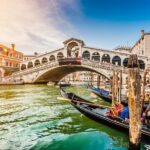
Then comes the iconic stuff: the Ponte di Rialto crossing. This is the oldest of the four bridges over the Grand Canal, and it’s famous for both its architecture and its role as a historic economic hub.
You’ll spend time here on foot, which matters. Rialto is busy, but crossing the bridge as part of a guided route means you’re not just stuck navigating crowds; you’re also getting the “why it looks like this” context. The bridge you see today dates from 1588 to 1591, built based on a project by Antonio da Ponte, and it replaced an earlier wooden structure that collapsed and burned in prior incidents. The design uses two inclined ramps joined by a portico in the center, which is part of why it feels like a covered passage instead of a simple crossing.
From Rialto, you’ll also get directed toward the Rialto Market area. Even if you don’t shop, the market neighborhood is where Venice shows how commerce shaped daily life. Expect a lot of motion, but you’ll likely find the best rhythm by going slower than your instinct.
Canal viewpoint plus cicchetti lunch: where the day cools down
Between the “big sight” moments, the tour builds in a quieter payoff: a hidden place viewpoint overlooking the Grand Canal. You don’t get specifics about the spot itself, but the value is clear—you’re shown a less obvious angle that helps you understand the canal as a live corridor, not just a scenic backdrop.
Right after that, you’ll head to lunch at an ancient bacaro hidden among Venice’s calli for traditional cicchetti. This is a smart way to eat in Venice: cicchetti are built for wandering days, so you can snack your way through without needing a long sit-down restaurant meal that steals time from walking.
Do keep in mind one practical thing: the tour includes the experience, but it doesn’t explicitly say that meals are fully covered. If cicchetti lunch is included in your booking, great; if not, plan for it as an expected add-on so you don’t get surprised.
Also, this is a good moment to use the restroom and reset your shoes before the final stretch toward San Marco.

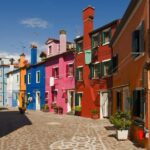
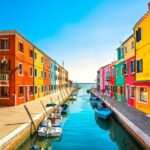
Piazza San Marco + Bridge of Sighs: the finish line (and the water factor)
Now you roll into the beating heart of Venice: Piazza San Marco. The description of it as the most beautiful salon in Europe fits the feel once you’re there. The square has deep layers—built in the 9th century and paved in 1177—and it’s surrounded by the city’s biggest landmarks.
Expect to see the major buildings around the square, including the Basilica of San Marco, Doge’s Palace, the Correr Museum, the Campanile, and the Clock Tower. One detail worth knowing: Piazza San Marco is the lowest area of Venice, so it’s often the first place affected when water levels rise. If your day includes high water, you’ll understand why crowds and ground conditions can change fast.
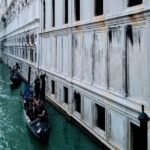
You’ll also arrive near the Bridge of Sighs, which sits in the story space between grand palace drama and prison reality. The Basilica of San Marco visit is not included, so if you want inside time, plan it separately.
Finally, after San Marco, the tour shifts to getting you out cleanly. You’ll take a ferry boat toward the rail station for the return.
Ferry back to the station: a simple ending that beats last-minute scrambling
This day trip doesn’t leave you floating around Venice trying to find the right boat. After Piazza San Marco and the Bridge of Sighs area, you take a ferry back, then connect to the return by train so you end up back where you started.
That matters if you value a smooth finish. Venice can be chaotic near transit hubs, and having the day “hand you the next step” reduces stress—especially if you’ve walked all day already.
Price and value for a 7.5-hour Venice day from Padua
At $150.49 per person for about 7 hours 30 minutes, the real question is what you’re buying: not just guiding, but the structure. You’re getting a guided walk, a tour leader, round trip transfer by train from Padua, insurance/technical organization, and a route that strings together neighborhoods, markets, and big landmarks in one coherent day.
Also, the group cap at 10 travelers is a meaningful value factor. In tight Venice streets, fewer people makes a tour feel less like a slow-moving obstacle course.
One more price note: the experience is described as currently having no entrance fees required, but that can change. Some local access rules can also apply depending on the date.
If you’re the type who enjoys first-time orientation—getting bearings quickly, learning what’s where, and knowing what to return to later—this price is easier to justify.
Practical tips so your day runs smoothly
A few things make a real difference on days like this:
- Bring walking shoes. The route moves through narrow streets (calli), and the pace depends on getting from stop to stop.
- If you want church interiors, follow the covered shoulders and legs rule. Plan light layers you can actually move in.
- Check Venice day-visit access rules. On certain dates, visitors staying outside Venice may need a €5 access fee. Your tour info points you to the official cda.ve.it page for exact dates and exemptions.
- Pack for weather. This experience requires good weather, and if it’s canceled due to poor weather you’ll be offered another date or a refund.
- Don’t assume language is 100% uniform. The tour is English-led, but a group mix can sometimes affect timing. If you’re sensitive to translation delays, plan accordingly.
Who should book this tour (and who might skip it)
Book it if you want a Venice day trip with a clear balance: local neighborhoods first, then Rialto and San Marco. This is also a good fit if you like street-level history and food culture—walking through the Jewish Ghetto and Cannaregio, then sitting down for cicchetti rather than doing only museum-style stops.
Skip it if you want lots of time sitting inside major churches or if you hate walking for a solid stretch. Also, if you strongly prefer a single-language experience at all times, you may want to ask ahead how language groups are handled.
Should you book Live Venice as a local from Padua?
If you’re doing Venice for the first time and you want a day that feels like both orientation and fun, I think it’s a solid choice. The combination of quiet early neighborhoods, a structured walk through Rialto, and a clear finish at San Marco—plus the easy train-and-ferry logistics from Padua—makes it good value for your time.
If you’re the kind of traveler who likes to linger long in one area, you might feel rushed. But if your goal is to see the city’s main “story beats” while still tasting local life, this route makes sense.
FAQ
What time does the tour start?
The tour starts at 9:45 am.
Where do I meet in Padua?
You meet at Stazione FS di Padova, Piazzale della Stazione, 1, 35131 Padova PD, Italy.
How do we get to Venice from Padua, and how do we return?
The tour includes round trip transfer by train from Padua station, and after San Marco you take a ferry boat to reach the rail station for the return.
What are the main places the tour covers?
You’ll walk through the Jewish Ghetto area, see Cannaregio, San Polo, cross Rialto Bridge, spend time around Piazza San Marco, and visit the Bridge of Sighs area. You also include time around the Rialto Market area.
Is Basilica di San Marco included in the tour?
No, Basilica of San Marco is not included.
Are there any dress requirements?
Yes. To visit churches, you need covered shoulders and legs.
Is there an entrance fee for attractions?
Entrance fees are currently noted as not required, but they may be required in the future by local government.
Is there an access fee for day visitors on certain dates?
On certain dates, visitors staying outside Venice may be required to pay a €5 access fee. The information also points you to cda.ve.it for details and exemptions.
How many people are in the group, and is it walkable?
The tour has a maximum of 10 travelers, and it’s intended for people with moderate physical fitness since you’ll be walking through Venice’s streets.