REVIEW · VENICE
Musica a Palazzo ‘Traveling Opera’ Performance in Venice
Book on Viator →Operated by Musica a Palazzo · Bookable on Viator
A palace. An opera. And you walk between rooms as the story changes. Musica a Palazzo turns classic Italian opera into an up-close evening in Venice’s Palazzo Barbarigo Minotto. I like the way the performers keep everything intimate, with singers and live musicians close enough that it feels personal, not distant. I also love the built-in variety: each act takes place in a new salon, so you’re not stuck in one view the whole time. One thing to consider: the venue can run warm and seats are small, so it may feel a bit tight if you’re heat-sensitive.
You can choose among adapted versions of The Barber of Seville, La Traviata, or Rigoletto, and you’ll have a drink at intermission (prosecco, peach juice, or water). Plan to arrive early, follow staff directions into the palace, and be ready for a show with movement, candlelight, and very limited distractions like phones and cameras. If you want the words, you can buy a libretto for about 5 euro at the venue.
In This Review
- Key things to know before you go
- Why This Traveling Opera Works in Venice
- Palazzo Barbarigo Minotto: Your Candlelit, Up-Close Setting
- Choosing Between Barber, Traviata, or Rigoletto
- How the 2.5-Hour Evening Plays Out (Act by Act, Room by Room)
- Price and Value: What You’re Really Paying For
- Logistics That Can Make or Break Your Night
- Who This Opera Experience Fits Best (and Who Should Think Twice)
- Should You Book Musica a Palazzo in Venice?
- FAQ
- How long is Musica a Palazzo traveling opera in Venice?
- Which operas are available?
- Is a drink included in the ticket price?
- Do I need to buy a libretto?
- Is the ticket mobile?
- Is there a dress code?
Key things to know before you go
- A traveling performance in a restored 15th-century palace overlooking the Grand Canal
- Move salon to salon as each new scene or act starts
- Pick your opera: Barber of Seville, La Traviata, or Rigoletto
- One drink at intermission: prosecco, peach juice, or water
- Libretto is optional but costs about 5 euro if you want the translation
- Photography/video is not allowed during the performance
Why This Traveling Opera Works in Venice
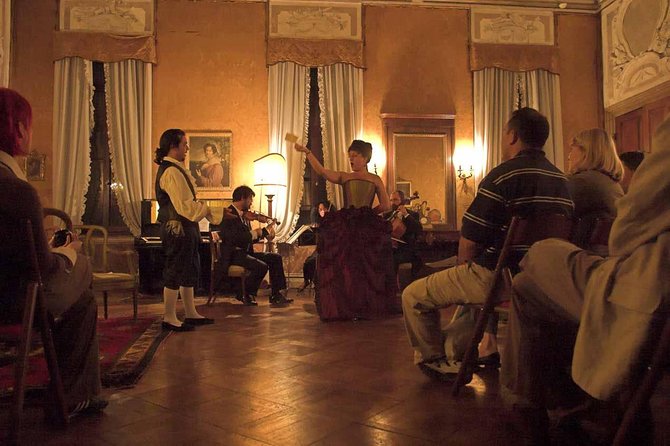
Venice is already theatrical. You step into a maze of marble, arches, and echoes, and then you add opera sung in a palace that feels like it was built for candlelight and close listening. That’s the magic here: this isn’t opera in a big modern hall where the sound and story feel separate. Instead, you’re in a series of small, richly decorated rooms, with performers acting near you.
The “traveling” part is not just a gimmick. Moving from salon to salon changes your sense of time and place. When the ensemble shifts rooms, it creates a natural reset, like a new chapter of the evening. You get variety without losing the thread of the music. And because the audience is small, you don’t feel like a spectator hiding in the dark—you feel like part of the audience space.
This also makes the event friendlier if you’re not an opera die-hard. The program is built around well-known classics, but the performances are adapted versions, so you’re less likely to feel trapped for hours waiting for your favorite moments.
You can also read our reviews of more tours and experiences in Venice.

Palazzo Barbarigo Minotto: Your Candlelit, Up-Close Setting
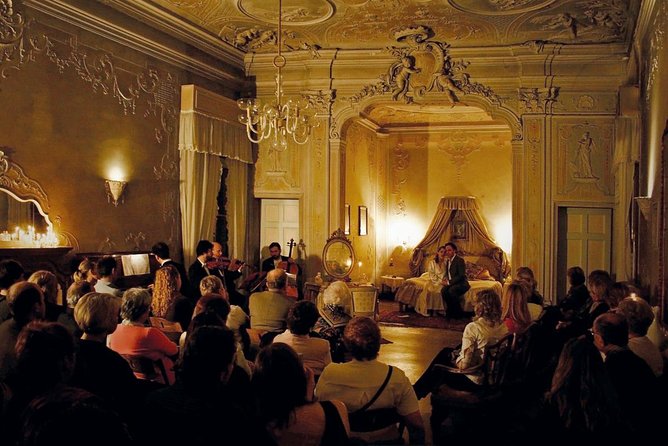
Your evening centers on Palazzo Barbarigo Minotto, a restored 15th-century palace with elegant salons. The palace’s location is right in central Venice and it overlooks the Grand Canal, so you’re in the right part of town for a “Venice night out,” not a remote stop.
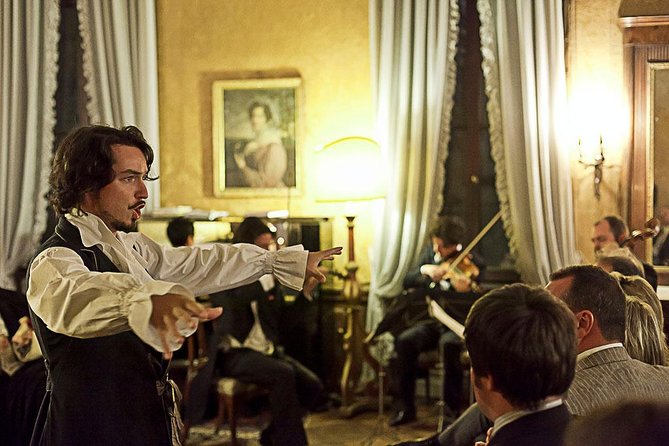
Inside, the atmosphere is what you’d hope for. Expect period furnishings, ornate rooms, and candlelight ambiance. The audience seats are close, and in many cases you may be only a short distance from the singers and the live musicians. The acoustics in small rooms can be surprisingly strong, even if you’ve never been in opera before.
Now the practical side: this is a historic building, not a venue designed like an air-conditioned theater complex. Some people find it hot and stuffy, and seats can be a bit uncomfortable because spaces are compact. If you tend to get bothered by heat, wear light layers and plan to accept that you’ll be spending a couple of hours in old walls with crowds.
One more small detail worth knowing: there’s a bathroom, but space is limited. In at least one past show, it was described as a single unisex bathroom—so don’t treat it as a last-minute convenience.
Choosing Between Barber, Traviata, or Rigoletto
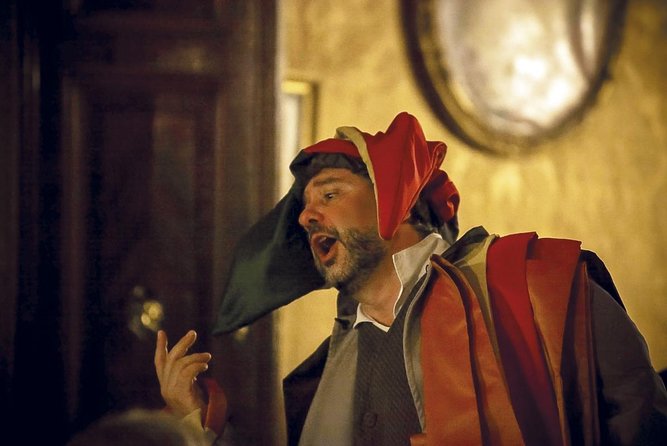
You’ll pick from adapted versions of:
- The Barber of Seville
- La Traviata
- Rigoletto
This matters because each opera gives a different kind of energy. If you want something lively and comedy-leaning, Barber tends to be the fun choice. If your heart is set on drama and emotion, La Traviata is the classic pick. And if you’re drawn to darker intensity, Rigoletto is often the one people remember most.
Also, the pacing can be a little different from what you might expect from a full-scale production. Because the show moves through rooms and focuses on an intimate format, not every section of every opera may feel exactly like a grand stage version. In practice, that can be a benefit: you get a strong arc without the “how is it still going?” feeling.
How the 2.5-Hour Evening Plays Out (Act by Act, Room by Room)
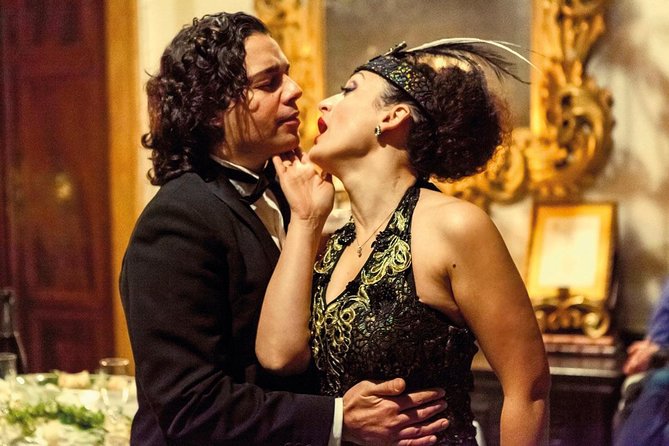
The show runs about 2 hours 30 minutes (approx.). Your evening follows a simple rhythm: arrive, get settled, enjoy, then follow the cast.
Here’s what your timeline usually looks like:
1) Arrival at the palace
Make your way to the palazzo in central Venice. It’s set up for a small, ticketed group, and once you’re inside, staff guide you through the process.
One important detail: you may need to fill out personal information on a card to become a member for entry. Some past guests noted they must complete this step to be allowed to watch the performance. So plan for this as part of arriving, not as a quick formality you can skip.
2) Get your bearings before the music starts
If you want the translation, you can purchase a libretto for about 5 euro after you arrive. It’s not included. The libretto helps a lot because the words are delivered in Italian, and your comfort with what’s being sung can vary.
Take a moment to look around: the salons are the point. Period furnishings and candlelit décor aren’t background. They’re part of the performance design, and they also change how you experience the music.
3) The traveling opera begins
When the show starts, you’ll hear arias, duets, and live accompaniment. The performers enact scenes close to you. Instead of a typical stage setup with one fixed view, you’ll follow the ensemble as each new scene or act starts in a different salon.
This walking-to-the-next-room element is the heart of the experience. It keeps the story feeling immediate. It also gives you a reason to stand up and move without breaking the illusion. Just be ready for brief transitions and keep your place in line with the group.
4) Intermission drink
Intermission is built in, and you’ll receive one drink per person in that break: prosecco, peach juice, or water (still or sparkling). This is a nice touch because you don’t have to shop for drinks in the middle of the show.
One practical note: the break can get crowded because everyone is moving and settling. If you’re clumsy (I say that lovingly), take extra care with your glass and watch where you set it down.
5) Final scenes in the next salon(s)
After the break, the group continues through the remaining acts/scenes with the same room-to-room rhythm. By this point, you’ll understand how the experience works: the venue isn’t just a backdrop, it’s part of the storytelling.
6) Phone-free, camera-free environment
Photography and video are not allowed during the performance. It’s a shame if you love capturing moments, but it also keeps the space focused and helps the performers maintain the intimate, live feel.
Price and Value: What You’re Really Paying For
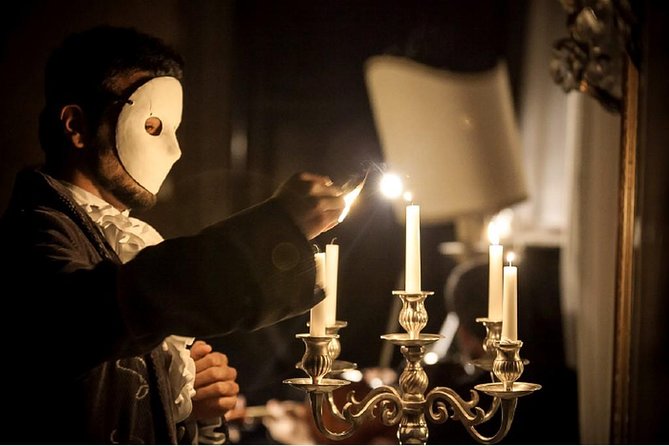
At $117.83 per person, this isn’t a budget activity. But value here isn’t about getting more hours or more seats—it’s about getting a rare kind of access.
What you’re paying for:
- A real opera performance in a private-palace setting
- Live musicians and singers, with close seating
- The experience design that uses the palace itself, with act-to-act room changes
- A included intermission drink
- A small, controlled setting where you’re less likely to feel swallowed by a crowd
If you’re comparing it to a big opera house ticket, you won’t get the same scale or full-length “grand production” feel. But you do get something that big venues often can’t provide: visibility into emotion, gestures, and vocal nuance.
Also consider convenience. You get a mobile ticket, and you only need to add one optional purchase if you want words (the libretto). That means less time figuring out add-ons once you’re already in Venice.

Logistics That Can Make or Break Your Night
This is not a “walk in anywhere and it’s obvious” kind of experience. A palace can be tricky to locate in Venice streets, especially if you’re using map apps that don’t account for small lanes and turns.
Here’s what helps:
- Give yourself extra time to get near the palace before the start.
- Use the directions included with your voucher.
- If you’re struggling, ask locals or staff for help. People in Venice are used to assisting visitors who are a little off-track.
Also, dress in elegant casual. You don’t need formal evening wear, but you should aim for neat and comfortable. Expect walking between rooms, so shoes matter, especially if you’re navigating stone floors.
Heat and crowding are the main comfort issues. If you know you run hot, plan accordingly: light clothing, small breaks when possible, and realistic expectations about temperature control in an old building.
Who This Opera Experience Fits Best (and Who Should Think Twice)
This works best for you if:
- You love music and want something more personal than a standard theater seat
- You enjoy historic settings and don’t mind moving through a venue during the show
- You’re curious about opera but want a more approachable format than a full-length production
It’s also a smart choice for couples or small groups. The environment is designed for closeness. If you want to talk during dinner first, then switch into full attention for the show, this evening rhythm fits.
Think twice if:
- You’re sensitive to heat, because some rooms can feel warm and stuffy
- You need very comfortable seating for long periods
- You’re traveling with small children. The show is not recommended for children under age 5, based on the stated guidance.
- You want lots of explanatory visuals or subtitles. You’ll need the libretto purchase for translations.
If you’re a first-timer to opera, you’ll likely still enjoy it even if you don’t follow every word. The combination of close staging, acting near you, and strong musical performance can carry a lot of the meaning without you needing to be fluent in Italian.
Should You Book Musica a Palazzo in Venice?
I’d book this if you want an opera night that feels like part of Venice rather than something scheduled inside Venice. The combination of intimate performances, movement through the palace salons, and a live, close-up setting makes it memorable in a way that a typical auditorium experience rarely is.
Do consider the comfort factors. Bring patience for tight rooms, a possible warm atmosphere, and the reality that seats aren’t theater-cushion heaven. If you’re okay with that trade-off, you’ll probably feel like you got something special: not bigger, but closer.
If you like what you’re reading, go for it—especially since booking happens well in advance on average. And if you want the translation, plan to add the libretto purchase (about 5 euro) so you can follow the story more fully as the scenes change room by room.
FAQ
How long is Musica a Palazzo traveling opera in Venice?
It runs about 2 hours 30 minutes (approx.).
Which operas are available?
You can choose adapted versions of The Barber of Seville, La Traviata, or Rigoletto.
Is a drink included in the ticket price?
Yes. You get one drink at intermission: prosecco, peach juice, or water (still/sparkling), per person.
Do I need to buy a libretto?
The libretto is not included. You can purchase it at the venue for about 5 euro if you want the translation.
Is the ticket mobile?
Yes. The experience includes a mobile ticket.
Is there a dress code?
Dress code is elegant casual.