REVIEW · VENICE
Ellegi Murano Glass: The Art of Tradition
Book on GetYourGuide →Operated by Ellegi Murano Glass Srl · Bookable on GetYourGuide
Hot glass happens right in front of you. At Ellegi Murano Glass, a family-run workshop carrying on a craft from about 600 years ago, you get a quick look at how artistic glassware is shaped by hand, not machine. I love the furnace demo up close, and I love that the know-how is passed down through generations. The one catch: the experience can feel a little fast and, depending on the session, you might not always get the exact language you expected.
You’ll also like the location. Getting there is simple because it’s just a few steps from the main boat stop, Faro, plus it’s close to big Murano sights like the Glass Museum and the Basilica of Santa Maria e San Donato. There aren’t major architectural barriers either, and the visit is set up to work for wheelchairs.
Timing and value are the big decision points. This visit is listed around 15 minutes and is paired with a showroom stop, so you won’t lose half your day on an “extra” activity—and for the price, it’s a practical way to see the craft in motion. The downside to keep in mind is sound and pacing: if you’re near the back, you may work harder to hear the explanations.
In This Review
- Key things to know before you go
- Murano Glass in 15 Minutes: What You’re Really Buying for $5
- Getting There Near Faro: The Easiest Murano Add-On
- Meeting in the Courtyard: Your Arrival Game Plan
- Inside the Factory: What the 15-Minute Guided Tour Feels Like
- The Furnace Moment: Hot Blown vs Molded Glass
- Showroom Time: Turning Watching Into Buying
- Value and Logistics: Why This Works for Families and First-Timers
- Watchouts: Language Mix-Ups and Pace (Based on Real Sessions)
- Should You Book Ellegi Murano Glass?
- FAQ
- How long does the Ellegi Murano Glass visit last?
- How much does it cost?
- Where do I meet for the tour?
- What languages are available for the live tour guide?
- What do you do during the glass processing demonstration?
- Is the showroom visit included?
- Are kids and pets allowed?
- Is the tour wheelchair accessible?
Key things to know before you go
- 600-year family tradition: This is a skills-on-the-job kind of workshop, built on generational learning rather than formal school training.
- Two glass techniques in one visit: You’ll see both hot processing methods—hot blown glass and molded glass—explained by the guide.
- Faro is your landmark: It’s a short walk from the main Murano boat stop, so it’s easy to tack onto a Basilica + museum day.
- You get more than a peek: The experience includes the demonstration plus a chance to visit the showroom and shop.
- Language options exist, but plan smart: Live guiding is offered in Italian, English, Spanish, and French—yet it’s worth confirming at arrival for the language you need.
- Good for families: Kids up to age 15 are free, and pets are welcome too.
Murano Glass in 15 Minutes: What You’re Really Buying for $5
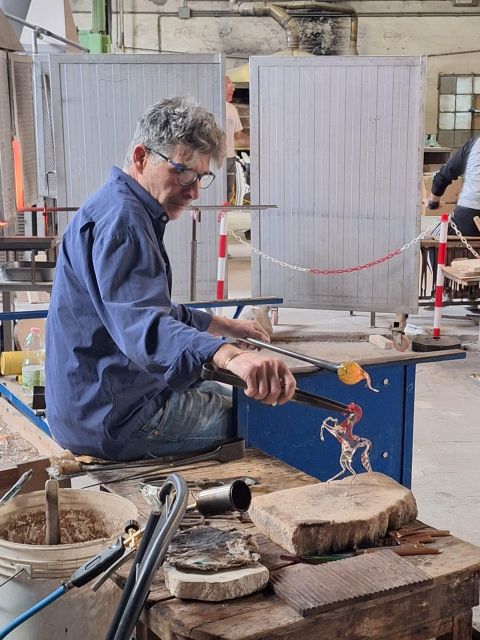
Ellegi Murano Glass is one of those “small time, big payoff” stops. You’re not paying for a long museum-style presentation. You’re paying for a live view of how glass is processed at high temperature—when it’s literally still hot, being shaped before you—and that’s where the magic is.
At around $5 per person, the value is mainly about access. For a low entry fee, you see the furnace work up close, hear how the technique works, and then you can continue your Murano day without feeling stuck. If you’re doing a first visit to Murano and want glass context without committing to a longer workshop, this fits.
One thing to keep your expectations grounded: it’s short. If you want slow, classroom-level explanations or you’re hoping for a full, uninterrupted walkthrough of every step, you might find the pace brisk. That doesn’t make it bad—it just means you should show up ready to watch, listen when you can, and let the demonstrations do the heavy lifting.
You can also read our reviews of more tours and experiences in Venice.


Getting There Near Faro: The Easiest Murano Add-On
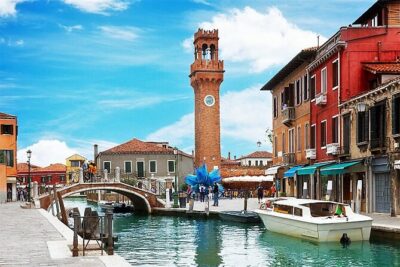
Ellegi’s location is a big reason I think it works for most itineraries. The factory is just a few steps from the main boat stop in Murano, Faro, which keeps friction low. No complicated bus hops, no long walks across the island—just a simple step-on, step-off schedule.
It also sits near major Murano stops. You’ll be able to combine it smoothly with a visit to the Glass Museum and the Basilica of Santa Maria e San Donato. If your day is already built around those landmarks, Ellegi becomes an easy “third point” rather than a detour.
There’s also a travel-plan option for water-taxi style arrivals. If you use a private taxi, the factory has its own private boat pier. That’s a convenience detail, but it matters if you’re arranging transfers and want to keep the day tight.
Meeting in the Courtyard: Your Arrival Game Plan
Plan to meet in the internal courtyard of the Ellegi Murano Glass factory. There’s a sign above the entrance with the factory name, which makes it easier to spot once you’re there.
Because the visit is short, show up a bit early rather than at the exact minute. You’ll want a moment to find the meeting spot, then settle in so you can actually catch the key parts of the demonstration—especially the furnace moment.
Also keep an eye on what’s open when you arrive. The workshop experience is built around the demonstration and a showroom visit, but at least once there have been situations where the showroom part was under work. If you walk in and something looks closed or incomplete, don’t panic—use your own common sense and the free-cancellation window to protect your schedule.
Inside the Factory: What the 15-Minute Guided Tour Feels Like
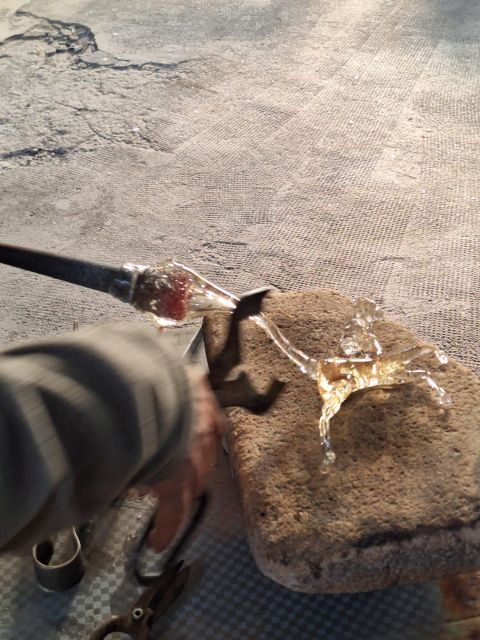
Once you’re in, you’ll get a guided walk-through tied directly to how Murano glass is processed. The emphasis is on making techniques and on watching the glass change shape in real time.
A key detail: the guide explains each of the two techniques in the language required for your tour (Italian, English, Spanish, or French). That matters because glasswork has lots of small terms—so understanding the explanation helps you “read” what you’re seeing, not just stare at the spectacle.
The tour structure is simple: it’s the demonstration first, then the visit to the showroom. Expect to be a spectator in a working environment rather than a student moving through stations. If you’re hoping to ask deep technical questions, the time window may not allow it. But if your goal is to witness craft in action, this is exactly the right length.
The Furnace Moment: Hot Blown vs Molded Glass
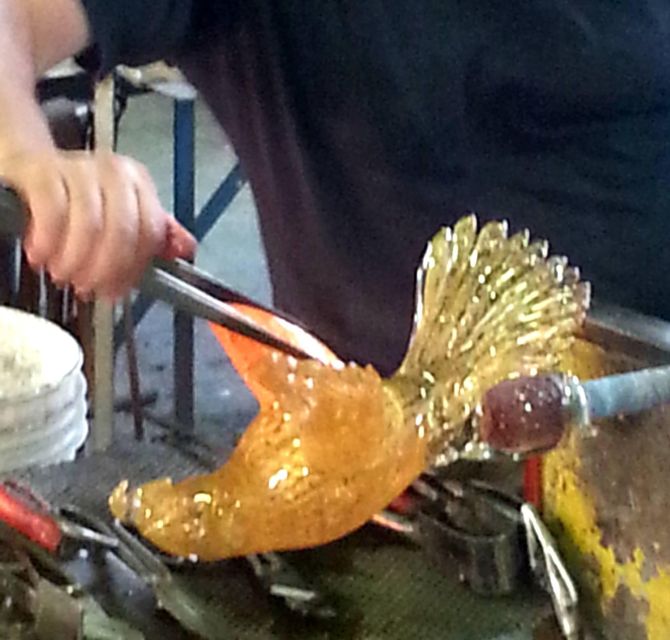
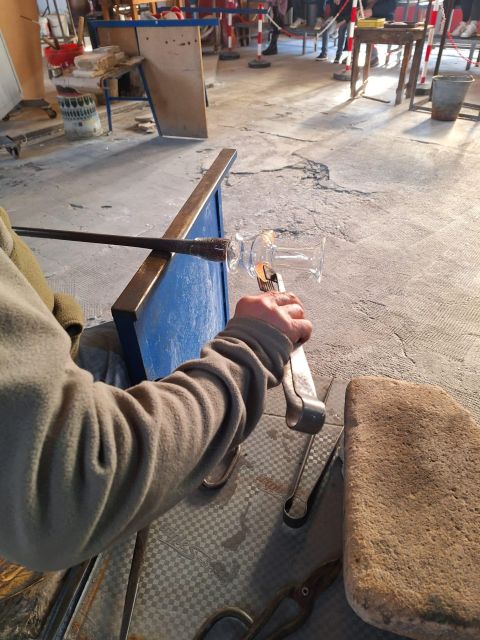
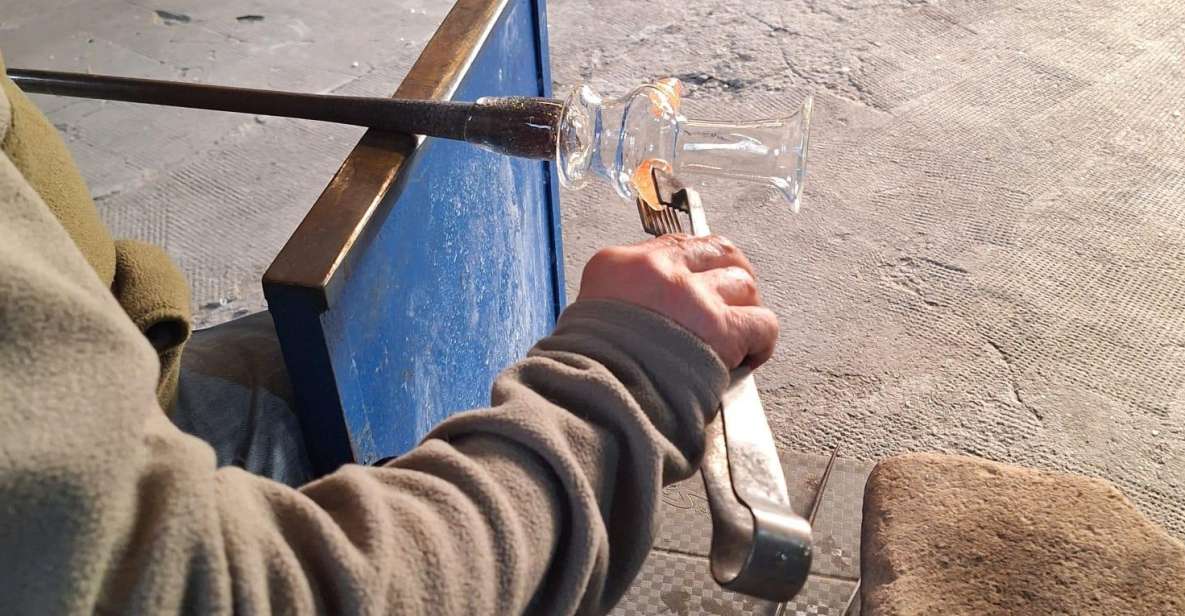
This is the heart of the experience. You’ll watch glass be extracted at high temperatures and shaped before your eyes. The point isn’t abstract history—it’s the craft process itself, and it’s built for kids and adults alike.
Ellegi’s demonstration covers two techniques:
- Hot blown glass: You’ll see how the glass is formed by blowing while it’s still hot and workable.
- Molded glass: You’ll also see glass formed using molds, with a different feel and different results than blowing.
You’ll likely notice how different the steps are. Blown glass tends to look airy and fluid, while molded glass can look more precise and structured. Even in a short time, seeing both helps you understand why Murano glass has such a wide range of styles.
And yes, the furnace is part of the show. Seeing a furnace in operation isn’t something you can easily replicate elsewhere in Venice. It turns glass from a souvenir category into a real-time craft process.
One practical note: in a working demo, sound can be tricky. If the guide is speaking from a spot with lots of movement, or if there are multiple conversations happening nearby, the explanation can get harder to hear. If hearing is important to you, try to position yourself where you can face the guide and still see the glasswork clearly.

Showroom Time: Turning Watching Into Buying
After the demonstration, you’ll head to the showroom. This is where the experience becomes useful for your future Venice/Murano memories—because you can look at the final products and decide what you actually want to take home.
The workshop sells their own handmade products, and it’s in the same area as the demonstration. That’s a smart layout. It keeps the visit compact and reduces the “grabby souvenir market” feeling you can get elsewhere.
You should go into showroom time with two mindsets:
1) Look for technique and finish, not just the subject (like a plate or decorative piece).
2) Don’t expect pressure-free shopping the way you might at a museum shop. This is a working family studio, so browsing feels more like interacting with a maker community.
Also, you’re not paying extra for drinks and snacks through any included package. If you want water or a snack at the entrance, you’d use the vending machines (they aren’t included as part of the visit).
Value and Logistics: Why This Works for Families and First-Timers
For a low-cost stop, the value is unusually direct. The visit checks three boxes in one go:
- you watch real glass processing
- you get guided explanations in your language
- you leave with time to keep exploring Murano
At $5, it’s an easy choice if you’re doing multiple island activities. It’s also a good “weather-proof” option, since it’s inside and focused.
It’s especially friendly for families. Kids up to age 15 are free, and the experience is described as welcoming to young and old. That means you can bring children without feeling like you’re paying adult-level prices for a short attention-span activity.
And if you travel with pets: pets are welcome. That detail is rare in guided attractions, and it can make a huge difference for real-world family logistics.
Wheelchair access is also part of the plan. The factory access is said to have no architectural barriers, so the experience is set up to be smoother for everyone.
Watchouts: Language Mix-Ups and Pace (Based on Real Sessions)
This is the part I want you to be smart about. The experience is simple, but small mismatches can happen.
Language: Live tours are offered in Italian, English, Spanish, and French, but there have been instances where the advertised language didn’t match what happened on the day. If Spanish is important, or if English is a must, I’d check on arrival which guide and language you’re actually joining.
Hearing and interruptions: In a working craft space, interruptions can happen. The demonstration depends on the artisan and the timing of the glasswork, and if someone else is talking nearby or the session gets reorganized, you can lose parts of the explanation. That’s not a deal-breaker if your priority is watching the hands-on craft, but it matters if you’re counting on every word.
Organization and completeness: Because the visit is short, you may feel like the schedule is efficient rather than slow. On one occasion, the experience felt like mass handling and that not everything could be seen. If you’re the kind of visitor who wants to linger, plan to keep your expectations flexible and focus on the core furnace moment.
Open/closed status on site: There’s also been a case where the factory area was open but a portion of the showroom was being repaired, and the lack of clear signage became a problem. If anything looks off when you arrive, don’t assume it’s just you. Ask what’s happening. And if your plans are tight, rely on the free-cancellation option available up to 24 hours ahead.
Should You Book Ellegi Murano Glass?
If you want a quick, hands-on Murano glass experience that you can fit into a normal day, I’d book this. The furnace demo plus the two technique explanations (hot blown and molded) is exactly the kind of “see it, understand it, then move on” stop that makes Murano feel real.
Skip it or be more selective if you have very specific language needs and you need perfect interpretation, or if you hate short tours where you can’t linger. Also skip it if you only care about a long museum-style explanation rather than watching the craft in action.
The best way to use this visit is to pair it with Murano’s top sights. Show up early enough to get settled in the internal courtyard, focus on watching the shaping process, and then use the showroom browsing time as your souvenir decision moment.
If your goal is to witness Murano glass as a living craft (not just a product display), this is an easy yes.
FAQ
How long does the Ellegi Murano Glass visit last?
The tour is listed as 15 minutes. The on-site description also mentions an experience lasting around 20 minutes, so plan for roughly that range when you add time to enter and settle.
How much does it cost?
The price is listed as $5 per person.
Where do I meet for the tour?
Meet in the internal courtyard of the Ellegi Murano Glass factory. There’s a sign above the entrance with the factory name.
What languages are available for the live tour guide?
The live guide is available in Italian, English, Spanish, and French.
What do you do during the glass processing demonstration?
You watch glass being processed at high temperatures and then shaped before you, with demonstrations covering hot blown and molded glass techniques, explained by the guide.
Is the showroom visit included?
Yes. The experience includes a visit to the showroom, so you can see and buy handmade products afterward.
Are kids and pets allowed?
Kids until 15 years old are free, and pets are welcome.
Is the tour wheelchair accessible?
Yes. The factory access is described as wheelchair accessible with no architectural barriers.