REVIEW · VENICE
Biennale Off: Exploring External Pavilions and Collateral Events
Book on Viator →Operated by deTourist Venice Valerio Coppo · Bookable on Viator
Biennale Off turns art-hunting into street-walking. I like that it keeps you moving through Venice’s historic center to reach Biennale external pavilions and collateral events that are usually hard to access, and I especially like the included admission at Ca’ Giustinian. The main drawback is time: it is only about 2 hours, so if one stop really grabs you, you might wish the tour could linger longer.
To make it feel efficient, the route is built for a quick run at several sites across the city, instead of treating this like a slow, day-long museum crawl. You start in the Rialto area at Campo San Giacomo di Rialto and finish on Dorsoduro at the Fondazione Emilio e Annabianca Vedova site near the Magazzino del Sale—an easy way to change neighborhoods by the end of your walk.
You’ll also appreciate the “small-group” feel. It is a private tour for your group only, pickup is offered, and you get a mobile ticket so you are not hunting for printouts mid-walk.
In This Review
- Key things to know before you go
- Biennale Off is about seeing more with less time
- Start at Campo San Giacomo di Rialto, finish on Dorsoduro
- Ca’ Giustinian: the stop that justifies the ticket
- The guide makes the Biennale make sense fast
- Outdoor pavilions and collateral events: what to watch for
- How the 2-hour route works for your Venice day
- Value for money: what $178.27 buys you
- Getting the most from the walk
- Who this tour suits best
- Should you book Biennale Off?
- FAQ
- How long is the Biennale Off tour?
- Where does the tour start and end?
- Is admission included?
- Will I have a licensed guide?
- Is pickup available?
- Is this a private tour?
- Do I need a paper ticket?
- Are service animals allowed?
- Can I cancel for a full refund?
- How far in advance do people usually book?
Key things to know before you go
- Licensed guide leadership that focuses on what you are seeing, not just what it is called
- External pavilions and collateral events across Venice, not only the most famous ticketed areas
- Ticket included for La Biennale di Venezia – Ca’ Giustinian
- A short, pace-friendly format that fits into a real Venice day
- Private tour for your group with pickup offered and a mobile ticket
- A route through side streets where you actually feel like you are in Venice, not passing it
Biennale Off is about seeing more with less time
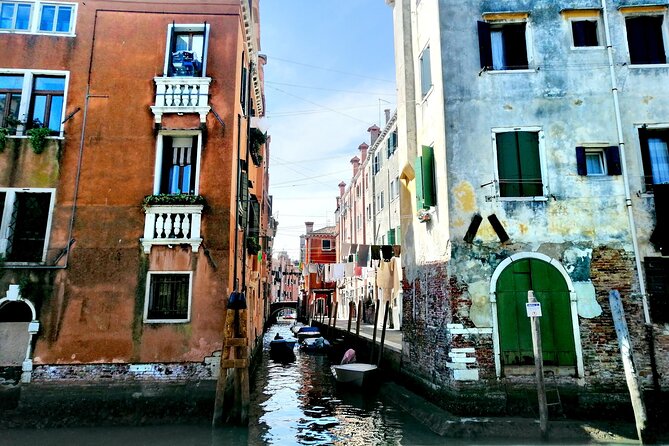
This tour is built for one big goal: getting you into the external layer of the Venice Biennale without spending your entire day chasing venues. Instead of only concentrating on the headline locations, you focus on outdoor pavilion setups and collateral events connected to the Biennale that are scattered around the city.
I like this approach because it changes how you experience Venice. When you walk to art stops through alleys and canal-adjacent streets, the city becomes part of the show. And because the route is designed for speed, you do not lose half your time navigating between far-flung locations on your own.
There is also a practical payoff. You are not just buying an idea of the Biennale—you are getting a guided sequence, with stops that are linked to the event and housed in places that are often closed or hard to reach.
You can also read our reviews of more tours and experiences in Venice.

Start at Campo San Giacomo di Rialto, finish on Dorsoduro
The meeting point at Campo San Giacomo di Rialto is convenient if you are already exploring around Rialto or using that area as your “hub.” It helps you avoid a start that forces you to cross Venice cold-tired. From there, the tour route carries you away from the most direct tourist corridors and toward the more “walkable with a purpose” parts of the historic center.
You end at Fondazione Emilio e Annabianca Vedova – Magazzino del Sale on Dorsoduro. That matters more than it sounds. Dorsoduro is often where the evening energy and independent feel pick up, so finishing there is a smart move if you plan to keep wandering after the tour.
If you want a smooth day plan, I’d pair this with a meal or a slow art walk near Dorsoduro afterward. You end in a different neighborhood than you started, so your afternoon does not feel like repeating the same streets.
Ca’ Giustinian: the stop that justifies the ticket
The highlight anchor is La Biennale di Venezia – Ca’ Giustinian, and you get an admission ticket included for this part. That is a strong value driver because it means your payment covers the guided time plus access at least at one specific Biennale site.
What you should expect here is the kind of Biennale experience that benefits from an on-foot visit. Even if you are not the type who reads every label, you will get more out of the space when someone gives you context quickly and helps you notice what matters. The tour is short, so this is not the place for a slow, stand-and-stare museum rhythm. It is more like targeted looking, with guidance that keeps you oriented.
One more reason Ca’ Giustinian is a good anchor: it gives the tour credibility. You are not only bouncing between meetpoints and looking at exterior info boards. You have a real Biennale entry point within the time window.
The guide makes the Biennale make sense fast
Guides are the difference between seeing art and understanding what you just saw. In this experience, the guide is described as licensed and top-rated, and the names that come up in praise are Valerio Coppo (listed with the provider) plus an additional named guide, Ms Kunz, who impressed with strong background knowledge and the ability to explain architecture and art essentials.
What I like about that kind of guidance is the tone. It is not heavy academic lecturing. It is more like a well-informed conversation while walking. One of the standout themes is that the guide adds witty, practical insight, so you feel like you are getting Venice and the Biennale explained at human speed.
In a two-hour format, this matters. You do not have time to slowly decode everything yourself, especially when you are moving from stop to stop. A good guide helps you notice the details you would otherwise miss and helps you connect the dots between what you see outdoors and what it is doing within the Biennale conversation.
Outdoor pavilions and collateral events: what to watch for
The tour focuses on outdoor pavilions and collateral events tied to the Venice Biennale, across multiple spots around the city. That setup changes how you experience contemporary art. It is less about controlled lighting and more about how an installation interacts with street-level movement, views, and the mood of the surrounding streets.
Since the tour route is designed to hit several stops quickly, your best strategy is to treat each stop like a short film: watch the whole thing in real time, then decide what you want to return to afterward. If you try to “master” every detail during the tour, you will end up tired before you finish.
Practical advice that helps: bring your attention to the relationships. Look for how a pavilion frames a view, how an exhibit sits within a historic environment, and how collateral programming connects with the wider Biennale themes. Even when you do not love every work, you will usually walk away with a clearer sense of what the event is trying to say.
How the 2-hour route works for your Venice day
Two hours sounds short because it is short. That is the point. This is a sprint designed to protect your energy while still giving you a meaningful taste of the Biennale’s external footprint.
If you are doing Venice over a few days, a tour like this is a smart way to get oriented. You see how art shows up outside the biggest venues, and you learn what kind of places you might want to revisit on your own. And because you are walking through side streets, you also get the feeling of moving like a local, not just taking photos from the main routes.
Here is the trade-off: you cannot expect deep time at every stop. If you are the type who likes to sit with one work for 30 minutes, this will feel fast. But if you want a guided hit of multiple sites with context, it is a good match.
Value for money: what $178.27 buys you
The price is $178.27 per person, and you should judge it by what is included in the experience, not just the raw number. In your case, that price covers a licensed guide, a private-group format, and an included admission ticket for Ca’ Giustinian.
You also get extras that are often not guaranteed in smaller art experiences:
- Pickup offered
- Group discounts
- Mobile ticket access
For Venice, guided time has real value. The city is easy to get lost in, and art venues connected to major events can be hard to access without the right plan. A two-hour route with expert guidance helps you spend time looking, not solving logistics.
If you are traveling with friends, the private-group structure is often where the math improves. And if your goal is to experience more Biennale-related locations than you could comfortably manage alone in a short window, this is a solid use of money.
Getting the most from the walk
Because this is a walking experience through Venice, comfort matters. Wear shoes you trust on uneven stone and keep your phone charged for the mobile ticket. If pickup is offered and you can use it, it can reduce stress at the start, which makes the first stop feel smoother.
Also, plan your expectations. Think of this as a guided route of “see it, understand it, move on.” That makes the pace feel like momentum instead of rushing.
If you have one must-see stop in mind, decide it ahead of time. The tour format is short, so you can use the guide’s explanations to help you pick your favorite work quickly. After the tour ends on Dorsoduro, you can always return to the area that felt most meaningful.
Who this tour suits best
This works well if you:
- Want a fast way to experience Biennale external pavilions and collateral events
- Prefer guided context over wandering with a vague plan
- Like walking through historic Venice with clear direction
- Are happy with a 2-hour pace and want to keep the rest of your day flexible
It may not be ideal if you need lots of quiet time at a single installation or if you dislike moving between several sites in one session. But for most art-minded visitors who also want to enjoy Venice streets, it is a practical, well-targeted option.
Should you book Biennale Off?
I’d book Biennale Off if you want the Biennale experience to feel connected to Venice itself, not trapped inside a single big venue. The combination of a licensed guide, a fast route to multiple external-related sites, and included admission at Ca’ Giustinian is strong for the time you spend.
Book it especially if you are visiting Venice during the Biennale and you want to make smart use of a limited schedule. It is short enough to fit, structured enough to reduce guesswork, and guided enough to make the art feel understandable while you are walking.
If you hate rushed viewing, or you expect a full-depth, long-session museum visit at every stop, you might feel boxed in. But if you want a guided, art-focused sprint through the external side of the Biennale, this is exactly the kind of tour that just works.
FAQ
How long is the Biennale Off tour?
It runs for about 2 hours.
Where does the tour start and end?
It starts at Campo San Giacomo di Rialto and ends at Fondazione Emilio e Annabianca Vedova – Magazzino del Sale in Dorsoduro.
Is admission included?
Yes. Admission ticket is included for La Biennale di Venezia – Ca’ Giustinian.
Will I have a licensed guide?
Yes. The tour includes a licensed, top-rated guide.
Is pickup available?
Pickup is offered.
Is this a private tour?
Yes. It is private, and only your group participates.
Do I need a paper ticket?
No. A mobile ticket is used.
Are service animals allowed?
Yes, service animals are allowed.
Can I cancel for a full refund?
You can cancel for free up to 24 hours before the experience for a full refund.
How far in advance do people usually book?
On average, it is booked 121 days in advance.