REVIEW · VENICE
Venice for First-Timers: Essential Private Tour
Book on Viator →Operated by deTourist Venice Valerio Coppo · Bookable on Viator
Venice is smarter when you understand the tides. This private first-timer tour teaches you how Venice survives the lagoon, with clear explanations of Acqua Alta and the MOSE flood barriers. You’ll connect the dots between water, geography, and the city’s daily life so the map in your head makes sense fast.
Two things I really like: the pacing, which stays calm enough for questions, and the fact that you’re not just looking at landmarks—you’re learning the system behind them. With Valerio as your licensed guide and a group capped at eight, the walk feels like having a smart local friend explain Venice at your speed. You’ll also get practical pointers for where to linger and where to eat, not just facts on a screen.
One possible consideration: on certain days, you may need to pay a €5 access fee if you’re staying outside Venice and visiting for the day. It’s not a dealbreaker, but it’s worth checking before you commit your first itinerary day.
In This Review
- Key highlights to look for
- Why a small private group is the best first day move
- Entering the lagoon world at Laguna di Venezia
- How Venice trades water with the Adriatic Sea
- The causes of Acqua Alta: not just rain
- MOSE-era thinking and the 80 cm vs 140 cm contrast
- The 1960s aqua granda and how tragedy reshaped life
- Lido di Venezia and the 2019 high-water lessons
- Campo Santa Maria Formosa: what happened at the end of 2019
- The guide makes it work: Valerio’s pace, anecdotes, and family-friendly style
- Price and value: what you get for $185.85 per person
- Logistics you should plan around (quick and practical)
- Who this tour is best for
- Should you book this Venice for First-Timers tour?
- FAQ
- How long is the Venice for First-Timers private tour?
- Is this tour private?
- How many people are in the group?
- What language is the tour offered in?
- Do I need to buy admission tickets for the stops?
- Is pickup available?
- Will I get a mobile ticket?
- Is there a Venice day-trip access fee?
- What’s the cancellation policy?
- Does the tour include a licensed guide?
- Are service animals allowed, and is it accessible for most people?
Key highlights to look for
- Small group (up to eight), so you can ask real questions without being rushed
- MOSE and sea defenses explained in plain language, tied to what you’ll see around the lagoon
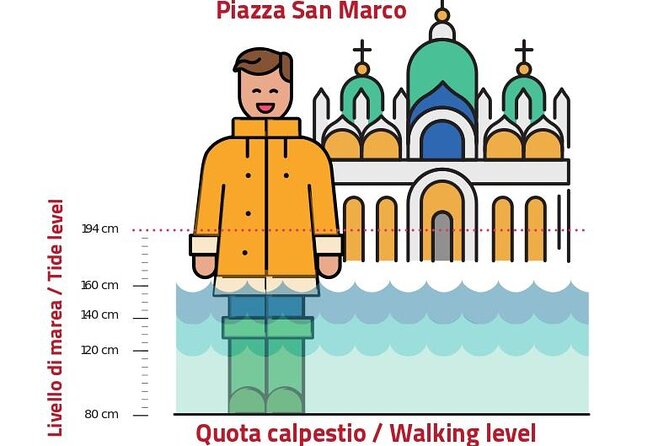
- Acqua Alta thresholds (80 cm and 140 cm), so you understand why some flooding is manageable and some isn’t
- The science of high water: lunar phases, astronomical tides, wind, and low pressure—rain is not the main driver
- Historical comparisons from the 1960s aqua granda to high-water events in 2019
- Local street time and tips after the walk, including where to eat and what to sample
Why a small private group is the best first day move
Venice rewards attention. The first few hours are where you either get lost (physically and mentally) or start building a working sense of direction. This tour is designed to do the second one: it’s short, focused, and small enough that you can keep up.
For first-timers, the big problem is that Venice can feel like a puzzle with missing pieces. You’re staring at canals and calling it a city, but you’re missing the rules that govern it—especially water levels. This experience fixes that by teaching you how the lagoon works and how Venice reacts when nature gets loud.
And because it’s private with only your group, you can ask about what you’re seeing right now: Why does a certain area feel higher? Why does the water behave differently in different places? Why does a bad-weather day matter one year and not another? The guide can shape the walk around those questions.
You can also read our reviews of more private tours in Venice
Entering the lagoon world at Laguna di Venezia
The tour begins by stepping into Laguna di Venezia with a focus on how people and water have been negotiating for centuries. You’ll hear how the Republic of Venice shaped the lagoon for both survival and control—using big sea defenses and altering river routes while trying to keep the delicate balance between nature and human intervention.
This part is especially valuable because it gives context before you start wandering the main city. Once you understand that Venice isn’t sitting by the sea the normal way, the rest of the walk feels less random. The lagoon becomes a character in the story, not background scenery.
You’ll spend about 15 minutes here, and there’s no admission ticket listed for this stop. The timing also means you’re not stuck on one topic for too long—useful if you’re traveling with kids or you just don’t want an all-day lecture.
How Venice trades water with the Adriatic Sea
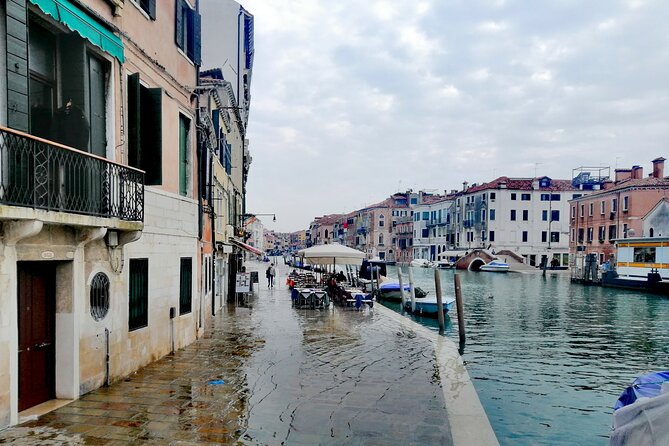
Next you zoom in on Venice’s connection to the Adriatic Sea, explained through the lagoon’s port inlets. The guide walks you through how water moves in and out with the tides, and why that exchange matters for the lagoon’s ecosystem.
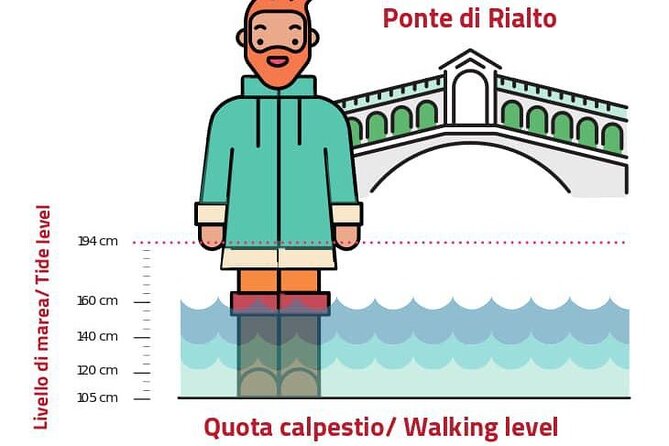
This stop also introduces the key number that you’ll hear again and again on the walk: 80 cm. When high tide exceeds that level, Venice crosses the line into Acqua Alta—high water that becomes a real problem rather than a background condition.
Why this matters for you: once you’ve got the 80 cm idea in your head, you’ll start noticing things on your own later—raised walkways, signage, and the way some streets seem more vulnerable than others. You don’t need to become a tidal expert. You just need the threshold to make sense of what you see.
The causes of Acqua Alta: not just rain
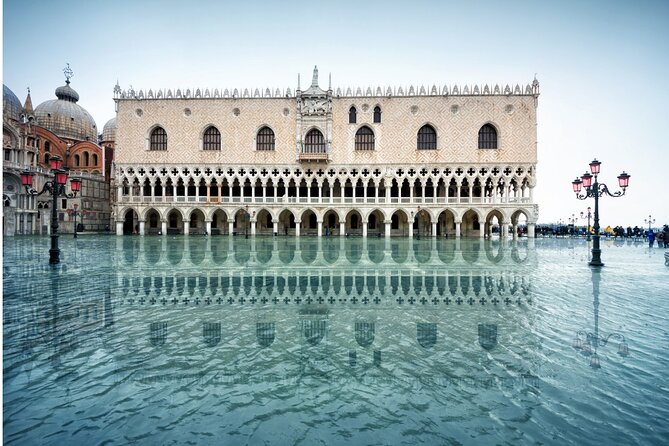
The tour then tackles one of the most counterintuitive parts of Venice weather: high water isn’t simply about rain. You’ll learn why Acqua Alta comes from a mix of factors, including what can be predicted and what often isn’t.
Here’s what you’ll take away:
- Some high-water situations follow patterns you can anticipate.
- Other surges feel more chaotic.
- Lunar phases and astronomical tides play a bigger role than most people expect.
- Strong winds and low pressure can be major triggers.
This is a great stop for travelers who like clarity. The guide’s job isn’t to overwhelm you with jargon—it’s to help you understand why Venice sometimes gets hit even when the skies seem fine.
Practical note: this stop is also about interpretation. When you know which factors matter, you stop treating high water as a random curse and start seeing it as a system.
MOSE-era thinking and the 80 cm vs 140 cm contrast
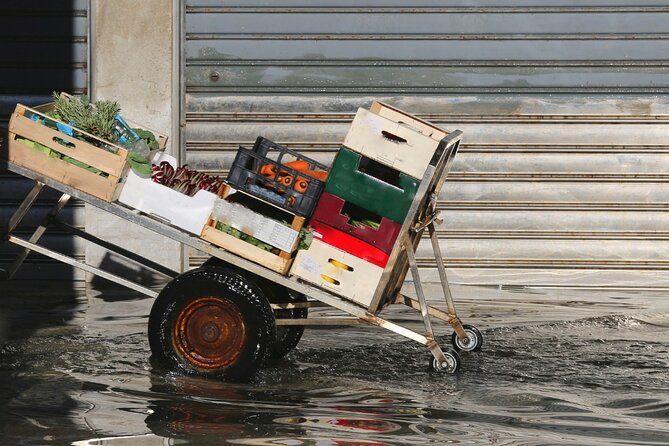
At the next lagoon-focused point, you’ll connect the theory to everyday reality: how someone’s feet can stay dry when the tide reaches 80 cm, and why a rise to 140 cm can impact Venice much harder.
This is where the tour becomes more than science talk. It turns into a street-level explanation: water doesn’t flood in a single uniform way. The city has thresholds, protections, and vulnerable zones. Understanding that helps you plan your day—especially if you want to explore low-lying areas.
Also, this is where the discussion naturally links to Venice’s flood defense approach, including the MOSE floating flood barriers (highlighted in the tour’s focus). You’ll see how the idea of “defense” fits the broader theme: Venice constantly adapts to water forces, rather than trying to eliminate them.



The 1960s aqua granda and how tragedy reshaped life
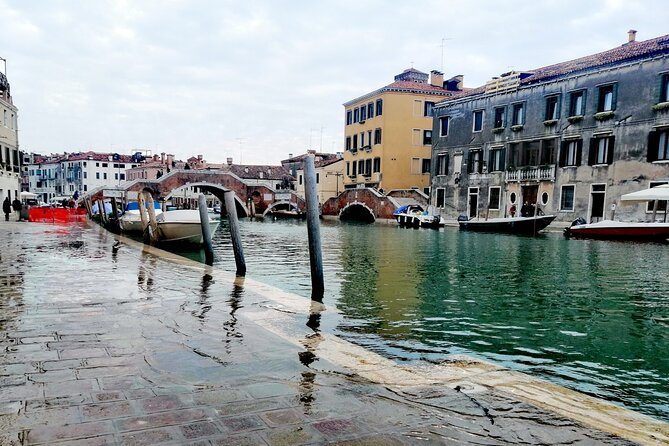
Now the walk goes time-travel mode, back to the 1960s and the event known as the aqua granda. You’ll learn about a day when an exceptional wave of bad weather hit much of Italy and Venice experienced one of its most tragic high-water events, with the tide reaching the highest peak ever recorded in the city’s history.
Why it’s worth covering: disasters change how a place evolves. Even if you never saw the event, you can feel its legacy in how Venice prepares and how Venetians think about water risk.
This stop also helps you understand why modern flood protection is taken seriously. It’s not theoretical. It’s rooted in lived memory, architecture, and long-term adaptation decisions.
Lido di Venezia and the 2019 high-water lessons
Then you move toward Lido di Venezia, where the tour compares past events to more recent high-water impacts. Venice experienced a similar situation on the evening in 2019, and you’ll discuss how natural events are increasingly connected with global climate changes and how over-tourism puts extra pressure on the city.
The valuable part here is that you’re not only learning about water levels. You’re learning how today’s Venice is dealing with competing stresses: environmental pressure and visitor pressure at the same time.
The guide also points you toward places heavily impacted during those events, giving you a way to connect what you’re hearing with what you see outside your guide’s voice.
Campo Santa Maria Formosa: what happened at the end of 2019
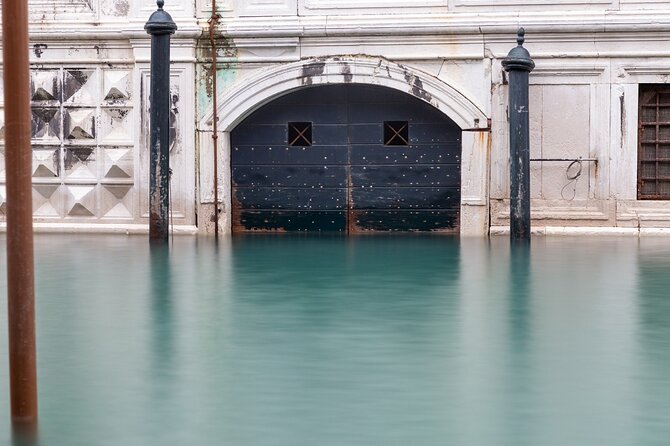
The final major stop heads to Campo Santa Maria Formosa, again tied to high-water events at the end of 2019. You’ll get an explanation of what happened and how those dramatic water days affected heavily impacted areas.
For first-timers, this ending works well because it ties the science back to a human-scale reality: squares, streets, and daily routines. You’re leaving with a framework for interpreting Venice not as postcards, but as a city that has learned to cope with the water it can’t fully control.
And because the overall tour is about two hours, the story stays tight. You end with understanding, not fatigue.
The guide makes it work: Valerio’s pace, anecdotes, and family-friendly style
What separates a good Venice guide from a great one is rhythm. You need someone who can explain complex ideas without turning them into a textbook, and who can keep you moving so you don’t feel stuck in one spot.
You’ll likely get that with Valerio, a licensed local guide who’s known for friendly, enthusiastic commentary and solid English. Multiple families have enjoyed the way he keeps children engaged—making the explanations easy to follow and fun enough that kids want to keep asking questions.
You should also expect practical local help. In addition to the water-world knowledge, Valerio shares recommendations for the rest of your trip—where to eat, what to sample, and how to find satisfying gelato and cafés without losing your day to random wandering.
That tip list is not a gimmick. It’s the difference between seeing Venice and actually enjoying it.
Price and value: what you get for $185.85 per person
At $185.85 per person for about two hours, this is not a budget bargain. It’s a value play.
Here’s why it can still be worth it:
- You’re getting a private licensed guide rather than a crowded group experience.
- The group size is capped at eight, which increases the odds you’ll get your questions answered.
- The tour targets exactly what first-timers struggle with: how Venice functions with water, not just what Venice looks like.
- You’re also getting follow-up usefulness through local guidance for food and sights.
If you’re traveling solo or as a couple, the cost may feel steep compared with standard walking tours. But if you care about understanding what you’re looking at—and you want a guide who can adjust to your questions—this price can make sense quickly.
If you’re on a tight schedule, the short duration can be a hidden win. You’re not spending a full day to get the basics. You’re buying clarity for the rest of your trip.
Logistics you should plan around (quick and practical)
This is a private tour/activity: only your group participates. Pickup is offered, and the meeting area is near public transportation, which helps if you’re already using vaporetto and walking.
You’ll also receive a mobile ticket. That matters in Venice, because paper tickets can turn into little stress snacks at the worst times.
One more planning point: on certain dates, some visitors staying outside Venice and visiting for the day may need to pay a €5 access fee. Check the official info before you pick your first-day tour time.
Who this tour is best for
This tour is a strong match if:
- You’re visiting Venice for the first time and want the city’s water rules explained early.
- You want a smaller-group experience with room for questions.
- You’re traveling with kids and want facts delivered in a way that actually lands.
- You care about Venice beyond the obvious sights—especially the lagoon, defenses, and high-water behavior.
You might want something else if you’re hoping for a long museum-style route, since the focus here is the water story and the city’s response to it. It’s a strong intro, not a replacement for every major attraction.
Should you book this Venice for First-Timers tour?
Yes, if you want your first Venice day to make sense. The tour is built around the lagoon and Acqua Alta, including the practical thresholds (like 80 cm and 140 cm) and the causes (winds, low pressure, lunar and astronomical tides). That foundation pays off all week long when you’re walking streets and trying to predict how the city will feel.
Book it with confidence if you like guides who teach with stories and leave you with actionable recommendations for eating and exploring afterward. With 61 reviews and a 5.0 rating and a 100% recommendation signal, it’s also the kind of experience many people feel they’d repeat.
Skip it only if your goal is purely postcard Venice with minimal explanation. This tour is for people who like knowing why things are the way they are.
FAQ
How long is the Venice for First-Timers private tour?
It’s listed as about 2 hours.
Is this tour private?
Yes. Only your group participates.
How many people are in the group?
The experience is limited to eight travelers.
What language is the tour offered in?
It’s offered in English.
Do I need to buy admission tickets for the stops?
Each stop in the provided itinerary notes admission ticket free.
Is pickup available?
Yes, pickup is offered.
Will I get a mobile ticket?
Yes, a mobile ticket is included.
Is there a Venice day-trip access fee?
On certain dates, day visitors staying outside Venice may be required to pay a €5 access fee. The applicable days and exemptions are listed on the linked official page.
What’s the cancellation policy?
Free cancellation is available up to 24 hours in advance for a full refund.
Does the tour include a licensed guide?
Yes, a licensed tour guide is included.
Are service animals allowed, and is it accessible for most people?
Service animals are allowed. Most travelers can participate, and the meeting area is near public transportation.