REVIEW · VENICE
Venice Film Tour: Explore Iconic Movie Locations
Book on Viator →Operated by deTourist Venice Valerio Coppo · Bookable on Viator
Venice felt cinematic from step one. This Venice Film Tour turns famous landmarks into a walkable movie map, with film-making commentary and real-world location context from Valerio Coppo. I love how movie scenes become a reason to look closer at Venice’s streets, not just a way to pass time.
Two things I liked a lot: first, the guide’s focus on what you can actually see from where you stand, from canal angles to church facades. Second, I appreciated the on-the-spot way the story connects back to the screen, including short clips shown during the walk. It’s a fun way to pick up the city’s geography fast.
One consideration: the tour is about 2 hours and moves at a steady pace, so if you want long museum-style stops, you may feel a little rushed. Also, the experience runs best with good weather since it’s a lot of outdoor wandering.
In This Review
- Key highlights worth your time
- Why a Venice film-location walk makes the city easier
- Price and practical logistics (what you should expect)
- Starting at the train station: movies begin before you reach the water
- Campo del Ghetto and San Stae: Senso and the funeral-boat mood
- Grand Canal and Rialto fish market: the city as a film machine
- Santa Maria dei Miracoli, San Marco Scuola, and Ca’ Rezzonico: romance, church drama, and Bond offices
- Teatro La Fenice and the Bovolo stairs: from real fires to legend-powered stairs
- Campo Santa Maria Formosa and Campo San Barnaba: fake damage and real search-and-find drama
- Gritti Palace, Piscina Sant’Agnese, Hotel Danieli, and San Marco: the big-screen finale feel
- How to get the most out of the walk (and not get cranky)
- Who this tour is for
- Should you book this Venice Film Tour?
- FAQ
- What’s the duration of the Venice Film Tour?
- How much does the tour cost?
- Is pickup offered?
- What language is the tour in?
- Is the tour private?
- Are movie clips used during the tour?
- Are any tickets required for the stops?
- Is there a Venice access fee?
- What’s included in the price?
- What should I know about cancellations and weather?
Key highlights worth your time
- On-site scene context: You stand on the spot and get the film connection right away.
- Valerio Coppo’s storytelling: He mixes film trivia with how Venice works as a real city.
- Off-main-route walking: You get alternative corners instead of only the biggest postcard stops.
- A tight 2-hour route: Many stops are brief, so you cover a lot without burning the day.
- Free entry at listed stops: Each stop notes admission ticket is free.
- Private-group feel: It’s only your group, with pickup offered and mobile tickets used.
Why a Venice film-location walk makes the city easier
Venice can be disorienting the first time you arrive. Streets twist, bridges pop up where you expect open space, and it’s easy to spend hours chasing views you saw in photos. This tour gives you structure. You’re not wandering aimlessly—you’re moving from one well-chosen location to the next, with a reason for each turn.
It’s also a great match for movie fans who want more than quotes and trivia. Instead of treating film references as a side hobby, the tour uses them to teach you how Venice looks and functions: where boats would pass, how public squares frame dramatic moments, and why certain facades or interiors are visually powerful.
Finally, the best part is the pacing. You get a cross-city sweep of major areas in a short window, without needing to plan anything yourself. For first-timers, that can be worth as much as the movie connections.
You can also read our reviews of more tours and experiences in Venice.
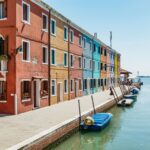
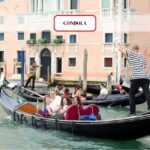

Price and practical logistics (what you should expect)
The price is $185.43 per person for about 2 hours. You’ll get a licensed guide in English, with pickup offered, plus a mobile ticket. It’s also listed as a private tour/activity, so it’s only your group.
Here’s how I think about value: you’re paying for (1) a guided route through multiple iconic spots, (2) film-making commentary tied directly to what you’re seeing, and (3) route-smart guidance so you spend your time efficiently. If you’re the kind of traveler who enjoys learning as you walk, it can feel like a bargain versus trying to research 15+ film locations on your own.
A couple of practical notes that matter for planning:
- Booking trend: it’s commonly booked about 56 days in advance, so earlier planning helps.
- Weather: the experience requires good weather, and if it’s canceled you’ll be offered a different date or a full refund.
- Venice access fee: on certain dates, day visitors staying outside Venice may need a €5 access fee. Check the city’s page at https://cda.ve.it for details and exemptions.
- Tips aren’t included, so set aside a gratuity if you want to reward great guiding.
- It’s near public transportation, and service animals are allowed.
Starting at the train station: movies begin before you reach the water
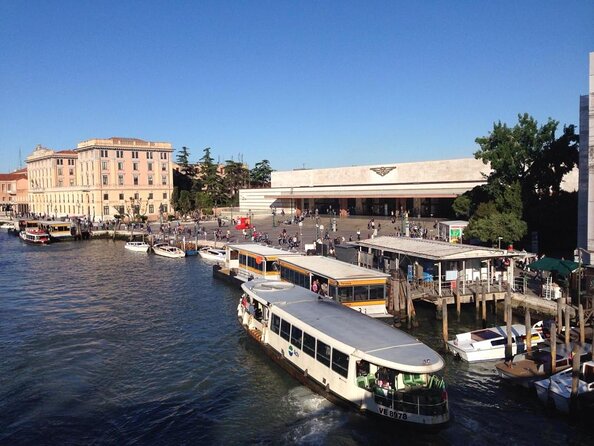
The tour starts at Venice’s railway station area. It’s a smart choice because many famous film moments treat transportation hubs as a gateway into a dreamlike Venice. From here, you get both orientation and momentum.
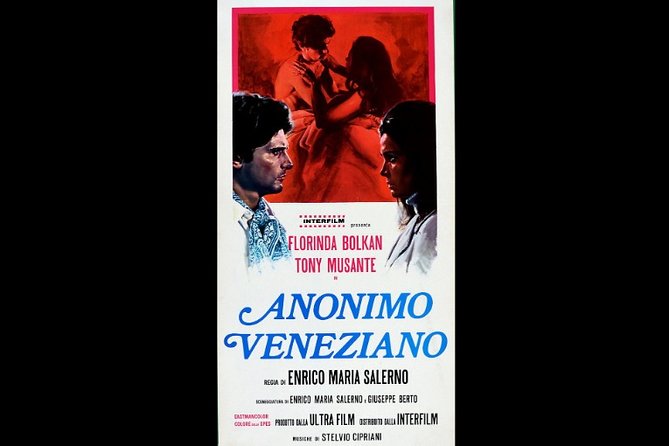
You’ll hear how the station shows up in films ranging from older Italian cinema to later Hollywood productions. One of the most memorable connections is the 1958 film Venice, the moon and you, where the Italian actor Alberto Sordi plays a uniquely bizarro gondolier who hooks foreign tourists.
Why this works in real life: you’re still on your feet and can shake off the travel day, while the guide sets up what kind of Venice you’re about to see—romantic, theatrical, and slightly strange, just like movies prefer.
Campo del Ghetto and San Stae: Senso and the funeral-boat mood
Next, you move into Campo del ghetto (in the Jewish Ghetto area). This big “campo” is where Luchino Visconti sets the start of the passion story in Senso (1954). The film uses the space to launch a romantic drama between Livia Serpieri (played by Alida Valli) and Austrian lieutenant Franz Mahler (Farley Granger).
After that, you’ll stop at Chiesa di San Stae (also known as Eustachio). This is tied to the final-scenes funeral boats in Don’t Look Now (1973), with moored boats in front of the church overlooking the Grand Canal. Even if you’re not hunting for exact film framing, this stop gives you a strong sense of how Venice uses water and buildings together for atmosphere.
Practical note: these are the kinds of stops where the best “see it” moment is often the viewpoint and facade alignment, not a long interior visit.
Grand Canal and Rialto fish market: the city as a film machine
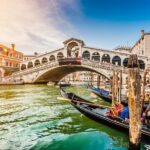
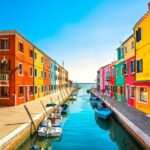
From San Stae, the tour heads toward the Grand Canal, where cinema history gets extra specific. You’ll learn that in 1896, Alexandre Promio boarded a gondola and made one of the earliest film runs by filming boats and men at work. Since then, the Grand Canal’s lineup of over 170 buildings has shown up in dozens of films.
If you’re into film, it’s a fun reminder that Venice’s look wasn’t invented by modern directors. If you’re not, the Grand Canal is still the fastest way to understand why filmmakers keep returning: the scale, the reflections, and the way the buildings frame the water.
Then you pivot to Mercati di Rialto, the Rialto fish market area. Two film beats connect here. In The Tourist (2010), Johnny Depp’s terrace-to-stall stunt was shot at the Rialto market. And across the canal, the area links to the palace-collapse fiction from Casino Royale (2006)—a reminder that cinema borrows Venice’s textures, sometimes bending reality for effect.
Santa Maria dei Miracoli, San Marco Scuola, and Ca’ Rezzonico: romance, church drama, and Bond offices
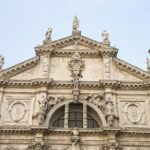
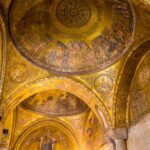
At Chiesa di Santa Maria dei Miracoli, you’ll get a feast of small-scale beauty. This church is covered in polychrome marble, and Orson Welles chose it for the wedding of Otello and Desdemona in Othello (1952). It’s the kind of place that makes you slow down a little because the detail is the point.
A few steps away, you’ll also hear about the fictional flower shop used in Bread and Tulips (1999), tied to the workspace of Licia Maglietta’s character.
Next comes Scuola Grande di San Marco, linked to the TV series The New Pope (2019), directed by Paolo Sorrentino and starring Jude Law. This is a good stop for people who like modern screen references as well as classics.
Then you’ll visit Ca’ Rezzonico, a palace that functions as a civic museum. In Moonraker (1979), it was used as the fictional Drax’s office. What I like about this kind of location is how Venice’s grandeur stays consistent even when the film invents an entirely different story.
Teatro La Fenice and the Bovolo stairs: from real fires to legend-powered stairs
Teatro La Fenice is one of the tour’s best “film-plus-city” moments because it connects drama to real-world history. In Senso (1954), the movie begins during a performance of Il Trovatore staged at La Fenice, and the theater’s later fire in 1996 makes the phoenix theme feel extra loaded. The current building was rebuilt and reopened in 2003. Even the name La Fenice (the phoenix) has history behind it: the theater had already suffered partial destruction in 1836 before rising again.
If you’re standing near theaters often, you can sometimes forget that buildings are shaped by events, not just architecture. This stop brings that home.
After La Fenice, you’ll go to Scala Contarini del Bovolo. There’s a legend that this is Desdemona’s house, and Orson Welles chose it for Brabanzio’s home in Othello (1952), even though Brabanzio is not from Venice in the original story. Either way, it’s a visually memorable stairway—one of those Venice details that feels made for screen drama.
Campo Santa Maria Formosa and Campo San Barnaba: fake damage and real search-and-find drama
In Campo Santa Maria Formosa, you’ll hear about Spider-Man: Far From Home (2019). The film showed the campo as if it had been “destroyed,” but the devastation is fictional. You get to see the real place right after the movie version in your mind, which makes the city feel oddly resilient and playful.
Then you’ll move to Campo San Barnaba. Here the tour blends classic adventure with mid-century romance:
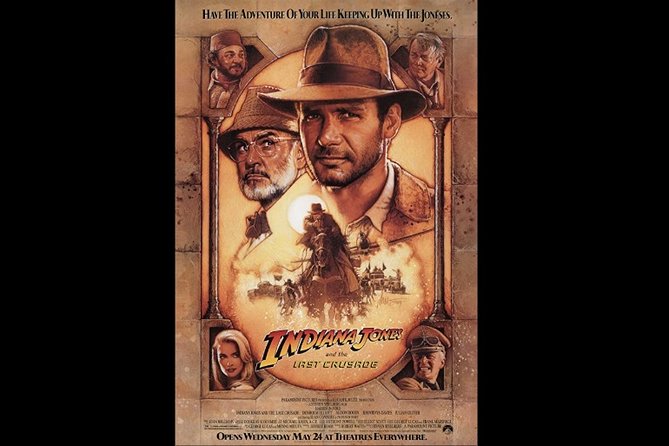
- In Indiana Jones and the Last Crusade (1989), Indiana Jones finds the X that (never) indicates the place to dig in the church basements area.
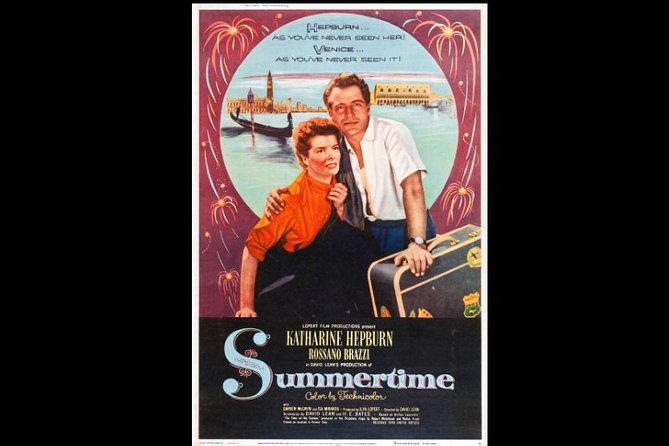
- In Summer Time (1955), Jane Hudson (Katharine Hepburn) wanders around with her camera and accidentally falls into the San Barnaba canal.
- The same location was also chosen for the remake of The Italian Job (2003).
This part of the tour is great for younger movie fans too. It’s the kind of stop where a guide can point out why certain corners look dramatic on camera, even when they’re just ordinary streets and water channels in real life.
Gritti Palace, Piscina Sant’Agnese, Hotel Danieli, and San Marco: the big-screen finale feel
The later part of the tour leans into major-set Venice. You’ll hear about some of the most famous hotel names and how they show up in Hollywood and international films.
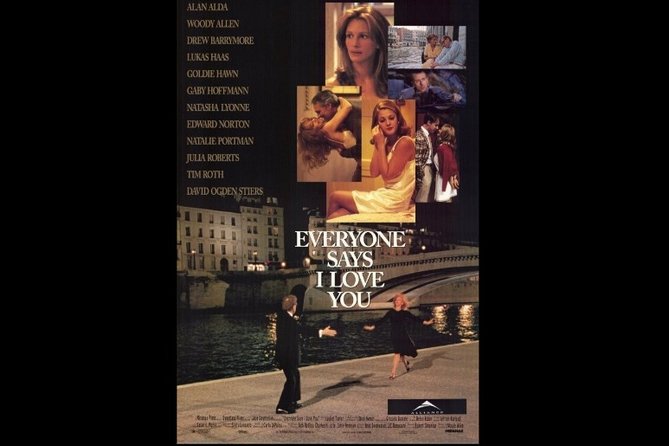
First, Gritti Palace (a Luxury Collection Hotel, Venice). It began life as the Doge Gritti’s family palace and later served as a residence of Vatican ambassadors. It’s been home to guests like John Ruskin, Ernest Hemingway, and Somerset Maugham. In Everyone Says I Love You (1996), Woody Allen used the hotel for scenes starring Julia Roberts. If you like your Venice with a side of old-world glamour, this stop hits the right note.
Next is Piscina Sant’Agnese, tied to jogging and cooling off in film. Julia Roberts’ character used to jog here in Everyone Says I Love You (1996), and Katherine Hepburn freshens up during her Venice heat break in Summer Time (1955).
Then you’ll reach Hotel Danieli, another ultra-classy name. It has connections to major literary and musical figures like Wolfgang Goethe, Richard Wagner, and Honoré de Balzac, plus the intense relationship between George Sand and Alfred de Musset. On screen, Vittorio de Sica used it in his last movie The Journey (1974) starring Sophia Loren and Richard Burton. It also appears in Moonraker (1979) as the hotel of Holly Goodhead, and it’s where the characters of Carlo Verdone and Veronica Pivetti spend their first tragicomic wedding night in Viaggi di Nozze (1995).
Finally, you’ll spend time around Doge’s Palace / San Marco square area, where the tour ties together multiple big titles:
- In Moonraker (1979), you’ll hear about James Bond’s gondola-hovercraft moment.
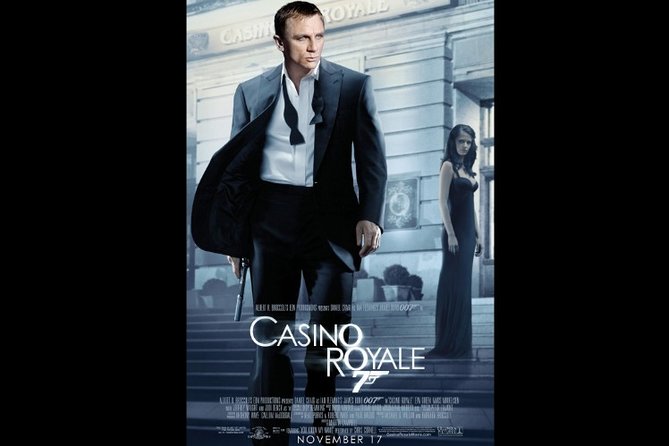
- In Casino Royale (2006), Bond’s hotel has a commanding view right on San Marco square.
- Orson Welles also chose the side facade south of the basilica for a dramatic dialogue between Brabanzio and Othello.
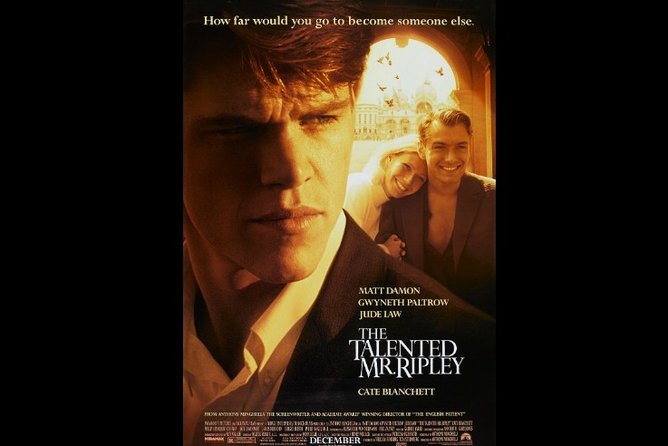
- In The Talented Mr. Ripley (1999), the final scene happens at café tables in the Piazza area.
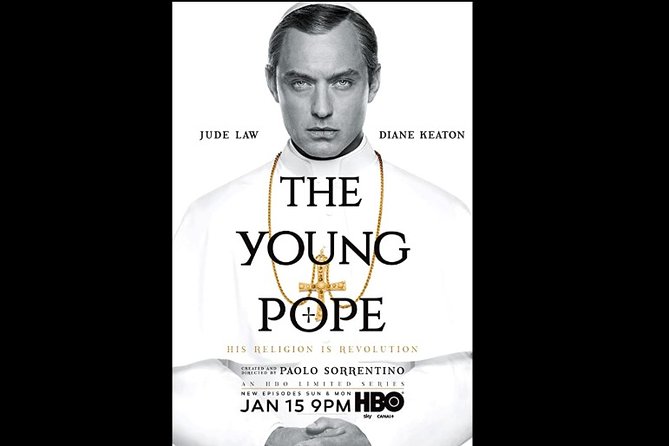
- Scenes from Paolo Sorrentino’s The Young Pope (with Jude Law and Diane Keaton) also connect to this square.
This is the part that tends to feel like a movie finale, even for people who came for one franchise only. You start noticing how Venice’s most famous public spaces naturally lend themselves to high stakes and high drama.
How to get the most out of the walk (and not get cranky)
A couple of small things make a big difference on this style of tour:
Wear shoes with grip. Venice floors can be uneven, and you’ll be moving for about two hours with multiple short stops.
Use the film cues like a map. When the guide ties a location to a specific moment—like the funeral-boat mood in front of San Stae, or the terrace stunt area near Rialto—your eyes start finding details you would miss otherwise.
Ask for the viewpoint logic. The tour works because the guide can explain what the camera likely wanted: an angle down water, a facade for drama, or a square for scale. If you ask where the camera would have stood, you’ll understand the city faster.
Plan for heat or rain. The experience requires good weather. If you go in summer, bring water and expect sun between stops. If it rains, trust the provider to adjust dates rather than forcing the walk.
Who this tour is for
This is a strong fit if:
- You’re a cinephile who enjoys seeing classic and modern titles connected to real places.
- You want a structured Venice walk that covers major highlights without spending the day sorting out directions.
- You’re traveling with a family member who loves Spiderman or adventure films. This kind of reference-heavy tour tends to keep younger people engaged.
It may be less ideal if:
- You prefer long, quiet museum time rather than a fast-moving route.
- You want only indoor stops. Many connections are made from outside views and street-level framing.
Should you book this Venice Film Tour?
If you’re excited by the idea of turning Venice into a movie map, I think it’s a very good buy. The combination of a licensed English guide, on-site scene context, and a route that hits both iconic and less-expected corners is exactly the kind of experience that helps Venice feel understandable fast.
Book it sooner rather than later since it’s often reserved about two months out. And only pick your date when the forecast looks friendly, because the tour relies on walking in good weather.
If your goal is simple sightseeing, you can do Venice on your own. But if you want a guided route where every turn has a screen reason behind it, this one delivers.
FAQ
What’s the duration of the Venice Film Tour?
It’s approximately 2 hours.
How much does the tour cost?
The price is $185.43 per person.
Is pickup offered?
Yes, pickup is offered.
What language is the tour in?
The tour is offered in English.
Is the tour private?
Yes. It’s listed as a private tour/activity, so only your group participates.
Are movie clips used during the tour?
The tour description and feedback indicate you’ll get immediate film context, including scenes shown during the walk.
Are any tickets required for the stops?
Each listed stop notes that admission ticket is free.
Is there a Venice access fee?
On certain dates, some day visitors staying outside Venice may need to pay a €5 access fee. Details and exemptions are at https://cda.ve.it.
What’s included in the price?
A licensed tour guide is included.
What should I know about cancellations and weather?
It requires good weather. If canceled due to poor weather, you’ll be offered a different date or a full refund. Tips are not included.