REVIEW · VENICE
Learn to Row in the Venice Canals
Book on Viator →Operated by Venice On Board · Bookable on Viator
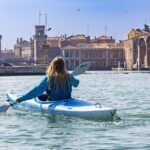
Rowing beats sitting in Venice. In this 90-minute Venice canal lesson, you learn the basics of traditional-style rowing while gliding through calmer waterways that many people only see from a sidewalk. You’ll also get the context behind the craft, including the mission tied to preserving and restoring Venetian boats, not just snapping photos on the way. Venice canals meet real rowing practice.
What I love most is how practical the instruction feels. You get hands-on coaching from a local who grew up with these boats, and the ride itself stays in the quieter Cannaregio-side canals instead of the main crush. Many instructors you may meet (like Stefano, Nicola, Emiliano, or Frederico) are described as passionate and patient, and that matters because rowing looks simple until you’re holding an oar.
One possible catch: it’s weather-dependent, and you’re on a boat for about an hour and a half learning technique. If what you want most is long sightseeing narration (or a nonstop scenic cruise), you might find the focus leans more toward skills than facts at every second.
In This Review
- Key things to know before you go
- Why Learn to Row in Venice Canals (Not Just Ride Them)
- The 90-Minute Flow: What Happens Once You’re On the Water
- The Boat Lesson: Technique, Timing, and That Forcola Moment
- The Canal Route: Chiesa dell’Orto, the Ghetto Area, and Campo dei Mori
- Cannaregio From the Water: A Quieter Venice You Can Feel
- Your Instructor: What Makes Stefano, Nicola, Emiliano, and Frederico Different
- Price and Value: $95.54 for Real Time on the Water
- Who This Suits Best (and Who Might Skip It)
- What to Bring: Practical Tips for a Smooth Rowing Lesson
- Weather, Water Conditions, and Real-World Timing
- Price, Access Fees, and Getting There Without Stress
- Should You Book This Venice Learn-to-Row Lesson?
- FAQ
- How long is the Learn to Row in the Venice Canals tour?
- What does it cost?
- Is the tour offered in English?
- Where do I meet, and does it end there too?
- Do I need good weather?
- How big is the group?
Key things to know before you go
- Small group (max 6): more hands-on time and quicker help when your rowing rhythm needs adjusting.
- You learn gondolier-style handling basics: including how pros manage the boat with the forcola, explained during the lesson.
- Quiet canal route: you’ll pass landmarks and canal edges without being stuck in the densest foot-traffic areas.
- Stops you can actually spot from the water: Chiesa della Madonna dell’Orto, the Ghetto Ebraico area, Fondamenta Dei Ormesini, Campo dei Mori, and Casa del Tintoretto.
- Value vs a classic gondola ride: it’s a much more affordable way to spend longer time on the water with instruction.
Why Learn to Row in Venice Canals (Not Just Ride Them)
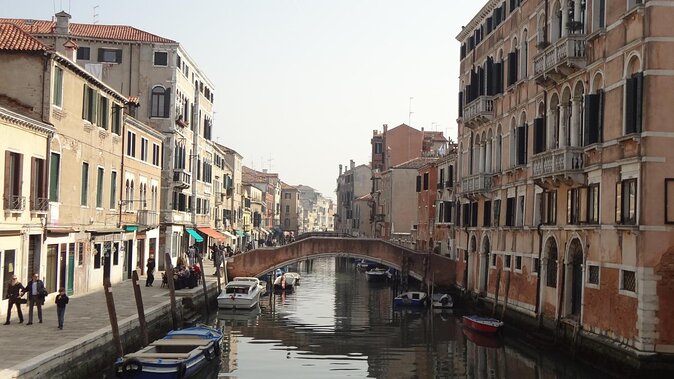
Riding a gondola is nice. Learning to row is better—because Venice changes when you’re the one moving the boat. Instead of watching the canals from a fixed seat, you feel how the oar works, how your body balances, and how small steering choices help you slide through tight spaces.
This experience is built for people who want something more personal than a standard canal photo loop. You’ll cover the history of Venetian boats and the organization’s recovery work, but you’re not stuck in a classroom. You leave with a new skill, not just memories.
And there’s a practical bonus: the route tends to highlight quieter canal stretches. That means you can enjoy the water and architecture without feeling like you’re surrounded on every side by crowds.
You can also read our reviews of more tours and experiences in Venice.

The 90-Minute Flow: What Happens Once You’re On the Water
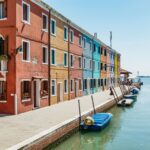
The whole experience runs about 1 hour 30 minutes, and the timing is part of the appeal. Long enough for real practice, short enough that it doesn’t turn into a half-day ordeal.
You start with a short introduction. Expect talk about traditional Venetian boats and the conservation/recovery mission, followed by the basics of how to handle the oar and how to move the boat with control. Then the fun part: you head out through the canals where you practice, turn, and get the hang of navigation around other boats.
Because the group stays small (up to 6 people), you’re not waiting for your turn. You get coaching, and you can ask questions without the guide feeling pulled in five directions.
The Boat Lesson: Technique, Timing, and That Forcola Moment
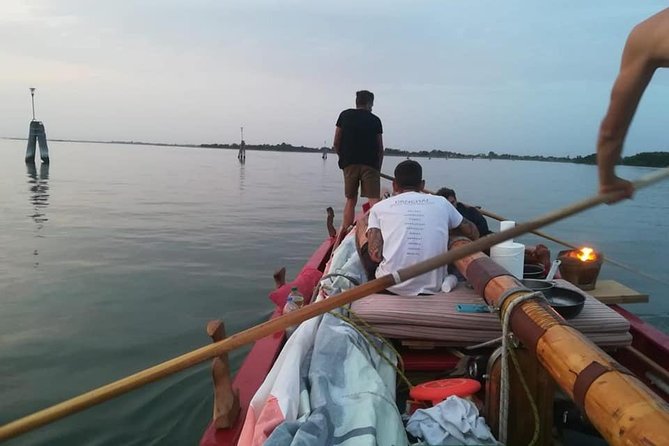
Rowing in Venice is not just swinging an oar. The whole point is learning the rhythm—how to coordinate your movement with the boat’s balance and how to keep your strokes consistent.
One of the standout teaching points you’ll hear about is the way gondoliers handle the boat, including the use of the forcola. Even if you’ve only seen gondolas from bridges, that detail helps you understand why the boats move the way they do.
From what people report, the instructors explain things clearly and keep the lesson interactive. Many sessions include a quick technique intro, then a longer practice portion where you get comfortable enough to steer and take turns. The skill part stays doable for a wide age range, because it’s hands-on learning rather than a workout boot camp.
The Canal Route: Chiesa dell’Orto, the Ghetto Area, and Campo dei Mori
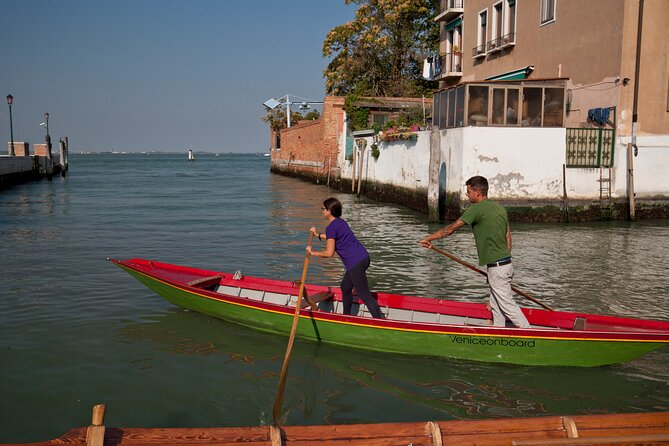
The route is one of the best reasons to do this lesson. You’re not just rowing in a straight line; you’re traveling past recognizable places from the water, with calmer canal sections that feel more local.
Here’s what you’ll encounter along the way:
Stop 1: Chiesa della Madonna dell’Orto
You’ll come near the church area while learning how the boat responds to your rowing. This is a good first stop because it helps you start feeling steady before the route widens into more open canal views.
Stop 2: Ghetto Ebraico
Rowing near the Ghetto Ebraico area gives you a different angle on an important part of Venice. From the water, you can watch how canal life works around the edges of the neighborhood—less “tour route,” more everyday geography.
Stop 3: Fondamenta Dei Ormesini
This is a waterfront stretch where you can practice the sense of moving alongside Venetian life. Fondamenta areas are where boats often feel most “connected” to the city—so it’s a strong place to refine your steering and cadence.
Stop 4: Campo dei Mori
You pass by Campo dei Mori, which helps break up the canal ride with a change in scenery and a sense of open space. It’s also the kind of landmark you remember later, because it doesn’t feel like another anonymous canal bend.
Stop 5: Casa del Tintoretto
You end up rowing by Casa del Tintoretto, a name that sticks because it’s tied to Venetian identity and architecture. It’s a satisfying closing point: you’ve learned technique, and you finish with the feeling that you truly crossed through the city, not around it.
Between these stops, you’ll be taught how to navigate with other boats. That’s key in Venice. Even if the canals look calm, you’re sharing the water.
Cannaregio From the Water: A Quieter Venice You Can Feel
If your Venice plan is mostly “stare at buildings from the sidewalk,” you’ll miss the way the city actually moves. This lesson shifts your perspective into Cannaregio’s canal side, where the pace feels more human.
People often love that the route avoids the most crowded sidewalk bottlenecks. You get the view without the constant stopping, edging, and photo-lurching. The water becomes your buffer, and that alone can make Venice feel less like a checklist and more like a place you’re learning to understand.
Also, since it’s a rowing session, you’re not rushing. You can look around, notice details, and then go back to practicing the movement. It’s one of the few Venice activities where skill-building and scenery happen at the same time.


Your Instructor: What Makes Stefano, Nicola, Emiliano, and Frederico Different
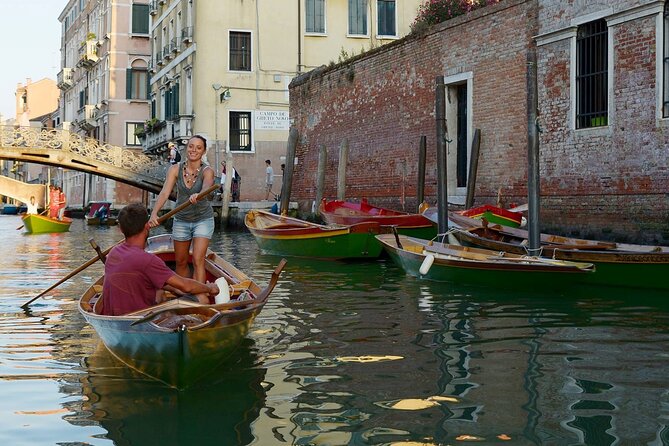
The lesson is only as good as the teaching. What shines here is the human part: instructors who clearly love their home waterways and take the time to help you get it right.
In the feedback you’ll see repeated names like Stefano, Nicola, Emiliano, and Frederico. While each instructor has their own style, the common thread is that they connect boat history with what you’re doing in the moment—so the lesson doesn’t feel random.
You should also expect English instruction, since the experience is offered in English. That matters because rowing has a lot of body mechanics. Clear, spoken guidance is what helps you progress fast instead of floundering.
Price and Value: $95.54 for Real Time on the Water
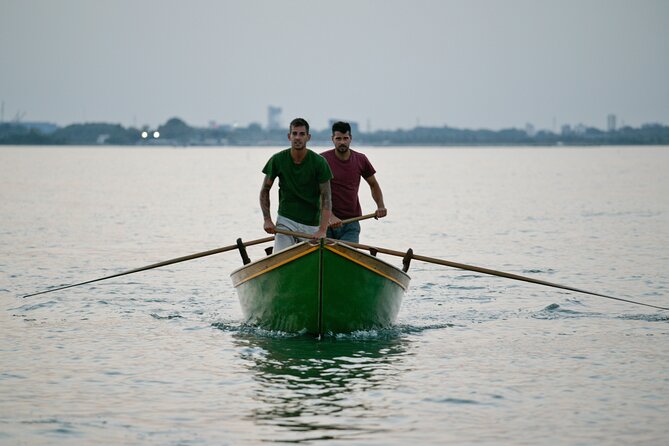
At about $95.54 per person for roughly 90 minutes, this is priced like a practical activity, not a luxury ride. And that’s exactly how it plays.
It’s often compared to gondola experiences because you get something more active than a short seated cruise. Instead of paying for a brief ride with limited control, you pay for longer time on the water with technique coaching. The difference is huge: the value comes from participation.
The small group size (max 6) also helps justify the price. In a big group, you’d feel shuffled. Here, the guide can actually correct your posture and pacing.
If you’re trying to balance budget with authenticity, this tends to be a smart swap: less money for more you-say-I-did-it skill.
Who This Suits Best (and Who Might Skip It)
This fits best if you want to:
- learn a real skill in a short time
- see Venice from the canals without battling crowds
- do an activity that’s fun for a mixed group of ages
It also works nicely as a family outing. People mention it as something teens and adults genuinely enjoy, not only because it’s calm, but because it’s hands-on.
You might consider a different activity if you’re mainly craving long, detailed sightseeing commentary. One criticism you’ll see is that some folks wanted more city talk during the canal stretches. If you’re the type who wants constant narration and stops for off-boat exploration, this lesson may feel more focused on instruction than storytelling.
What to Bring: Practical Tips for a Smooth Rowing Lesson
This is a water-based activity, so pack like you’re going out for a short Venice boat session.
Bring:
- comfortable clothes you don’t mind getting a little damp (even on calm days)
- non-slip footwear
- a light layer in case the air cools down near the water
- a phone camera, because the rowing angles are excellent for photos
Wear sun protection if it’s bright, and plan your time so you don’t feel rushed getting to the meeting point. The experience ends back where you start, so you can keep the rest of your day flexible.
One more smart move: ask your guide what to focus on first. With only 90 minutes, a single good adjustment can make your rowing click faster.
Weather, Water Conditions, and Real-World Timing
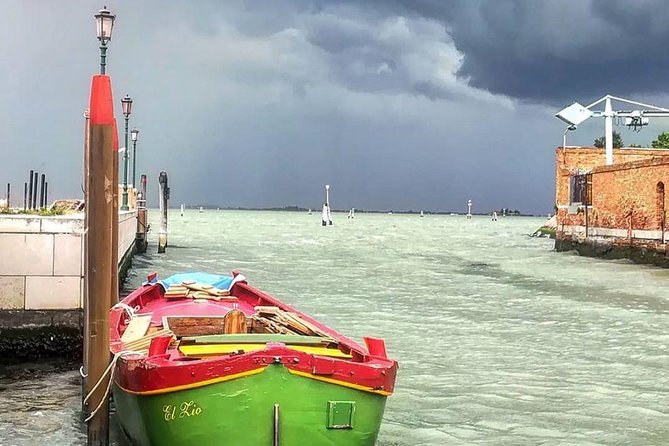
This experience requires good weather. If it’s canceled due to poor weather, you’ll be offered a different date or a full refund.
Rain doesn’t automatically mean you’re shut down; some guides may handle conditions in a practical way, but the key point is that the provider plans around what’s safe and workable. In Venice, weather can shift quickly, so keep an eye on the forecast the day before.
Timing is also worth thinking about. Since the tour runs about 1.5 hours and resets back at the meeting point, treat it like a block on your calendar. Don’t stack it too close to another timed reservation.
Price, Access Fees, and Getting There Without Stress
Two things can affect what you pay in the moment.
First, the price you book covers the activity itself at $95.54 per person and includes a mobile ticket.
Second, on some days, visitors who are staying outside Venice and visiting for the day may need to pay a €5 access fee. Check the updated schedule at https://cda.ve.it so you don’t get surprised on the day.
As for getting there, the meeting point is at Cantiere Nautico Navale Casaril S.r.l., 3009/H, C. del Magazzen, 30121 Venezia VE, Italy. It’s listed as near public transportation, which helps if you’re coming from a nearby rail stop or hotel area.
Should You Book This Venice Learn-to-Row Lesson?
Yes—if you want a Venice experience that’s active, small-group, and genuinely different from the classic gondola line.
Book it when:
- you like learning by doing
- you want quieter canal views and a more local rhythm
- you’re curious about how traditional boats are handled and preserved
- your group includes people who want something fun but not strenuous
Maybe skip it if:
- you only care about long scenic sightseeing with minimal instruction
- you’re traveling on a day where weather risk would ruin your schedule
- you expect a gondola-style narrated tour the whole time
For most people, this is one of the best values in Venice because you leave with a skill, not just a ride.
FAQ
How long is the Learn to Row in the Venice Canals tour?
It’s approximately 1 hour 30 minutes.
What does it cost?
The price is $95.54 per person.
Is the tour offered in English?
Yes, it’s offered in English.
Where do I meet, and does it end there too?
You meet at Cantiere Nautico Navale Casaril S.r.l., 3009/H, C. del Magazzen, 30121 Venezia VE, Italy. The activity ends back at the meeting point.
Do I need good weather?
Yes. The experience requires good weather. If it’s canceled due to poor weather, you’ll be offered a different date or a full refund.
How big is the group?
The activity has a maximum of 6 travelers.