REVIEW · VENICE
Glass Blowing Experience with Glass Master
Book on Viator →Operated by Gino Mazzuccato Murano Glass · Bookable on Viator
A red-hot demo, without the long wait. This glass blowing experience in Venice sends you by private water taxi to Murano, where you meet a glass master and get a short, hands-on try.
I especially like the behind-the-scenes feel: you watch the master work up close, including the kinds of moves that turn molten glass into real shapes. I also love that you get your own turn to blow glass (not a passive show), which helps you understand just how sensitive the process is.
One thing to think about first: the time you spend actively blowing is limited, so this is best seen as a short introduction rather than a full workshop.
In This Review
- Key Things You’ll Notice Right Away
- Private Water Taxi To Murano: How the Experience Really Starts
- Inside Gino Mazzuccato Murano Glass: Watching the Master Work
- The Demo Plus Your Turn Blowing: A Short Hands-On That Still Teaches
- Getting to Browse After: Murano Glass Collection and Purchases
- Why You Can’t Take Your Blown Glass Home Immediately
- Price and Value: Is $240.96 Worth It?
- Timing, Group Size, and Language: Plan for the Realistic Pace
- Who Should Book This Murano Glass Master Session?
- Should You Book Glass Blowing Experience with Glass Master?
- FAQ
- How long is the glass blowing experience?
- Where does the tour take place?
- Do you get a pickup to go to Murano?
- Is there an English-speaking guide?
- Do I get to blow glass myself?
- Can I take home the glass I blow during the session?
- Is this a private experience?
- Is a €5 access fee sometimes required?
- What happens if the weather is poor?
- What’s the cancellation policy?
Key Things You’ll Notice Right Away
- Private water-taxi ride to Murano: you start the experience the way Murano glass people do—by boat.
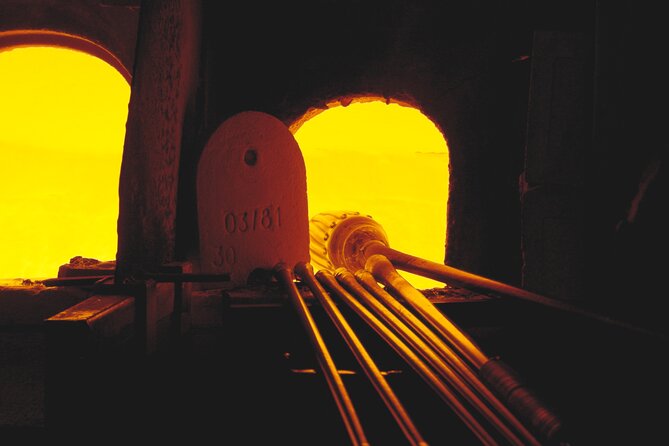
- A true glass factory setting: you’re watching production techniques, not performing for a crowd somewhere else.
- Meet the glass master in action: you’ll see how pieces start, how they’re shaped, and how control matters.
- You get a chance to blow: the “try it” part is real, even if brief.
- Your piece isn’t take-home-ready: the glass needs slow cooling (24–48 hours), so you leave with memories, not a souvenir you made.
- Shopping is part of the flow: after the demo, you can browse and buy Murano glass.
Private Water Taxi To Murano: How the Experience Really Starts
This is one of those Venice experiences that feels built for your schedule, not the other way around. You’re picked up in a private water taxi directly at your hotel (or your designated pickup point) at the time you’ve arranged. That alone changes the tone: you’re already in motion toward Murano’s glass world before the first explanation begins.
Murano is only a short ride away, but arriving by boat gives you that immediate sense of place. You’re not just visiting a landmark; you’re going to a working island known for glass. If you’re timing your Venice days, the water taxi also helps you avoid some of the guesswork that comes with public transport and transfers.
This part matters for value, too. At $240.96 per person, you’re paying for a set package: transport + private attention + the demo + the chance to participate. If you’ve done Murano tours before, you’ll recognize the difference right away: this one gives you a cleaner, more contained experience.
You can also read our reviews of more tours and experiences in Venice.



Inside Gino Mazzuccato Murano Glass: Watching the Master Work
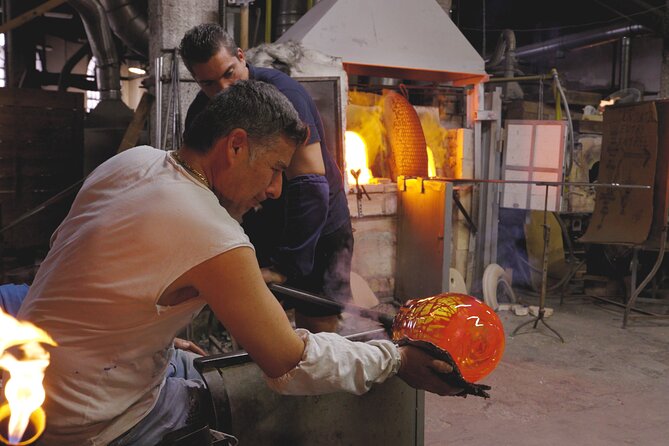
The experience centers on a single factory stop: Gino Mazzuccato Murano Glass. Once you arrive, staff meet you and handle the pacing—where to stand, when to watch, and when your turn comes. You’ll first see the glass master working, which is the heart of the value here.
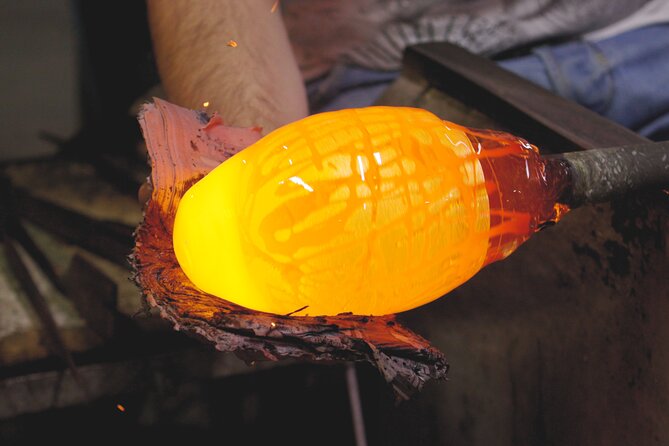
What makes the demonstration feel special is the level of process you see up close. You don’t just watch someone wave a tool around; you see steps that show how molten glass behaves. One moment can be about forming a basic shape, and the next can be about detail work—like creating small character forms. In the better moments of the experience, you’ll pick up how technique controls the final result, from thickness to form.
Staff also explain what you’re seeing: materials, how glass is handled at each stage, and why certain moves are used. Names like Rocco come up in participant experiences, and if he’s the explainer at your session, you’ll likely appreciate how he frames the “why,” not just the “what.”
Practical note: this factory building is large and visually obvious once you’re on Murano. If you’re going to arrive on your own first, keep it simple—use the clearest landmark signage and arrive early enough to breathe.
The Demo Plus Your Turn Blowing: A Short Hands-On That Still Teaches
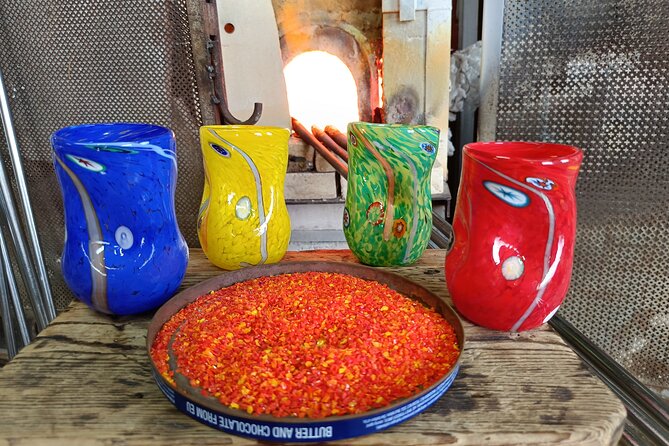
The format is straightforward. First comes the glass master’s work, and then you and your group get a chance to blow the glass along with the master. It’s explicitly described as a simple try to blow, not a long workshop where you make a finished object step-by-step.
So here’s the best way to set expectations: you’re learning the feel of glass blowing, not completing a craft project. You may get only a brief window—often described as quick participation where you try blowing into a tube and see what happens. That brevity is exactly why the experience can fit into a 2-hour total plan, including transport and shop time.
Even with limited time, this hands-on moment can be surprisingly memorable. People tend to remember the difference between watching a master and actually controlling airflow and timing. Glass responds immediately. If you don’t apply pressure correctly, the bubble won’t behave the way you expect. That’s the real lesson: control is everything.
There are also family-friendly notes from participant experiences. Kids have been allowed to blow glass under supervision in some sessions, which can be a big reason families choose this rather than a purely observational demo.
One more helpful detail: some sessions include recording your experience with staff using your own camera or phone. If you care about saving the moment, bring a fully charged phone and consider unlocking it in advance so you’re not fumbling at the wrong moment.
Getting to Browse After: Murano Glass Collection and Purchases
After the blowing demo, you can visit the rest of the glass collection and shop on-site. This is where many people shift from learning mode to souvenir mode—except the souvenir is typically something someone else made.
Your “made by you” item isn’t take-home-ready (more on that below), so the store is your real purchasing option. In practice, the shop is also part of how the business works: Murano glass isn’t cheap, and the prices reflect skilled work, not factory mass production.
Some participants notice a discount after the demo, which makes the shop feel like a natural follow-on instead of a hard sell. Still, it’s smart to go in with a plan. If you want a specific type of piece, decide what you’re looking for before you start browsing. That keeps you from getting pulled into looking at everything at once.
If you care most about technique rather than collecting, you can still use the shop time well by watching how the pieces are displayed and how they differ in color and form. It’s an easy way to connect what you saw at the bench to what’s for sale.
Why You Can’t Take Your Blown Glass Home Immediately
This is a key point people sometimes don’t expect: the glass you blow is not something you’ll be able to take away. The reason is cooling.
After shaping, the glass has to be slowly cooled to be tempered. That process takes about 24–48 hours, so your piece isn’t “finished and ready” the same day. In other words, it’s not like pottery where you can walk out with a baked result.
For you, that changes how you think about the experience. If your main goal is to create a take-home souvenir with your own hands, this setup may feel frustrating—especially if you’re only in Venice briefly. On the flip side, if your goal is the technique and the memory of blowing, it works well. You leave with a story, photos, and a better appreciation for why Murano pieces cost what they cost.
It also hints at the seriousness of the factory workflow. This isn’t a “toy demo.” The product is treated as real glass that needs real processing.



Price and Value: Is $240.96 Worth It?
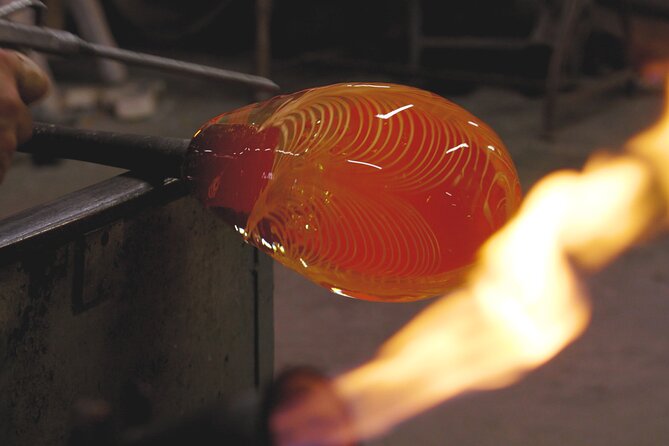
At $240.96 per person for about 2 hours, you’re paying for a bundle: private transport to Murano, a guided session with a glass master at a known factory, a short hands-on try, and time to browse the glass collection.
So what makes it worth it for the right traveler?
- You’re not spending a day just “getting there” and hoping you find a workshop.
- You’re getting private-group attention, not getting shuffled with random strangers.
- You’re paying for access to a working glass setting and a master’s approach, not just a sales pitch.
Where the price can feel questionable is if you expect a long class where you make a finished piece over and over. Some people have described the demonstration as short and the blow time as brief. That’s not surprising given the format and the need to keep the session moving. It’s best to treat it as an intro that happens fast.
One more value factor: your session time isn’t just for blowing. It includes seeing the master work, getting explanations, moving between locations, and then shop time. If you compare it to demos that are cheaper but purely observational, the interactive component is the main differentiator.
If you want more time at the torch or want to make something you’ll definitely take home same day, you may want to look for a longer workshop format instead. But for many people, this hits the sweet spot: worth paying for because it’s concentrated and personal.
Timing, Group Size, and Language: Plan for the Realistic Pace
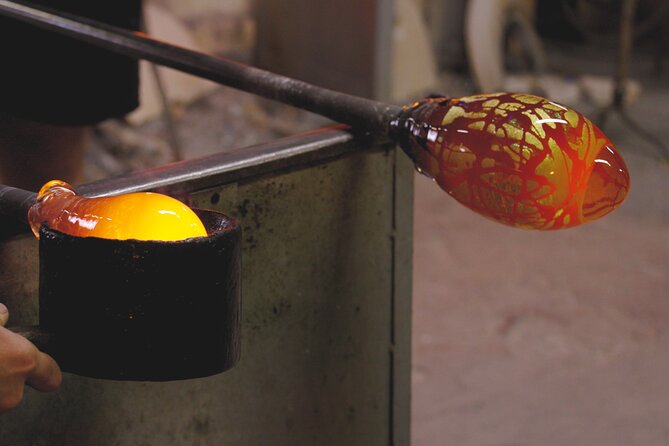
Even though this is private for your group, your hands-on chance can still be limited. Some experiences describe only a subset of the group getting actual blowing time. That may depend on how the session is set up and how many people are participating at the hot bench.
Also, your ability to follow everything matters. The experience is offered in English, but if you’re sensitive to accents or if the room is loud (a factory demo tends to be), you may want to arrive ready to listen and ask a question when you can. If you’ve got a group with mixed comfort in English, it can help to align expectations before you go.
Timing is another reason to manage expectations. The overall experience is listed as about 2 hours, but within that you may find the demonstration component feels faster than the longer workshop-style experiences some people imagine. The most productive mindset is to treat it like a focused show-and-try: watch carefully, ask questions, then use the shop time well.
Finally, booking timing matters. This kind of experience often sells ahead, and the average booking window is reported as 78 days. If your trip dates are fixed, don’t wait until the last week to decide.
Who Should Book This Murano Glass Master Session?
This fits best if you want:
- A short, hands-on introduction to Murano glass blowing
- A private, well-paced experience rather than a large group scramble
- A chance to meet the glass master and understand technique at the bench
- A fun activity that works even with kids under supervision
It may not fit as well if you:
- Want a long, step-by-step workshop where you’ll make and keep a finished piece
- Are mainly motivated by taking home a specific item you personally shaped that same day
- Are expecting a session that feels as long as the stories you might have heard about glass schools
If you’re the type who likes learning from artisans in action—watching how professionals control heat, movement, and timing—this is a strong match.
Should You Book Glass Blowing Experience with Glass Master?
I’d book it if you want a compact Murano experience with real factory access: private transport, a master at work, and a genuine chance to blow glass yourself. It’s a good value when your goal is appreciation and participation more than a long craft build.
I wouldn’t book it if your top priority is a lengthy class, extensive hands-on time for every person, or taking home what you blow the same day. In that case, you’ll likely feel disappointed because the process here is built around short try time and proper glass cooling afterward.
If you’re flexible, bring curiosity, and go in knowing it’s an intro—not a full making session—you’ll probably leave satisfied and more impressed with real Murano glass than you were when you arrived.
FAQ
How long is the glass blowing experience?
It’s approximately 2 hours.
Where does the tour take place?
The glass blowing session happens on Murano at Gino Mazzuccato Murano Glass, with the experience starting from Venice via a water taxi.
Do you get a pickup to go to Murano?
Yes. The experience includes a private water taxi pickup from your hotel or pickup point at your chosen time.
Is there an English-speaking guide?
The experience is offered in English.
Do I get to blow glass myself?
Yes. After watching the glass master, you get a chance to blow the glass along with the master. It’s described as a simple try to blow, not a full workshop.
Can I take home the glass I blow during the session?
No. The glass has to be cooled slowly to be tempered, which takes about 24–48 hours, so you aren’t able to take it away immediately.
Is this a private experience?
Yes. It’s private for your personal group only.
Is a €5 access fee sometimes required?
On certain dates, day visitors staying outside of Venice may need to pay a €5 access fee. You can check the applicable days and exemptions at https://cda.ve.it.
What happens if the weather is poor?
The experience requires good weather. If it’s canceled due to poor weather, you’ll be offered another date or a full refund.
What’s the cancellation policy?
You can cancel up to 24 hours before the experience for a full refund. If you cancel less than 24 hours before, the amount paid won’t be refunded.