REVIEW · VENICE
Giudecca Island Discovery Tour
Book on Viator →Operated by deTourist Venice Valerio Coppo · Bookable on Viator
Giudecca feels like Venice’s side door. This 2-hour small-group tour takes you to an island most first-timers miss, with stories that connect politics, industry, and today’s creative scene. You’ll also get a local guide who explains how the island got shaped over centuries, not just what to photograph.
I especially love two things about this experience: the low-crowd pace (max 10 people) and the way the walk mixes major sights with everyday island details. One possible drawback to plan for: you’re walking outside for much of the tour, so wind can make it feel cooler than you expect.
In This Review
- What Makes This Giudecca Tour Worth Your Time
- Entering Giudecca: The Name, the Banished, and the Artists
- Stop 1: A Lagoon Story Starts in Venice Proper
- Stop 2: Fondamenta Sant’Eufemia and a Veneto-Byzantine Church
- Stop 3: Hilton Molino Stucky Venice and the Neo-Gothic Flour-Mill Past
- Stop 4: Fondamenta de le Convertite and the Island’s Tough Edges
- Stop 5: Artisti Artigiani del Chiostro at Ex Convento Santissimi Cosma e Damiano
- Stop 6: Teatro Junghans and the Glass-Factory-to-Modern-Neighborhood Story
- Stop 7: Chiesa del Santissimo Redentore and Palladio’s Survival Moment
- Stop 8: Villa Heriot and Art Nouveau Views Over the Southern Lagoon
- Stop 9: Casa dei Tre Oci and the Finish Near San Marco Views
- Price and Value: What $163.64 Really Buys You
- Who This Tour Suits Best
- Quick Practical Tips Before You Go
- Should You Book Giudecca Island Discovery?
- FAQ
- How long is the Giudecca Island Discovery Tour?
- What is the group size for this tour?
- How much does the tour cost?
- Where do I meet the tour, and where does it end?
- Do I need a water bus ticket to reach Giudecca?
- What’s included in the tour price?
- Are admission tickets included for the stops?
- Is there a Venice access fee that might apply?
- Is free cancellation available?
- Are service animals allowed?
What Makes This Giudecca Tour Worth Your Time
- Max 10 people means real conversation: you can ask questions and actually keep up.
- Giudecca’s name story sets the stage: you learn why rebel aristocrats were sent here long ago.
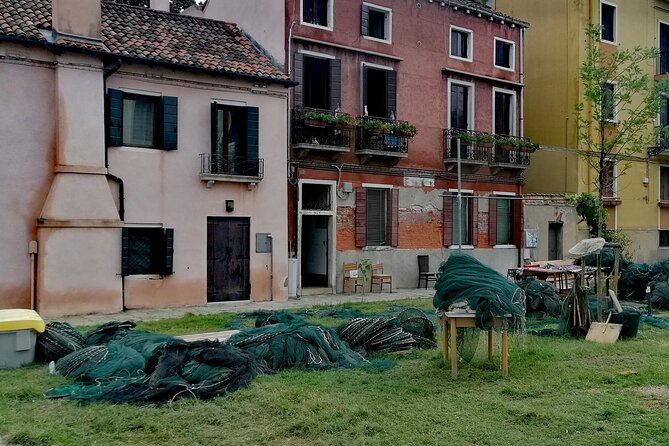
- Factories-to-culture sights: former mill and glass-factory spaces show how the lagoon economy changed.
- Stop-by-stop pacing: short visits let you see a lot without turning it into a museum slog.
- A classic Palladio payoff: you finish with a major church tied to the city’s survival story.
Entering Giudecca: The Name, the Banished, and the Artists
You start on the Zattere side of Venice (Zattere 30133). From there, the focus shifts fast: this isn’t just another postcard island. Giudecca’s story begins with its name—tied to the idea of the judged, connected to rebel aristocratic families banished here around the 9th century.
That’s the clever hook of the whole tour. It makes every later stop feel connected. When you hear that the big abandoned spaces eventually attracted artists who couldn’t afford central Venice rents anymore, the “why” behind all those repurposed buildings clicks.
One small logistics note that matters: the water bus ticket to Giudecca is not included. You buy it on board, so build in a little buffer time and be ready to sort it out as a group.
You can also read our reviews of more tours and experiences in Venice.
Stop 1: A Lagoon Story Starts in Venice Proper
Your first stop stays right on the Venice side. You’ll hear the explanation behind Giudecca’s name and the myth-versus-etymology angle—why it’s not simply a one-time Jewish presence story (as the similar sound might suggest). The point isn’t academic trivia. It frames the island as a place of exile and second chances.
This is also a good moment to get your bearings. If it’s your first time crossing to Giudecca, you’ll leave the first minutes with a clearer sense of what you’re about to see and why it looks the way it does.
Stop 2: Fondamenta Sant’Eufemia and a Veneto-Byzantine Church
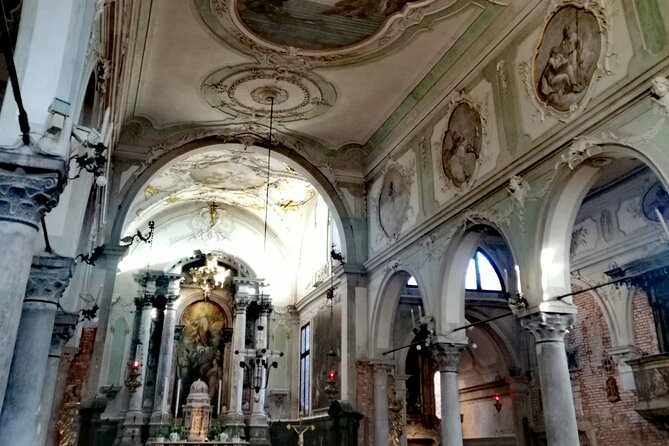
Next you visit a church linked to an AD 890 origin, but with the structure dated to the 14th century. It has a simple Veneto-Byzantine style, which you can usually spot by the blend of influences and the restrained look.
Then comes the legend tied to the church’s name. It refers to a Byzantine Christian martyr thrown to hungry lions who, after biting off her hand, they refused to eat her holy virgin flesh. Whether you treat it as legend or a kind of historical religious storytelling, it’s a memorable way to understand how people used faith, ritual, and narrative to explain suffering and survival.
Why you’ll like this stop: it’s compact, readable, and it adds color to the tour’s larger theme—Giudecca as a place shaped by major forces, not just local gossip.
Stop 3: Hilton Molino Stucky Venice and the Neo-Gothic Flour-Mill Past
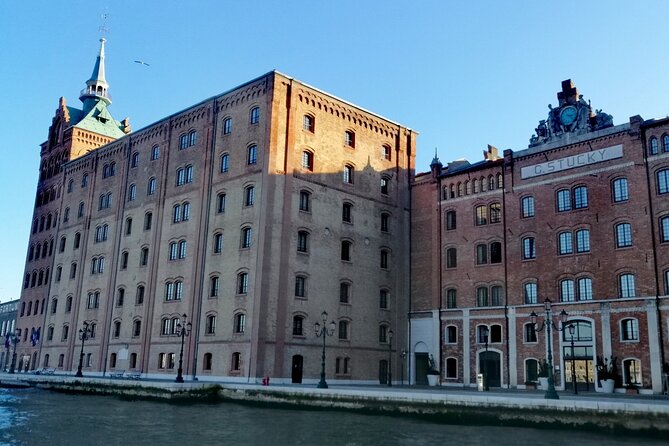
Then you hit one of the most dramatic “before-and-after” scenes on the island. You’ll see the Neo-Gothic Molino Stucky building, originally a flour mill supplied by boats across the lagoon. It later operated as a pasta factory, and today it’s a luxury 5-star hotel.
This is a fun stop because it teaches you how Venice and the lagoon economy worked. Boats weren’t just for tourism—they moved goods, and big industrial buildings rose where the shipping lanes and water traffic made sense. Seeing the same stone-and-brick shell repurposed gives you a practical understanding of how cities survive by changing use over time.
What to watch for: even if you’re not into architecture, you’ll still appreciate the scale. The building dominates the area and makes it easier to visualize Giudecca when it was more industrial and less attention-driven.
Stop 4: Fondamenta de le Convertite and the Island’s Tough Edges
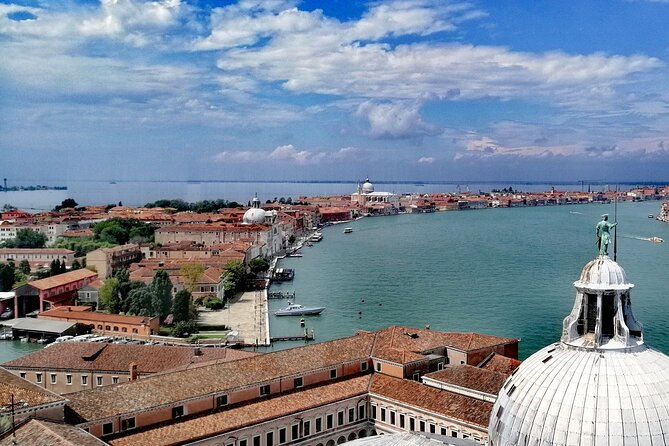
This part turns more “human and historical” than “pretty and picturesque.” You move through a less touristy area by Fondamenta de le Convertite, passing an organic prison market, adjacent to a women’s correction facility.
I like this stop because it adds realism. Venice often gets sold as only romance and marble. Giudecca forces you to notice the systems that sat alongside daily life—work, punishment, institutions, and how communities operated beyond the center.
It’s also a gentle reminder that the island isn’t just an art district or a photo walk. It’s lived-in space with complicated history.

Stop 5: Artisti Artigiani del Chiostro at Ex Convento Santissimi Cosma e Damiano
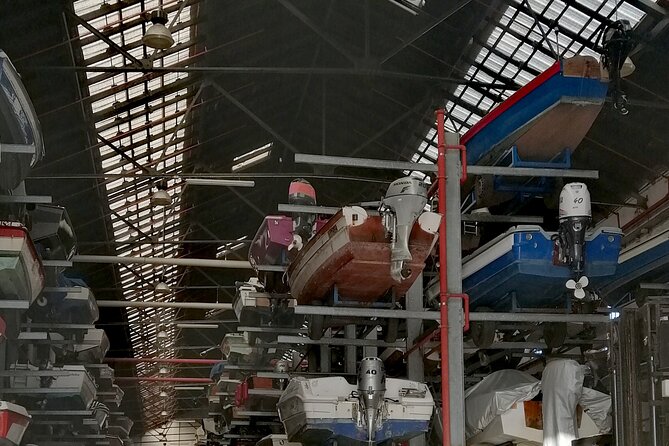
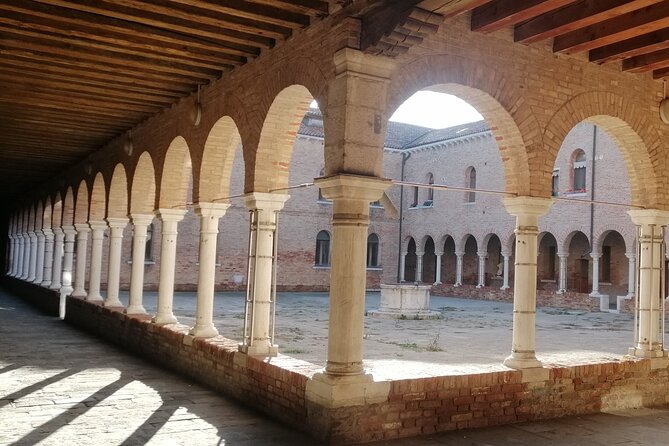
Now the tour shifts into the arts and makers’ world. You enter a former monastery that today functions as a center for promotion of local artists and artisans.
This stop is worth it for two reasons. First, monasteries and cloisters create built-in atmospheres—courtyards, corridors, and stone rhythms that make creativity feel anchored, not random. Second, it shows how people reuse space in Venice: rather than leaving large structures unused, the island repurposes them for community work.
If you’re someone who likes to see how local culture is supported today, this is the moment. You stop looking at Giudecca as “what changed” and start seeing “how it’s used now.”
Stop 6: Teatro Junghans and the Glass-Factory-to-Modern-Neighborhood Story
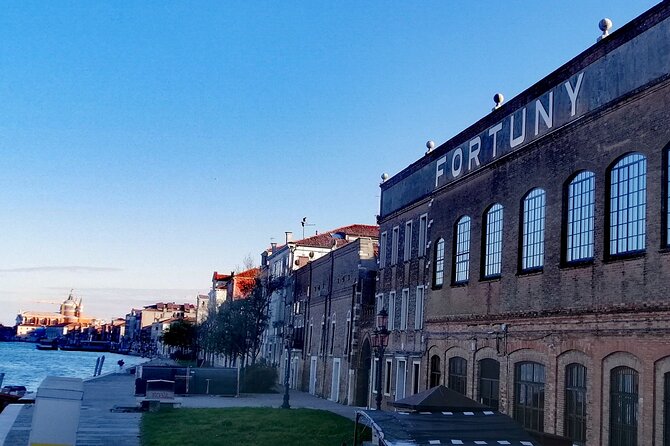
You then move to Teatro Junghans. Here, the story is transformation again: a former glass factory converted into a modern residential neighborhood and a contemporary theatre facing the southern lagoon.
This is where the tour’s “industrial Venice” theme really pays off. You’ll see how glass-making fit into lagoon trade and craftsmanship, then how the built environment adapted once industry patterns shifted. The theatre aspect gives you another lens too: a place once tied to production now ties to performance and public life.
Practical tip: if it’s sunny, the southern-facing position can make this stop brighter and more comfortable. If it’s windy, it can feel exposed—so bring layers you can adjust.
Stop 7: Chiesa del Santissimo Redentore and Palladio’s Survival Moment
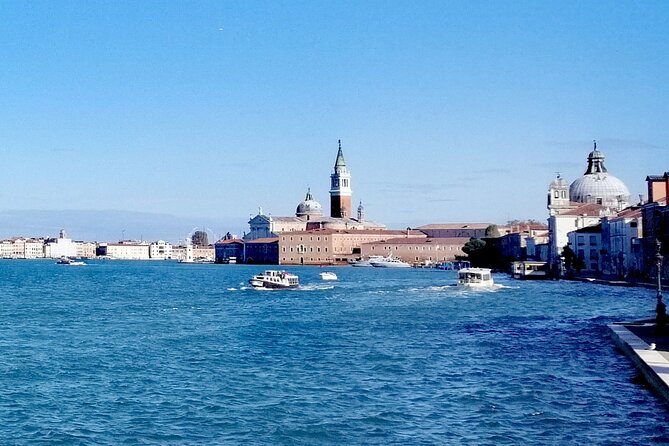
This stop is big. You admire Chiesa del Santissimo Redentore, designed by Palladio. It was built to celebrate the city’s deliverance from the Black Death—one of those Venice lessons that always lands hard: survival wasn’t automatic in a tidal town.
You’ll also hear about the pilgrimage tradition in July. Venetians make the crossing to the church on a shaky pontoon bridge from the Zattere since 1578. Even if you’re visiting in a different month, that annual ritual helps you understand why this church matters beyond architecture.
Why this is a highlight: Palladio makes it a major artistic name, but the Black Death story makes it personal and emotionally grounded. It connects the present to a time when Venice lived under constant threat.
Stop 8: Villa Heriot and Art Nouveau Views Over the Southern Lagoon
Next comes Villa Heriot, an Art Nouveau villa tucked off the beaten paths. You get into the property and enjoy breath-taking views over the southern lagoon.
I like this stop because it gives you a change of tempo. Up to now, you’ve been absorbing history and repurposing stories. Here, the landscape and light do part of the talking for the guide.
This is also where you’ll start noticing why Giudecca is so appealing even beyond its history: the open lagoon perspective. When you look out, the island stops feeling like an add-on and starts feeling like a destination.
Stop 9: Casa dei Tre Oci and the Finish Near San Marco Views
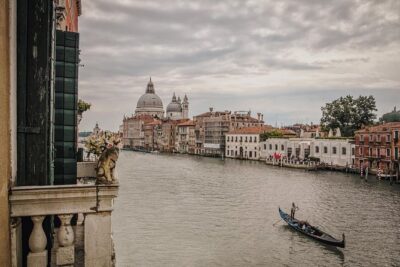
You end with scenic views toward San Marco and Punta della Salute. The walk goes past a palace with a distinctive neo-Gothic brick facade and three peculiar arched windows—Casa dei Tre Oci.
This finale works well because it ties the whole day together. You start with Giudecca as exile, then you see it as industry and institutions, then you see it as arts and conversion, and finally you look outward again toward the city that most visitors stay anchored to.
At the end, you finish near the Le Zitelle water bus stop (Fondamenta Zitelle, 33). That’s a convenient exit point if you’re heading back toward central Venice.
Price and Value: What $163.64 Really Buys You
At $163.64 per person for about 2 hours, you’re not paying for a long museum day. You’re paying for focused guidance, interpretation, and access to a part of Venice that most people never properly explore.
Here’s why it can feel like good value:
- The group size is small (max 10), which usually improves the quality of the experience.
- Your guide and interpretive guide are included, so you’re not just walking with someone who points at buildings.
- Many stops are admission-ticket free as part of the experience, so you’re not stacking surprise entry costs.
The main “watch-out” is the water bus ticket. Since it’s bought on board, it’s not as smooth as having it bundled. Still, it’s straightforward once you’re there.
Who This Tour Suits Best
This tour is a strong pick if you:
- want Venice beyond San Marco and the obvious canals,
- like history explained through real places, not lecture-only storytelling,
- enjoy architecture and repurposing—factories, monasteries, and churches given new roles.
It’s also a good family-friendly option in spirit. The vibe stays conversational, and the guide approach is described as involving kids too.
If you hate walking in wind, take that seriously. Giudecca is often nicknamed the island of seals (isola delle foche), and that hints at an island feeling that can be breezy—especially near exposed lagoon areas.
Quick Practical Tips Before You Go
- Wear layers. Even if Venice is mild, the lagoon wind can shift fast.
- Bring comfortable shoes. This is a guided walk with multiple short stops.
- If you’re budgeting, remember the water bus is handled on board, and day-trippers staying outside Venice may face a €5 access fee on certain dates (check the official site details for your travel day).
Should You Book Giudecca Island Discovery?
If you want the Venice feeling of discovery—without the throngs—book it. The tour’s biggest strength is how it builds meaning stop by stop: exile becomes industry, industry becomes studios and civic spaces, and then you end with real views of Venice from the lagoon.
I’d skip it only if you’re looking for a strictly landmark-only outing with zero walking and no institutional history. Giudecca is not trying to be your postcard fantasy. It’s showing you the Venice people live in, including the complicated parts.
FAQ
How long is the Giudecca Island Discovery Tour?
It runs for about 2 hours (approximately).
What is the group size for this tour?
The tour has a maximum of 10 travelers.
How much does the tour cost?
The price is $163.64 per person.
Where do I meet the tour, and where does it end?
You start at Zattere 30133, Venice and end at Le Zitelle, Fondamenta Zitelle 33, Venice, where the water bus stop is located.
Do I need a water bus ticket to reach Giudecca?
Yes. The water bus ticket to Giudecca is not included, and tickets will be purchased on board.
What’s included in the tour price?
Included are the tour leader and a nature and interpretive guide.
Are admission tickets included for the stops?
Admission tickets are listed as free for the stops included in the experience.
Is there a Venice access fee that might apply?
On certain dates, day-trippers staying outside Venice may be required to pay a €5 access fee. Details and exemptions are provided on the official website listed in the tour information.
Is free cancellation available?
Yes. You can cancel up to 24 hours in advance for a full refund.
Are service animals allowed?
Yes, service animals are allowed.