REVIEW · VENICE
Ghosts of Venice – Discovering the Unknown
Book on Viator →Operated by Bucintoro Viaggi · Bookable on Viator
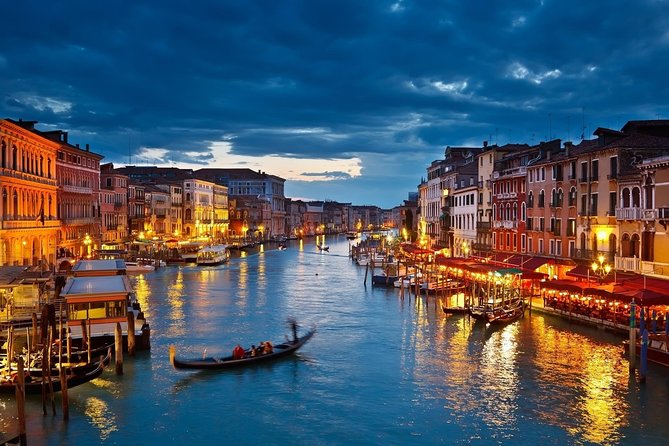
Venice at night has a darker side. This 90-minute Ghosts of Venice walk turns famous landmarks into story fuel, with eerie tales and lesser-known history threaded through the lanes between St. Mark’s and Rialto. I especially like how it aims for less-crowded streets while still keeping you anchored to the places you actually want to see.
I love the stop-by-stop momentum: you begin at Bacino Orseolo (right behind St. Mark’s) and quickly move into Piazza San Marco, then toward the clock tower area and the Mercerie S. Zulian shopping corridor. I also like that the stories aren’t only generic spooky vibes. They touch specific Venice details, from the legends around Campo della Fava to the Marco Polo connection, with guides such as Marco and Isabella mentioned as particularly charming and engaging.
One consideration: this isn’t a nonstop horror show. Many moments lean more macabre legends and history than clear-cut ghosts, and narrow streets can make hearing tough (especially with crowds). So if you want jump-scare thrills or whisper-clear storytelling in the middle of noise, go in with realistic expectations.
In This Review
- Key highlights to know before you go
- Ghosts of Venice: what you’re really getting in 90 minutes
- Where you start and end: Bacino Orseolo to Ponte di Rialto
- Piazza San Marco: legends in the most famous square in Europe
- Torre dell’Orologio and the Mercerie S. Zulian corridor
- Campo della Fava and Santa Maria della Fava: legends near Rialto
- Casa di Marco Polo: the outside story behind a famous address
- Campo San Bartolomeo and Rialto Bridge: the construction legend
- Hearing the guide in narrow lanes: how to avoid the common problems
- Price and value: is $32.44 per person fair?
- Who this ghost walk suits best (and who should skip it)
- Weather and comfort: Venice needs good walking conditions
- Should you book Ghosts of Venice?
- FAQ
- How long is the Ghosts of Venice tour?
- How much does it cost?
- Is the tour offered in English?
- Where does the tour start and where does it end?
- How many people are in a group?
- What sights do you pass or stop at during the tour?
- Do the stops require paid admission tickets?
- What happens if the tour is canceled due to poor weather?
- What is the cancellation policy?
- Are service animals allowed?
Key highlights to know before you go
- St. Mark’s Square to Rialto in 90 minutes: a short route with big payoff
- Legends tied to exact corners: Campo della Fava, Casa di Marco Polo, Rialto Bridge
- Fewer-crowds approach: you still see classics, but you move off the busiest lines
- Strong narration matters here: in crowded areas, you may need to position well to hear
- Group size capped at 30: keeps things manageable on tight sidewalks
Ghosts of Venice: what you’re really getting in 90 minutes
This tour is sold as a ghost experience, but what you actually get is better described as a ghost-themed legend walk. You’ll hear spooky stories, yes. But the heart of the experience is the way Venice layers myth onto real places. Think apparitions, visions, and dark folk tales attached to streets you can point to on a map.
The duration is about 1 hour 30 minutes, which is ideal if you want a nighttime-feeling activity without spending your whole evening trekking. It also helps you fit the tour around dinner and avoids the temptation to wander randomly through Venice when you’d rather have a plan.
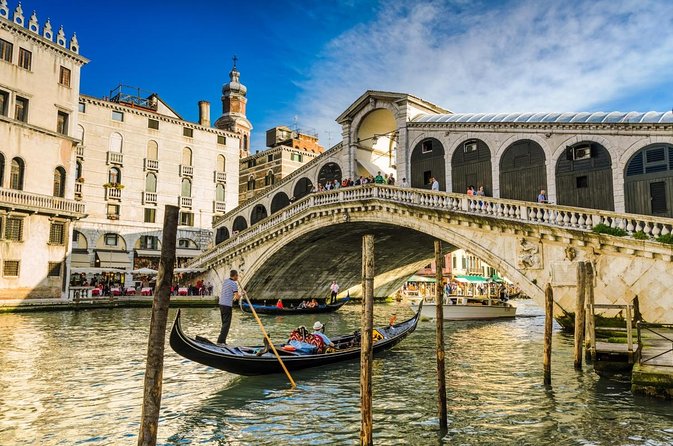
The route also matters for value. You’re not paying only for “a guide with facts.” You’re paying for curated movement between recognizable anchors: St. Mark’s Square, Torre dell’Orologio (Clock Tower), the Mercerie area, and ending at the Rialto Bridge. That structure is what keeps the tour from turning into a long stroll with scattered anecdotes.
You can also read our reviews of more tours and experiences in Venice.


Where you start and end: Bacino Orseolo to Ponte di Rialto
The starting point is near Bacino Orseolo, one of Venice’s main gondola stops, positioned right behind St. Mark’s Square. That’s a smart choice. You begin where you’re already oriented, which makes it easier to meet up and reduces that nervous scramble that can happen in Venice.
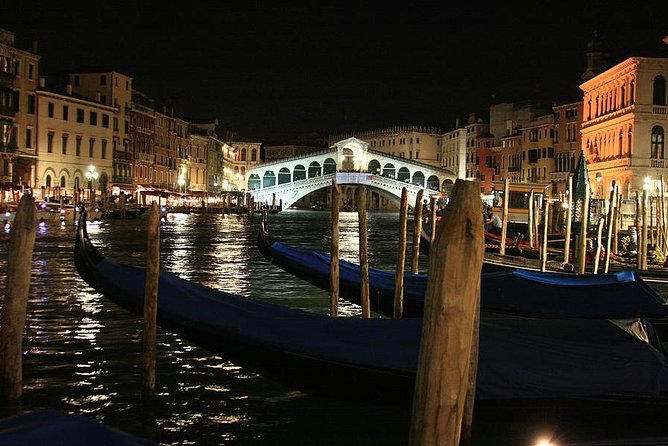
The tour ends at Ponte di Rialto. That’s the other smart move. Rialto is a natural landing spot for photos, gelato, and getting back toward the rest of your plans. If you’re doing a tight itinerary and don’t want to finish hours away from your “real” sightseeing, this ending point helps.
One practical tip: Venice streets can look similar fast. If you’re even slightly late, it becomes your job to find a new plan. A few past guests reported missing the tour entirely due to meeting-point confusion or communication failures. So when you arrive, take 30 seconds to confirm you’re at the right exact area before you drift into photos or searching.
Piazza San Marco: legends in the most famous square in Europe
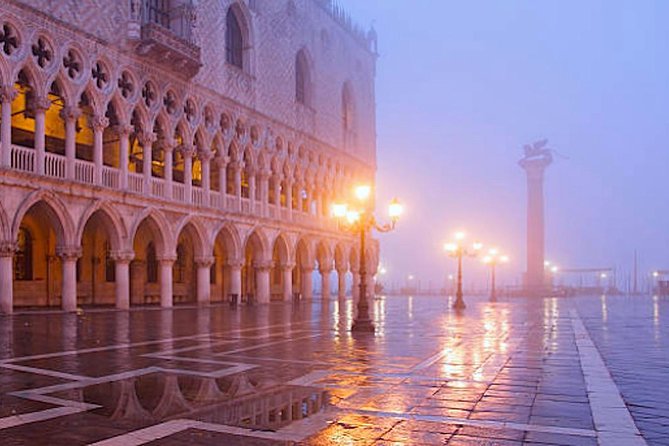
The first story stop is Piazza San Marco. It’s big, it’s iconic, and it’s exactly why it works as an opening act. You’re in the thick of the postcard Venice most people come for. Then the guide ties legends to the square’s reputation and the way people have mythologized this space for centuries.
What I like about starting here is contrast. Venice can feel overwhelming—so beginning at a landmark you already recognize gives your brain a reference point. After that, your route can peel away into smaller lanes without you feeling lost.
Possible drawback: Piazza San Marco can be loud and busy. Some guests mentioned difficulty hearing as crowds got in the way. If you struggle with sound, you’ll want to stay close to the guide’s voice as the group settles. Don’t let yourself drift to the edge where street noise takes over.
Torre dell’Orologio and the Mercerie S. Zulian corridor
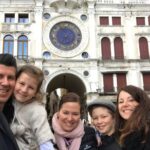
Next, you pass under Torre dell’Orologio, the clock tower area, and then move toward Mercerie S. Zulian. This is a great segment because it shows you a Venice that’s less about grand squares and more about the city’s daily geography.
Mercerie S. Zulian is known as a high-end fashion street, and the tour’s value here is perspective. You’re not just walking through a shopping strip; you’re moving through a corridor where wealth, prestige, and history have always rubbed shoulders. A good guide makes that feel like a story setting, not just a passageway.
This is also a “hinge” moment in the tour. After San Marco, you’re no longer in the widest open space. The streets tighten, and the narration becomes more important. If your guide is strong, this part feels lively and purposeful. If sound is an issue, you’ll feel it here first, since crowds and architecture can both distort voices.
Campo della Fava and Santa Maria della Fava: legends near Rialto
You’ll stop at Chiesa di Santa Maria della Fava, in the Campo della Fava area, close to Rialto. This is exactly the kind of place you’d skip if you were only following a checklist of Venice’s top attractions.
The tour’s pitch here is that Campo della Fava hides “great legends.” And that’s the point. You’re using a guided narrative to make the city feel deeper. A small field with a church nearby can sound ordinary on paper, but when someone connects it to local lore, it becomes memorable.
One reason this stop is valuable: it stretches you away from the most obvious route. Many people hit Rialto, take photos, and move on. Here, you get to arrive near Rialto with context, so you’re not just seeing the bridge—you’re understanding why certain places in Venice became story magnets.

Casa di Marco Polo: the outside story behind a famous address
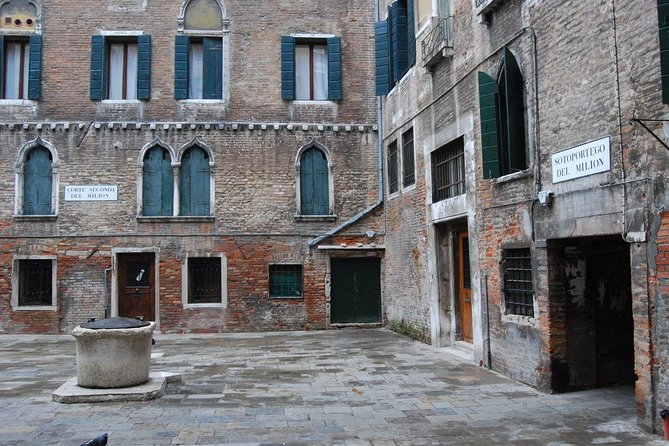
Another highlight is seeing Casa di Marco Polo from the outside. You’ll get the famous framing (Marco Polo lived in Venice) but also the twist: what about his mysterious Chinese wife, tied into the legend world surrounding him.
This stop is where the “ghost” vibe can feel like it’s at its best—or at least where Venice’s mythmaking feels the most vivid. Even if you’re not expecting spectral apparitions at every corner, this is the kind of narrative detail that sticks because it’s specific. You don’t just hear about a person. You hear about how people have spun a story around personal mystery.
If you love historical figures but also like the folklore layer, this is one of the most rewarding parts of the walk.
Campo San Bartolomeo and Rialto Bridge: the construction legend
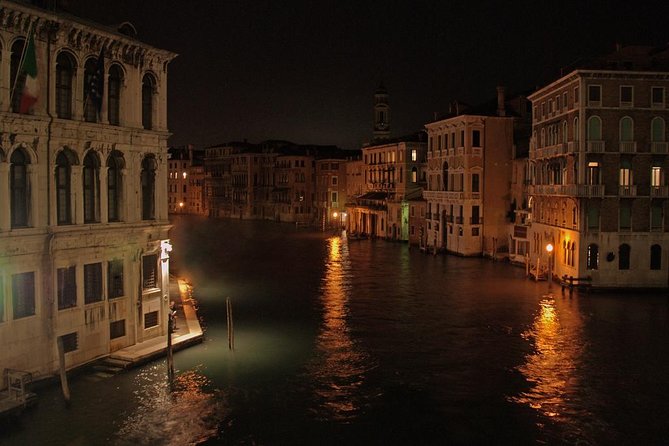
The next stop is Campo San Bartolomeo, where you look toward Rialto Bridge and hear a story tied to its construction. The tour leans into the idea that the bridge’s famous status comes with a darker tale behind the building process.
This matters because Rialto Bridge can become a “photo object” in your mind. But when a guide ties the bridge to a narrative conflict—something terrible, something unsettling—you start noticing the bridge as a symbol with consequences, not just an Instagram landmark.
Also, ending near Rialto gives you practical payoff. After you’ve heard the story, you’re right where you can verify angles, take a few photos with context, and then decide how long you want to stay in the area.
Hearing the guide in narrow lanes: how to avoid the common problems
The biggest complaint type in this kind of tour is simple: can’t hear the guide. Venice streets bring their own challenges—noise, crowds, and reflections off stone and buildings. Even when the guide is excellent, sound can get messy.
Here’s what helps you most:
- Stay closer to the guide when the group pauses for the story.
- Don’t stand far back expecting to hear clearly. If you can’t, it’s usually the distance, not the quality.
- If you’re traveling during a peak-crowd time, expect louder background noise and plan to keep your position.
- If radios or audio help are offered on your departure, use them. Some groups have reported receiving radios, which improved audibility.
One more angle: the tour is built around quick movement between stops. That’s part of the structure, but it means you can’t treat this like a slow museum tour. If you prefer very slow pacing with long stops, you might find it brisk.
Price and value: is $32.44 per person fair?
At $32.44 per person for about 1.5 hours, you’re paying for guided storytelling plus a curated walking route through iconic Venice-to-Rialto geography. You’re also getting the advantage that the listed sites have free admission tickets at the stops you visit.
What makes it feel like good value when it works:
- You get a connected route, not random wandering.
- You hear stories tied to specific locations, including St. Mark’s Square, Mercerie S. Zulian, Campo della Fava, and the Marco Polo area.
- The group size is capped at 30, so it shouldn’t become a chaotic mass event.
What makes it feel overpriced when it doesn’t:
- If the guide is hard to hear, the whole experience drops in value fast.
- If your expectation is strongly spooky, and you’re given more history-and-legend framing, you may feel the name oversells it.
My balanced take: this is a reasonable price for a short evening-style narrative walk, especially if you enjoy myths and local lore more than haunted-house scares. But you should choose it with realistic expectations about pacing and sound.
Who this ghost walk suits best (and who should skip it)
This tour fits you best if you:
- Want a guided way to see Venice’s center without building your own route from scratch.
- Enjoy local legend and myth, even when it leans more “macabre history” than “ghost sightings.”
- Like learning little details that change how you look at obvious landmarks like Rialto Bridge and St. Mark’s Square.
You might be less satisfied if you:
- Want a consistently spooky, theatrical experience where the stories are always supernatural.
- Need very clear audio at all times and don’t do well in noisy crowds.
- Prefer fewer stops and more time at each location. This one is built on moving and pausing for stories.
Group size is also relevant. With up to 30 people, you’ll want to be proactive about hearing and positioning. Some departures have also used radios for better audibility, but don’t assume that will always be the case.
Weather and comfort: Venice needs good walking conditions
The tour requires good weather. That’s common for walking tours, but in Venice it’s especially important because rain changes everything: sound carries differently, streets get slippery, and you lose that pleasant evening strolling feel.
Wear shoes you can trust for uneven paving stones. And bring a layer you’re comfortable walking in for 90 minutes. Venice can shift temperature quickly near the water, even when the forecast looked fine earlier in the day.
Also, if you’re staying outside Venice and doing day-trip logistics, there may be an access fee on certain dates. Check the city information page before you go, and look for exemptions if you think you might qualify.
Should you book Ghosts of Venice?
Yes, I’d book it if you want a short, story-driven walk through Venice’s most famous and slightly less famous corners. The route between St. Mark’s and Rialto is efficient, and the mix of legends—from Campo della Fava to Casa di Marco Polo and the Rialto Bridge construction tale—gives you more than generic “Venice fact” sightseeing.
Skip it (or at least reconsider your expectations) if you’re hunting for a truly spooky, scary experience every minute. This one is more about ghost-themed legends and eerie backstories than constant hauntings. And because hearing can be an issue in crowded spots, go in ready to stand close to the guide at each stop.
If you do book, pick a departure where you can arrive early and stand where you can hear. Then settle in. Venice has plenty of real darkness in its history—this tour just hands you the stories to notice it.
FAQ
How long is the Ghosts of Venice tour?
It runs for about 1 hour 30 minutes.
How much does it cost?
The price is $32.44 per person.
Is the tour offered in English?
Yes, it is offered in English.
Where does the tour start and where does it end?
It starts near C8MQ+24 Venice, Metropolitan City of Venice, Italy, and ends at Ponte di Rialto, 5319, 30125 Venezia VE, Italy.
How many people are in a group?
The tour has a maximum of 30 travelers.
What sights do you pass or stop at during the tour?
You’ll include stops around Piazza San Marco, Torre dell’Orologio, Mercerie S. Zulian, Chiesa di Santa Maria della Fava (Campo della Fava), Casa di Marco Polo (from the outside), Campo San Bartolomeo, and viewpoints near Rialto Bridge.
Do the stops require paid admission tickets?
The stops listed are marked as admission ticket free.
What happens if the tour is canceled due to poor weather?
If it’s canceled because of poor weather, you’ll be offered a different date or a full refund.
What is the cancellation policy?
You can cancel for free up to 24 hours in advance for a full refund. Cancellations within 24 hours are not refunded.
Are service animals allowed?
Yes, service animals are allowed.