REVIEW · VENICE
Gay Life in Venice from the Middle Ages to Present Days
Book on Viator →Operated by deTourist Venice Valerio Coppo · Bookable on Viator
Venice had a secret gay map. This 2-hour LGBTQ history walk threads together churches, bridges, and palazzi tied to romance, cruising spots, and the punishments Venice used to police “sodomy.” LGBTQ history here isn’t a vague theme. It’s pointed at real addresses you can see and stand on.
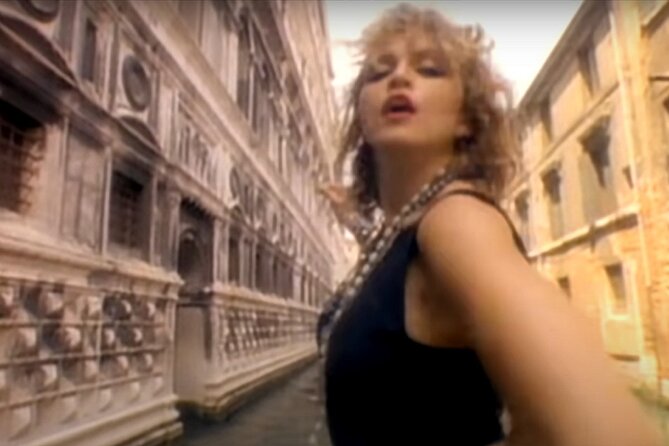
I especially like how the stories are anchored to place—Campo, church arcades, and waterfront corners—so the city feels like evidence, not a postcard. I also like how the tour mixes grim enforcement with surprise culture stops, like Ca’ Zenobio, later used as an indoor set for Madonna’s Like a Virgin.
One possible drawback: the tone can get heavy. You’ll hear about surveillance and brutal penalties, and each stop is short—so if you want long, slow discussion or more lighter romance, you may wish the walk lasted longer.
In This Review
- Key highlights you’ll feel fast
- A walk that turns Venice into a living LGBTQ archive
- Meeting Valerio Coppo and what the small-group size changes
- Churches, streets, and squares where enforcement left fingerprints
- Cat masks, cruising corners, and Rolandina Roncaglia’s hard story
- Opera-house lore, Casanova, and why Venice pulled writers in
- Palazzi, paintings, and the 80s Madonna surprise
- How to get the most from a route with so many short stops
- Value check: is $92.63 a good deal for two hours?
- Who should book this Venice LGBTQ history walk
- Should you book Gay Life in Venice from the Middle Ages to Present Days?
- FAQ
- How long is the Gay Life in Venice tour?
- Is the tour in English?
- How big is the group?
- Where does the tour start and end?
- Are there entry fees for the stops?
- What is the cancellation policy?
Key highlights you’ll feel fast
- Small-group format keeps it intimate, capped at eight travelers (and listed as max ten).
- English narration with an upbeat, storytelling style from Valerio Coppo and a second interpretive guide.
- Real sites, not generalities: arcades watched, execution locations, and named gathering spots.
- A sharp timeline from medieval enforcement to modern cultural references.
- Unexpected pop culture stops, including Madonna’s Like a Virgin video location.
- Balanced emotional range: you get both agency and persecution in the same streets.
A walk that turns Venice into a living LGBTQ archive
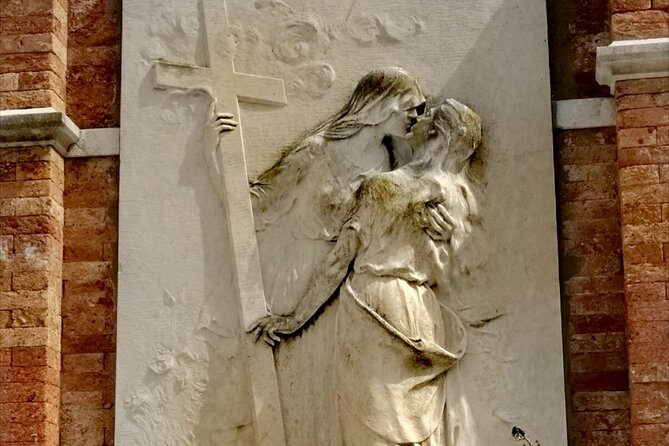
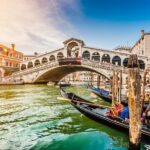
This is a timed, two-hour route that takes you from quieter corners to the big-name symbols of Venice—then back into the small side streets where people met, loved, performed, hid, and sometimes got caught. You start on the east side at Campo San Giacomo dell’Orio and finish near the Rialto area at Ponte di Rialto. That means you’re not just looking at Venice-you-know. You’re also learning how the city’s power centers and popular gathering zones overlapped with LGBTQ life.
The tour’s real strength is the way it teaches you to read Venice. The guide points out details that a casual walk misses: arcades placed under surveillance, bridges remembered for what happened under their porticos, and churches that became part of the enforcement system. Venice is full of “pretty why-not?” corners. This walk explains the why.
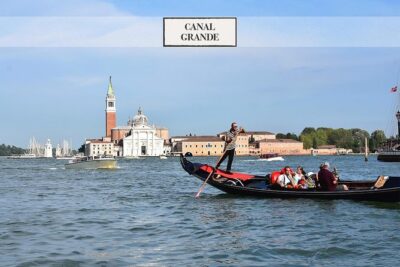
And yes, the route crosses some of the most central waterways and landmarks you can picture—San Marco area moments appear, and Canal Grande shows up too. You’ll see how the same city that creates romance for tourists also created a strict social order that punished certain relationships.
You can also read our reviews of more tours and experiences in Venice.

Meeting Valerio Coppo and what the small-group size changes
The tour is led by deTourist Venice Valerio Coppo, with a tour leader plus a nature and interpretive guide. It runs in English and uses a mobile ticket. You’re also in a small group: the experience is described as capped at eight travelers, and the maximum group size is listed as ten.
That small size matters more than it sounds. With a larger group, you’d just follow the flag and hope you catch the best story at the next corner. Here, you get time for the guide’s pacing—stopping long enough to make sense of why each location matters. If you have questions, you’re more likely to get an answer that connects directly to what you’re standing in front of.
Also, the stops are designed to be short and focused. Many locations are listed with admission ticket free, so you’re not doing a museum bottleneck. Instead, you’re walking Venice’s own corridors—church arcades, public squares, and bridge neighborhoods—and letting the city do the explaining.
Churches, streets, and squares where enforcement left fingerprints
Some of the most important lessons come from how Venice tried to control behavior in public space. You’ll learn that policing wasn’t just theoretical. It was physical, placed into architecture, and acted out in crowded places where people could watch, gossip, and learn fear.
In Chiesa Santa Maria Mater Domini, you’re shown how public authorities put the church’s arcades under surveillance in 1488 to prevent sodomites from using it as a cruising and meeting place. That single detail changes how you think about church buildings. It’s not just faith and art. It could be a monitored social system.
From there, the story moves into what happened when the city decided “privacy” was a myth. At Ruga dei Oresi, you hear about a suspicious pharmacy associated with meetings, and the risk could be deadly—simply getting close could lead to condemnation to death. It’s a grim reminder that “ordinary-looking” street businesses could be treated as evidence.
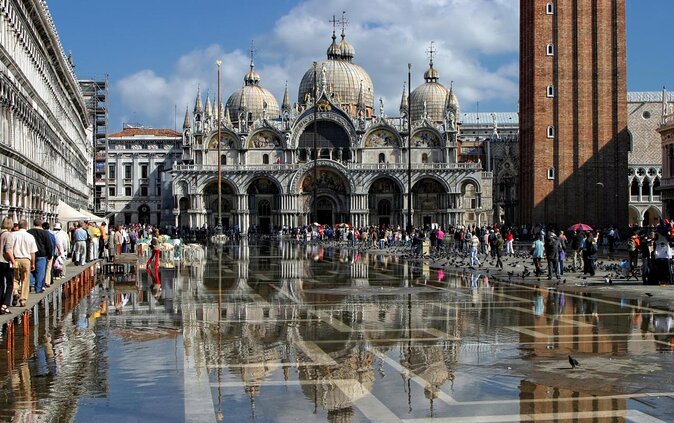
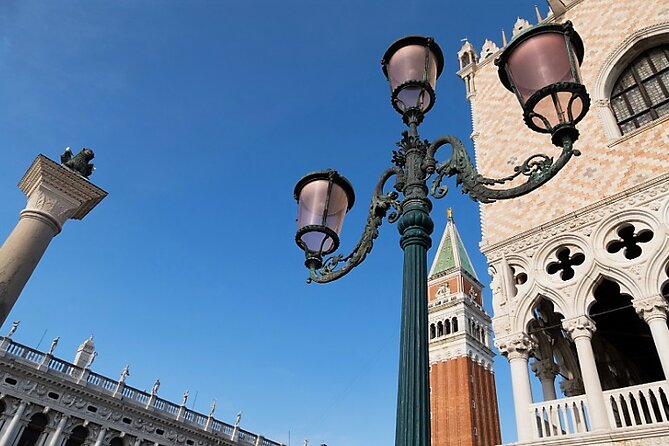
The San Marco area adds another layer: public spectacle. At the base of the Campanile di San Marco, an iron cage called cheba is discussed. The cage dates back to the 15th century and was still used in the 16th century as a way to expose sodomites priests to bad weather and taunts from the crowd below. This isn’t courtroom punishment behind doors. It’s humiliation as a civic event.
Then you step into Piazzetta San Marco, where executions took place between the columns up to the middle of the 17th century. The tour also notes Casanova’s confirmation—useful context because it connects official stories and what a famous observer wrote. Finally, near Campo San Giacomo di Rialto, you learn how proclamations and bans were made public, including bans related to sodomy read by an officer with the names of those sentenced to death.
If you’re visiting Venice for culture and color, this part can feel like getting hit with cold water. But it’s also why the tour is valuable. It shows how LGBTQ life existed in the same spaces as authority—and how quickly the city could shift from toleration to control.
Cat masks, cruising corners, and Rolandina Roncaglia’s hard story
When the tour shifts from enforcement to everyday life, it becomes more human—and in some places, more strange in a way that makes sense historically.
One of the most vivid scenes is Ponte delle Tette, described as the red light district par excellence in the 15th century. Here, authorities encouraged prostitutes to display their wares under the porticos around the bridge neighborhood as a way to prevent sodomy. So yes, this is a cruising-and-sex story—but the tour frames it as a system, not just gossip. People were managed through moral panic and social engineering.
In the same area, the tour references the gnaghe—men dressed as women who covered their faces with cat masks and made plaintive cat calls in heat. It’s one of those details that sounds like theater until you realize it was a survival tactic. Masks help hide identity. Performance can create safety. And in a city that punished openly, disguise mattered.
Then you get an account that’s historically specific in a way many tours never reach: the story of Rolandina Roncaglia, presented at Chiesa di San Cassiano. Rolandina is described as the first trans person we know of in Italy. Born as Rolandino, she lived as a woman for seven years in a house nearby. She sold eggs at the local market and became a prostitute. In 1355, she was discovered, and the tour notes she met a terrible death.
This is the kind of moment where the guide’s tone matters. The tour doesn’t just name-drop. It uses the setting—church surroundings and the local market economy tied to survival—to explain why someone’s public life could collide with punishment.
And earlier, at Campo San Giacomo dell’Orio, you’ll be directed past where an Italian poet once lived. The poet came out in the early 70s and later committed suicide. The tour adds that his works were among the first Italian poetry to explore homosexuality. That modern thread keeps the story from turning into a museum of the dead past.
Opera-house lore, Casanova, and why Venice pulled writers in
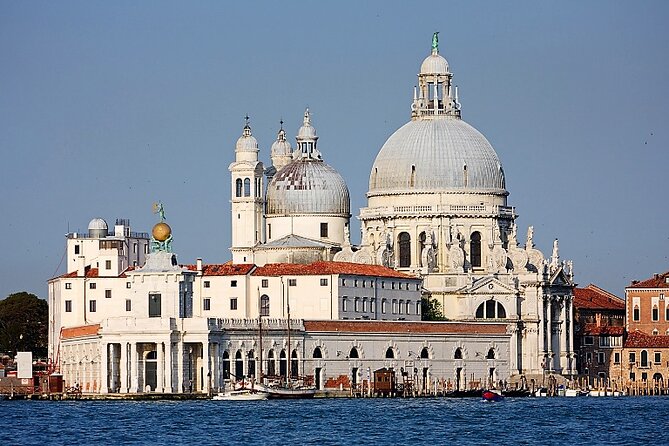
Venice attracted writers like a magnet, and it also attracted people looking for reinvention. The tour uses that gravity to explain why LGBTQ life and art kept showing up in major cultural sites.
At Campo San Cassiano, you learn there used to be a theater that claimed the title of the first public opera house in the world. The tour also links this place to homosexual encounters, including a note that Giacomo Casanova pointed it out when he worked as a spy for state inquisitors in the 18th century.
That’s a fascinating angle: Casanova isn’t just “a playboy story.” The tour positions him as part of an enforcement apparatus while also being an observer of the city’s underground. You get a real lesson about how Venice’s social world crossed moral lines, and how even those who enforced the rules could still witness what was happening.
At Calle dell Ogio along Canal Grande, the tour tells you about a writer and pioneer of the British gay movement meeting a beautiful 19-year-old porter. The point here isn’t the romance-kitsch of it. It’s the geography: Canal Grande is central, public, and constantly watched—yet private feelings and meetings still threaded through it.
You also spend time with the historian at Fondamenta del Megio, a Venetian historian from the 15th to 16th century whose major work is Diarii, chronicles intended to be a comprehensive Venice history. The tour mentions that he was said to be kind—extremely kind—then explains why it was not really a compliment. That small note matters because it hints that even traits that sound good could be read as socially suspicious in certain contexts.
Palazzi, paintings, and the 80s Madonna surprise
Then Venice gets playful—in the way cities do when they hide their secrets in plain sight.
At Palazzo Ca’ Zenobio, the tour focuses on late Baroque design and interiors, and then jumps into the building’s later life. After a restoration in 1993, it became a research center for Armenian studies. And then comes the modern shock: it was the main indoor location for Madonna’s Like a Virgin video in the 80s.
You might not expect a queer-history walk to land on pop culture logistics. But that contrast is useful. It shows how Venice buildings remain useful over centuries. The same walls that hosted surveillance-era fear can later host celebrity production. The city absorbs everything and keeps standing.
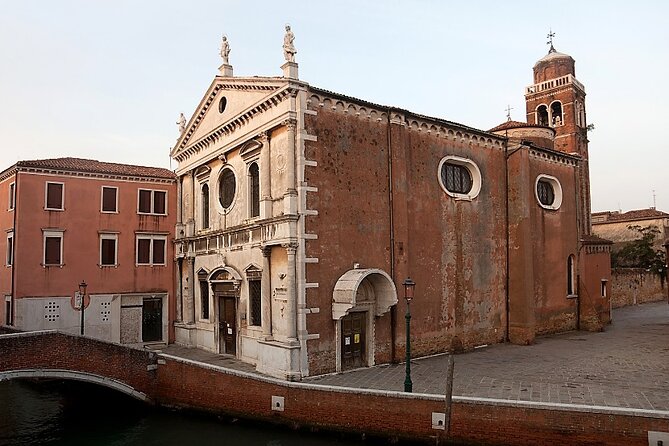
Chiesa di San Sebastiano adds another visual “why you care” lesson. The church is presented as a leading art venue because of Paolo Veronese’s cycle of paintings, and because Veronese is buried here. The tour then connects San Sebastiano to the LGBT community worldwide as a patron saint. Even if you don’t know the full devotion story before you arrive, you’ll appreciate the tour’s angle: people find symbols, and symbols move between communities.
The modern nightlife thread continues with Harry’s Bar. The tour says that despite the founder saying it was just rumors, you can check out the famous bar where gay travelers gathered up to the 70s. That’s a careful way to frame it—less tabloid certainty, more “here’s the site, and here’s what people associated with it.”
In Riva degli Schiavoni, you visit a palace where a love story was staged between a Venetian rower and a famous German writer. Calle del Dose da Ponte brings you to a hotel where a famous lesbian US painter lived, collecting love affairs with men and women. The tour then points to Palazzo Ca’ Dario, mentioned as famous for unfortunate events that happened to some of its owners, many of them gay. Finally, at Palazzo Mocenigo, the focus is a British poet whose life is described as having a bisexual component within complex sentimental and sexual relationships.
Whether you know these people or not, the effect is the same: you start seeing Venice as a long-running stage for identity, performance, and public/private negotiation.
How to get the most from a route with so many short stops
Because each location is listed for about 10–15 minutes, the pace is fast. That’s not a flaw; it’s how this tour tries to cover a lot of ground without turning it into a long lecture.
Here’s what helps you enjoy it:
- Plan on standing and walking the whole time. Venice stone and bridges demand solid shoes.
- Watch for the guide’s “why this matters” cues. Many stops are emotionally heavy, and the guide likely ties the details to what you’re seeing right now.
- If you’re sensitive to sexual content or discussion of historical punishments, know that this tour includes it. The tour also frames prostitution, cruising, and punishment as historical realities, not sensational gossip.
And if you like your tours to end with a feeling of wanting more, this one can do that. In a couple hours, you get dozens of entry points: streets to research, churches to revisit, and palazzi that suddenly feel less anonymous.
Value check: is $92.63 a good deal for two hours?
At $92.63 per person for about two hours, you’re paying for guided interpretation, a focused route, and the advantage of learning how to “read” Venice’s LGBT landmarks without hunting for context on your own.
What boosts the value here is that many stops are listed as admission ticket free. So you’re not double-paying for entrances while also paying for the guide. You’re also getting a small group size—eight capped, max ten—so the cost isn’t inflated by the usual large-group theater.
One more value signal: this is a popular walk, with an average booking window of about 25 days in advance. If you wait until the last moment, you’re more likely to see limited options.
Who should book this Venice LGBTQ history walk
This tour is a strong fit if you want:
- LGBTQ history that’s tied to place, not just timelines
- A city-focused experience that teaches you to notice details
- A guide-led mix of art, literature, and modern cultural references
- A respectful, storytelling style from Valerio Coppo and his team (the guide is repeatedly praised for warm communication and storytelling)
It’s also ideal for travelers who like smaller groups and don’t mind a route that covers many sites quickly. If you prefer slow museum time or you want purely lighthearted content, you may find the enforcement and punishment sections heavy.
Should you book Gay Life in Venice from the Middle Ages to Present Days?
If you’re the type of traveler who likes Venice more when you understand what’s underneath the beauty—social rules, hidden meetings, art networks, and the public machinery of enforcement—this is worth booking. The small group size helps you stay engaged, and the blend of medieval and modern references keeps it from feeling like a one-note history lecture.
I’d book it especially if you want to walk Venice with someone who can connect surprising details: cat masks and cheba cages, church arcades watched in 1488, and the jump to a Madonna video location in an elegant Baroque palazzo. That combination is exactly why this tour feels different.
If you tell me your travel dates and what you like most—history, art, romance, or pop culture—I can suggest how to pair this walk with the rest of your Venice day.
FAQ
How long is the Gay Life in Venice tour?
The tour lasts about 2 hours.
Is the tour in English?
Yes, it is offered in English.
How big is the group?
The experience is capped at eight travelers, and it lists a maximum of 10 travelers.
Where does the tour start and end?
It starts at Campo San Giacomo dell’Orio (Campo S. Giacomo dell’Orio, 30135 Venezia VE, Italy) and ends at Ponte di Rialto (30125 Venice, Metropolitan City of Venice, Italy).
Are there entry fees for the stops?
The stops listed are marked as admission ticket free.
What is the cancellation policy?
You can cancel for free up to 24 hours in advance for a full refund. If you cancel less than 24 hours before the start time, the amount paid is not refunded.