One quiet street turns into a whole world of stories. This exclusive private Venice Jewish Ghetto tour is built around a focused walking route in Cannaregio, with an English local guide and time to understand what happened here and why it mattered. I like how it mixes big turning points (forced segregation, centuries of rules) with the small, human details you’d miss wandering alone.
Two things I especially appreciate: the tour’s emphasis on street-level clues like symbols and Stolpersteine, and the chance to slow down with local food—traditional Jewish cake plus local wine (or a stop for gelato). As for a drawback, the synagogue interiors and museum add-on are not guaranteed in the standard flow, since access depends on days and times and entrance tickets are not included.
Also note the subject matter is serious—Holocaust memorials are part of the route—so if you want something purely light and scenic, this tour may feel heavy. If you’re up for history with context, guided walking is a strong way to make sense of Venice’s Jewish ghetto without getting lost in names and dates.
In This Review
- Key points worth knowing before you go
- A private walk through the Jewish ghetto in Venice’s Cannaregio
- Starting at Campo San Geremia: first views and the origin of the ghetto
- Fondamenta Cannaregio: reaching one of the ghetto’s gates
- Calle Ghetto Vecchio: Old, New, and the two Sephardic synagogues (outside)
- Ghetto Ebraico: oppression, Stolpersteine, and seeing Holocaust memory in street form
- Fondamenta Dei Ormesini and Campiello L’anconeta: finishing with local rhythm and next steps
- Jewish cake, wine, and where food fits into history
- Price and value for a private tour up to 6 people
- Guides, language, and the difference between facts and interpretation
- When synagogue interiors and the museum add-on make sense
- Getting the timing right in Venice (and the €5 access note)
- Who should book this tour?
- Should you book this private Venice Jewish Ghetto tour?
- FAQ
- How long is the Venice Jewish Ghetto private tour?
- What group size is this tour for?
- Is the tour offered in English?
- Where do we meet and where does the tour end?
- Is the synagogue visit included?
- Does the tour include Jewish cake or wine?
- Are tickets or admissions included?
- Is there an access fee for some visitors entering Venice?
- Can I cancel for a full refund?
Key points worth knowing before you go
- Private group (up to 6) keeps the pace relaxed and your questions on track.
- English-speaking local guide makes complex ghetto history easier to follow.
- Stolpersteine and Holocaust monuments are treated as living, visible parts of today’s Venice.
- Jewish cake and wine add a real-food break, not just sightseeing.
- Synagogues inside are optional and depend on scheduling; outside views are part of the walk.
- Good weather matters, since it’s a walking tour through outdoor streets.
A private walk through the Jewish ghetto in Venice’s Cannaregio
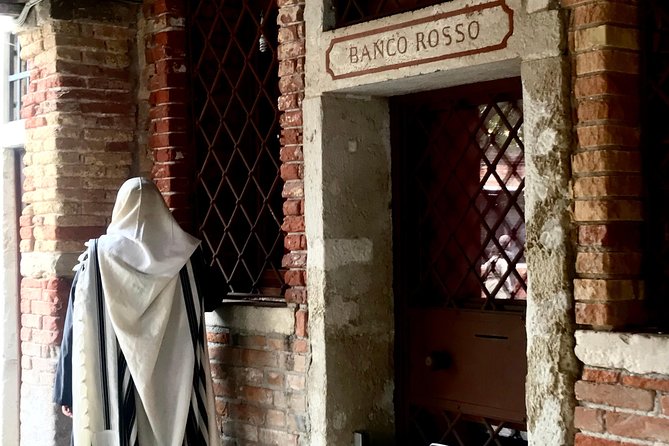
Venice’s Jewish ghetto can look like just another maze of canals and campi at first glance. But with a guide, those streets start to explain themselves. You’ll learn how the city—under the Serenissima—created rules that forced Jewish residents to live under restrictions for centuries, shaping daily life, community structures, and even the vocabulary people use today.
This is a private experience for up to 6 people, which matters more than you might think. In a crowded group tour, you get rushed past details. Here, the route is paced so you can actually connect what you’re seeing with what you’re hearing—especially at the corners tied to synagogues, former gates, and Holocaust-era memory.
The tour is about 2 hours (approx.), so it’s long enough to make the area coherent, but short enough to still enjoy the rest of your day in Venice. You also get a mobile ticket, and it’s offered in English. Service animals are allowed, and it’s near public transportation—handy if you’re planning a longer Cannaregio loop afterward.
You can also read our reviews of more private tours in Venice



Starting at Campo San Geremia: first views and the origin of the ghetto
You begin at Campo San Geremia, and that start point is useful. It gives you a strong orientation, then the guide builds the story from the past to everyday life today. This opening is where the tour sets expectations: not just “where things are,” but why Venice acted the way it did and how segregation became a system.
One of the tour’s most practical goals is clarity. Terms like ghetto can sound abstract until someone explains how and where they entered common use. At this first stop, you’ll also hear how hidden symbols and overlooked details connect to the district’s rules and community life.
Campo San Geremia is also where the tour brings in modern relevance without skipping the harder chapters. You’ll cover discussion points that include Venice during World War II, so the narrative doesn’t end at medieval walls. The pacing is built to keep you oriented even when the content gets emotionally difficult.
Fondamenta Cannaregio: reaching one of the ghetto’s gates
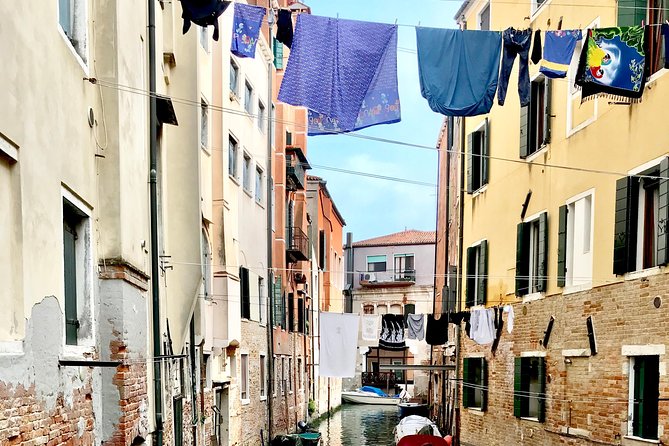
Next you move to Fondamenta Cannaregio, one of the key physical reminders that this was once an enclosed, controlled area. The guide takes you toward one of the three gates for entering the ancient ghetto of Venice, which instantly turns maps into lived geography.
This segment is short, but it’s important. Gates aren’t just architecture. They’re decisions—where people could and couldn’t move, how the city managed boundaries, and how daily routines were shaped by access and surveillance. Even without going into museums, you begin to understand the ghetto as a real-world system.
If you’re the kind of traveler who likes to know what you’re looking at before you take photos, this stop will feel like a checkpoint. You’ll know what the next streets are supposed to represent.
Calle Ghetto Vecchio: Old, New, and the two Sephardic synagogues (outside)
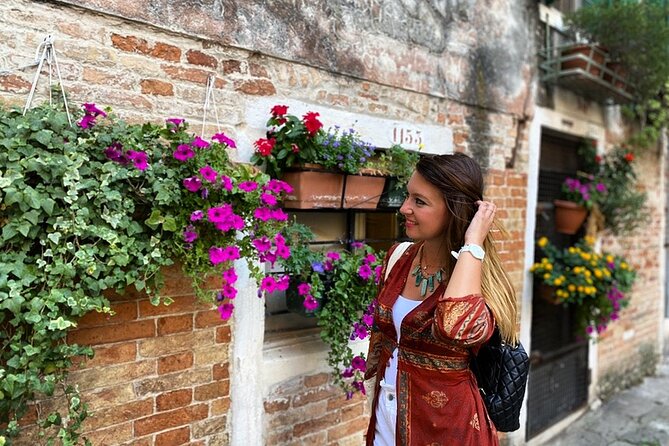
From Fondamenta Cannaregio you head into Calle Ghetto Vecchio, often described as the older but still living Jewish ghetto area. This is where the tour tackles language again, including the surprising story behind the Venetian origins of the word ghetto.
You also get a bit of play in the middle of the history. The guide may help you try a little Venetian along the way—more “learn by pointing” than formal lessons. It’s a clever way to keep the walk lively while you’re still absorbing serious context.
Visually, this stop is about religious geography. You’ll see two historic Sephardic synagogues from the outside and hear the stories tied to these buildings. The other synagogues are located on Ghetto Novo, so the guide helps you understand why different synagogues are grouped where they are.
A special note: there’s an option to add synagogue interiors, but it’s not always possible. If you care about inside visits, you’ll want to plan that in advance rather than assuming it’s automatic.
Finally, you’ll pause to look at the so-called skyscrapers of Venice—those tall structures in the ghetto area—and learn why they’re there. When a guide explains the engineering and the social reasoning behind those heights, it changes how you read the skyline.
Ghetto Ebraico: oppression, Stolpersteine, and seeing Holocaust memory in street form
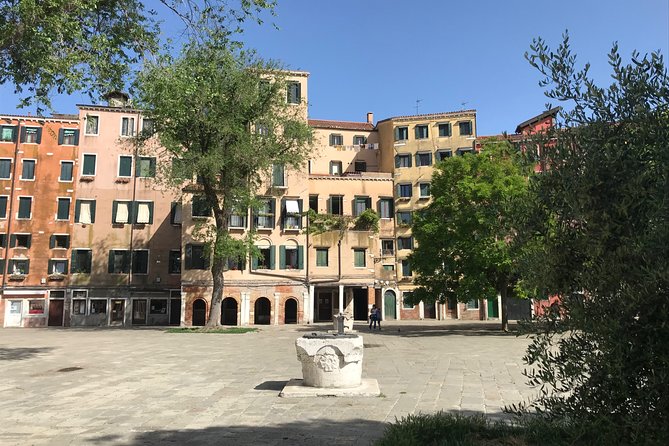
Now you reach Ghetto Ebraico, where the tour emphasizes both the oldest Jewish ghetto in the world and the human cost of forced segregation. Expect clear explanation of how Venetians lived under oppression, with stories that connect buildings and street markers to real lives rather than treating the area as a static monument.
This is also the stop where the tour shows you Stolpersteine—the stumbling blocks—and explains how the Holocaust left a deep mark on Venice. Seeing them in place is different from reading about them. The guide’s job here is to help you understand what you’re seeing and how to interpret the names and symbols you encounter.
You’ll also see, from the outside, three ancient synagogues, plus Holocaust monuments, special wells, and the Chabad of Venice. Even without interior access, you get a strong sense of what community institutions looked like and how memory and religion coexist in the same neighborhoods.
One practical consideration: this portion can feel intense. If you need a slower pace, it’s worth asking the guide to adjust—private tours make that possible.




Fondamenta Dei Ormesini and Campiello L’anconeta: finishing with local rhythm and next steps
After the main historical spine, the tour shifts into a softer landing. You end at Fondamenta Dei Ormesini, a beloved part of the Cannaregio district where the guide helps you unwind and look at Venice with a fresh set of eyes.
Then you finish at Campiello L’anconeta, where you get practical info and tips for continuing your Venice day without the guide. This last stretch is useful because ghetto tours can leave you with “what now?” energy. Ending in a local square gives you a natural launching point for exploring nearby streets, canals, and food stops.
If you want one last taste of the area, the tour may also include a food and drink moment earlier—like a glass of local wine from a favorite bacaro, and the option of gelato depending on timing and preferences.
Jewish cake, wine, and where food fits into history
The food part here isn’t a random add-on. It’s timed to let the history settle into something you can feel in your body, not just your brain.
You’ll have a chance to taste traditional Jewish cake as part of the experience, and the tour includes time to enjoy a glass of local wine. The idea is simple: Venice isn’t only monuments. It’s also markets, kitchens, and the ordinary comforts people kept even in difficult times.
There’s also an option to switch the end-of-tour treat toward gelato, depending on your guide’s suggestions and your interests. In past experiences with the same guide team, people reported communication that helped avoid crowd peaks during busy periods like Carnival, which matters if you’re mixing history with eating.
If you have dietary needs, you can ask ahead of time. The tour info explicitly mentions that special requests can be tailored to your wishes.
Price and value for a private tour up to 6 people
The price is listed at $372.45 per group (up to 6) for about 2 hours. On its face, that may look expensive compared with large-group walking tours.
But private pricing in Venice is often about what you gain: time for questions, a route shaped to your pace, and a guide who can tailor the experience (including options like synagogue add-ons). For families or small groups of friends, splitting the cost can make this feel far more reasonable than it seems at first glance.
You’re also paying for a specialized topic. This is not a generic “Venice highlights in 90 minutes” walk. It focuses on the Jewish ghetto story, including terminology, street markers like Stolpersteine, and key religious architecture visible from outside. That specialization is where private guidance tends to justify the cost.
One small value note: the tour includes a lot of “free” sightseeing time, plus guided food tasting moments. Admission tickets are not listed as included except for general entry on certain segments, and synagogue interiors are not standard. Still, the guide-led interpretation is the core value.
Guides, language, and the difference between facts and interpretation
The tour is led by a local guide who speaks Italian and English. That’s a practical detail that can help you when the guide uses place names, slang, or local references. Even if you only speak English, it often means the guide can explain things clearly in the language you need.
In the experiences tied to this tour, Lucia is named as a guide in multiple high-rated accounts. People praised her for pointing out details they wouldn’t notice on their own and for communicating well after booking about meeting points and timing. Another guide name that appears in past experiences is Valentina, also described as taking time to help continue the rest of a Venice visit.
That matters because the ghetto area can overwhelm you with new names. A good guide doesn’t just recite facts. They help you make connections: why the ghetto was designed, what the city’s rules did to daily life, and how memory shows up on the street today.
When synagogue interiors and the museum add-on make sense
The tour includes a way to add synagogues and the Jewish Museum of Venice on request. Right now, the museum is noted as closed, and synagogue interiors are described as possible only on certain days and times, with entrance tickets not included. The guide also mentions having a license to run tours inside synagogues, which is relevant if interior visits are your main goal.
So here’s how to think about it: the standard walking experience still covers major outside views and key context. If you want interior access, ask early and treat it as an add-on, not a guaranteed part of the 2-hour walk.
If you’re traveling during a period when access is limited, you might choose to focus on the outdoor interpretation instead. Either way, you’ll come away with a clearer story than you would from wandering.
Getting the timing right in Venice (and the €5 access note)
This tour depends on good weather, since it’s a walking route. If rain is in the forecast, plan a flexible day in Cannaregio and be ready for schedule changes if the experience is canceled due to weather. The tour also notes that if that happens, you’ll be offered another date or a full refund.
There’s also a Venice-specific consideration: on certain dates, day-trippers staying outside Venice may need to pay a €5 access fee for some visitors. The tour points you to the official city info page for details, exemptions, and applicable days. If you’re visiting from outside the city center, check your dates ahead of time so you don’t get surprised.
Meeting is straightforward: you start at Campo San Geremia and end at Campiello de l’Anconeta.
Who should book this tour?
This fits best if you want more than photos. You’ll enjoy it if you like context—why the city imposed rules, how community life worked, and how the Holocaust shows up in today’s streets through monuments and Stolpersteine.
It also works well for small groups who want flexibility, not a rigid script. Families, couples, or friends who can walk a bit and handle serious history should find the pacing manageable.
If your goal is a light, purely scenic stroll with minimal emotional weight, you might feel the subject matter more strongly here than on other neighborhood walks. The content is respectful, but it is still history with real harm behind it.
Should you book this private Venice Jewish Ghetto tour?
Book it if you want a private, English-guided explanation of the Jewish ghetto that connects buildings, street markers, and language to real lives. The mix of outside sights, serious memory, and a food break (Jewish cake and wine) makes it more balanced than many “just history” walks.
Hold off or ask extra questions before booking if you’re specifically counting on synagogue interiors. Interior access is optional and can depend on scheduling, with entrance tickets not included. If you’re okay with outside views and the guided interpretation, the standard route still delivers.
If you’re visiting during a busy season, email or message early about timing choices. Past experiences linked to this guide team show that adjusting to avoid crowd peaks can make the walk smoother.
Finally, if you want to spend the rest of your day in Venice with a stronger sense of place—this tour gives you that “now I understand what I’m looking at” feeling faster than most self-guided plans.
FAQ
How long is the Venice Jewish Ghetto private tour?
It runs for about 2 hours (approx.).
What group size is this tour for?
It’s a private tour for your group, up to 6 people.
Is the tour offered in English?
Yes, it’s offered in English.
Where do we meet and where does the tour end?
You start at Campo San Geremia, 30121 Venezia VE, Italy and end at Campiello de l’Anconeta, 30121 Venezia VE, Italy.
Is the synagogue visit included?
Synagogue visits inside are not included in the standard tour. The option is available on request, and entrance tickets are not included. The tour notes that adding synagogue interiors depends on access availability.
Does the tour include Jewish cake or wine?
Yes. The experience includes tasting traditional Jewish cake and also includes a glass of local wine from a bacaro as part of the tour flow.
Are tickets or admissions included?
Admission is listed as free for several stops during the walking tour. Synagogues are not included, and entrance tickets for optional synagogue/museum add-ons are not included.
Is there an access fee for some visitors entering Venice?
On certain dates, people staying outside Venice who visit for the day may have to pay a €5 access fee. The tour points you to the official city page for details and exemptions.
Can I cancel for a full refund?
Yes. Cancellation is free, and you must cancel at least 24 hours before the experience’s start time for a full refund. If the tour is canceled due to poor weather, you’ll be offered a different date or a full refund.