REVIEW · VENICE
Easy Grappa Tasting in Venice
Book on GetYourGuide →Operated by Slow Travel · Bookable on GetYourGuide
Venice has a way of making even 30 minutes feel like a mini education. This easy grappa tasting at Poli Grappa is a smart break from the crowds: you try three distinct styles and get the story behind how they’re made, explained clearly by the shop’s team. I especially like that the format is short and focused, and that you can ask for a narrower focus on young grappa, barrique-aged grappa, or infused liqueurs. One possible drawback: it’s a tasting room experience, so if you’re hoping for a long, sightseeing-style tour, this one will feel brief.
Expect to meet in Venice city center, walk a few minutes from San Marco square, and then spend about half an hour learning how different production choices change what ends up in your glass. If you’re a grappa fan already, you’ll get better at tasting it. If you’re new, you’ll leave knowing what to look for without needing a wine dictionary.
In This Review
- Key things to know before you go
- Venice grappa tasting at Poli: why this 30-minute plan makes sense
- What you actually taste: young, barrique-aged, and naturally infused
- Young grappa: fresh grape essence
- Barrique-aged grappa: oak-driven complexity
- Naturally infused grappa: flavor from ingredients
- The guide-led history of grappa production (without the lecturing)
- Walking through the short route: Poli Grappa stop to tasting moment
- Stop 1: Poli Grappa (the start)
- Stop 2: a short shop-time break around the tasting
- Back to the start point
- How to taste grappa like you know what you’re doing
- Price and value: is $14 fair for three tastings?
- Who this experience suits best (and who should skip it)
- Practical tips that make the tasting smoother
- Should you book? My call on this easy grappa tasting
- FAQ
- Where is the tasting located in Venice?
- How long does the grappa tasting take?
- What kinds of grappa will I taste?
- How many people are in the group?
- Do they offer the guide in English?
- Is there an age requirement?
- Is it wheelchair accessible?
- How much does it cost?
Key things to know before you go
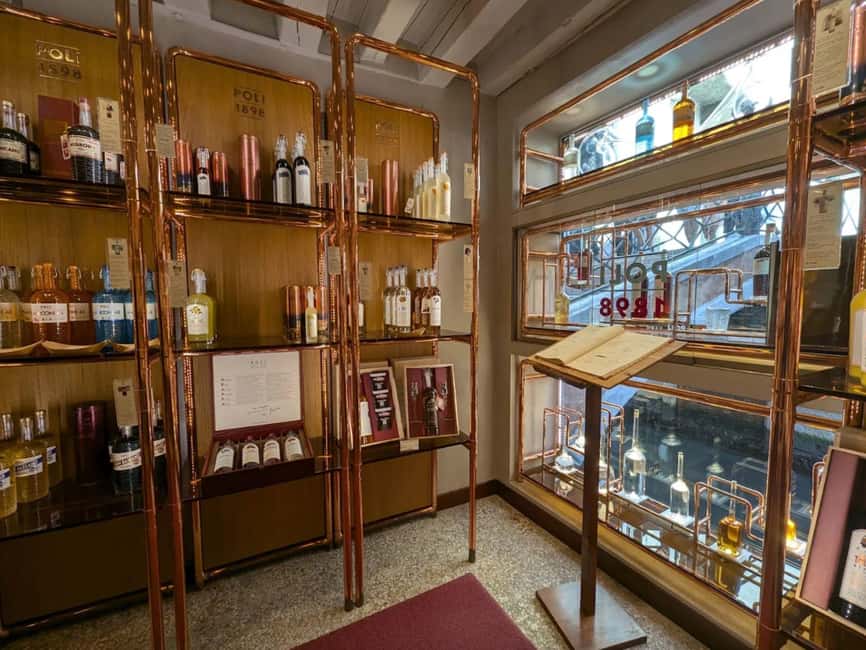
- Three styles, one tasting: young, barrique-aged, and naturally infused grappa
- Small group size: limited to 8 participants, so you can actually ask questions
- Short and practical: plan on about 30 minutes in total
- Venice location: start in the Poli Grappa shop area, about 3 minutes on foot from San Marco square
- English and Italian guide: explanations are offered in English, Italian
- Tailored tasting focus: you can request leaning toward only one of the styles
Venice grappa tasting at Poli: why this 30-minute plan makes sense
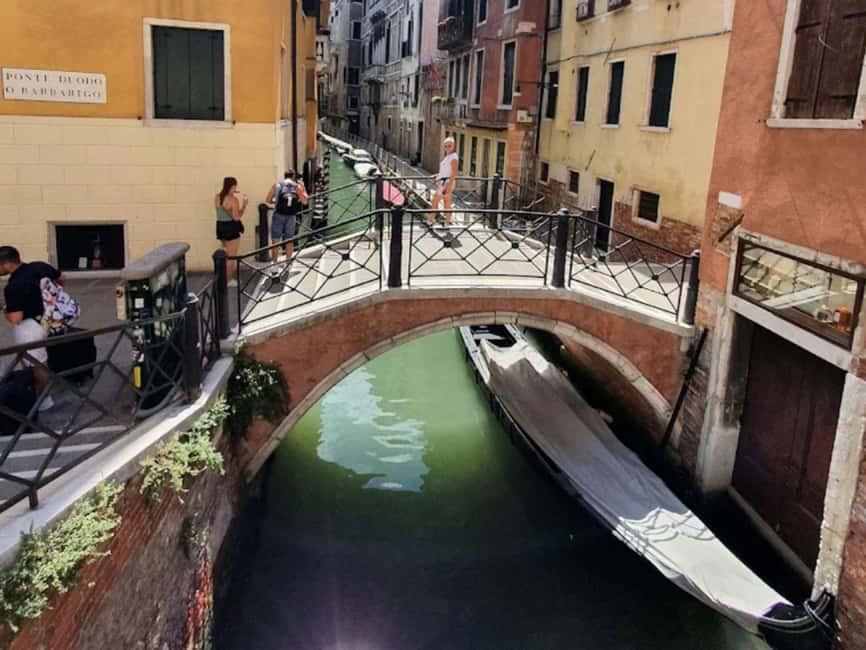
Venice can be intense. Between walking, water-bus time, and the constant pull of viewpoints, it’s easy to waste time on experiences that run long or feel vague. This 30-minute grappa tasting is the opposite: you get a tight window where you’ll learn something real and still stay flexible for the rest of your day.
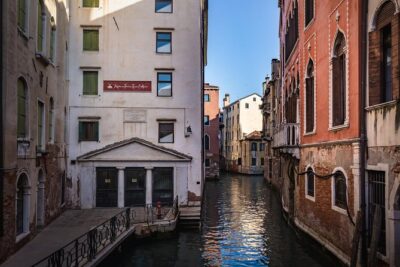
Also, the location is practical. You’ll find Poli Grappa in Venice city center, roughly 3 minutes walking from San Marco square. That matters because you can fit it in before or after you do the big sights, without committing to a whole half-day block.
And yes, the price is approachable. At $14 per person for three tastings plus guided explanation, you’re not paying like you would for a full guided tour session. You’re paying for the instructional moment—how to taste grappa and understand why the flavors shift from one bottle style to the next.
You can also read our reviews of more food & drink experiences in Venice


What you actually taste: young, barrique-aged, and naturally infused
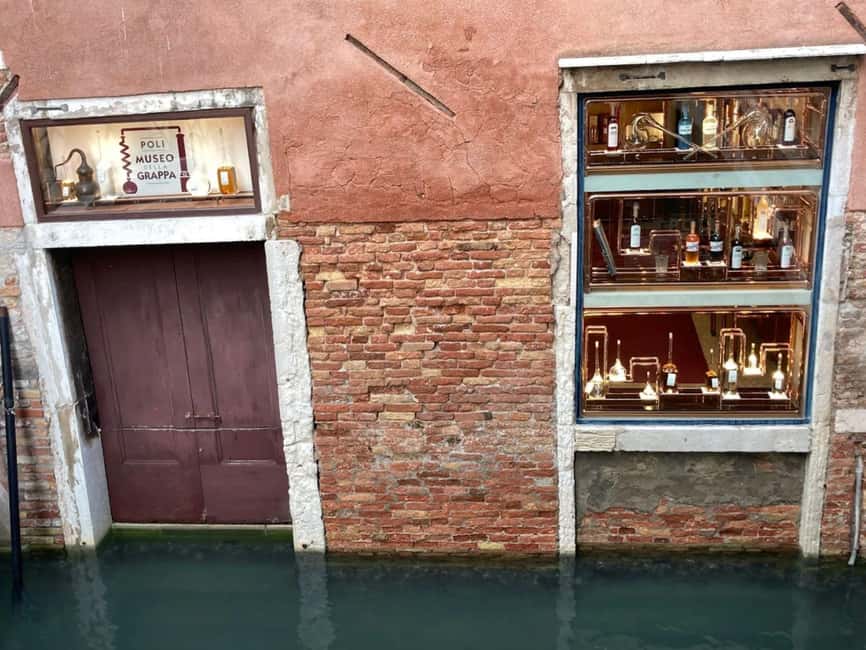
This tasting is built around three types of grappa, and each one teaches you something different.
Young grappa: fresh grape essence
Young grappa is meant to show what the grapes bring before aging adds extra tones. In practical terms, you’ll taste a spirit that tends to feel crisp and more direct in character. The point isn’t to make it sound fancy—it’s to help you notice how unaged grappa can come across with grape-forward notes and a lighter, cleaner profile compared with aged styles.
Barrique-aged grappa: oak-driven complexity
Next is barrique-aged grappa, where time spent in barriques (oak barrels) changes the aroma and taste. Think of it as the difference between a simple ingredient and something that’s been transformed by aging conditions. The guide will connect what you smell and taste to what’s happening in the barrel—so you’re not guessing.
This is the category many people like most because it often feels smoother and more layered. It’s also where tasting notes start to become easier: you’ll start picking out how aging influences warmth, structure, and aromatic balance.
Naturally infused grappa: flavor from ingredients
The third pour is naturally infused grappa, made with grappa plus natural ingredients. This tasting is a quick lesson in how infusion changes everything, from nose to finish. It’s not just sweet or perfumed; it’s about ingredient character showing through. You’ll get guided tasting notes for what you’re drinking, including what natural ingredients contribute to the overall impression.
One cool detail: the experience is set up so you can ask to focus only on young grappa, barrique-aged grappa, or infused liqueurs. If you already know your favorite style, you won’t feel forced to endure a tasting lineup you’re not excited about.


The guide-led history of grappa production (without the lecturing)
What makes this tasting worth your time isn’t just the three sips. It’s the explanation that turns them into something you can remember and reuse later.
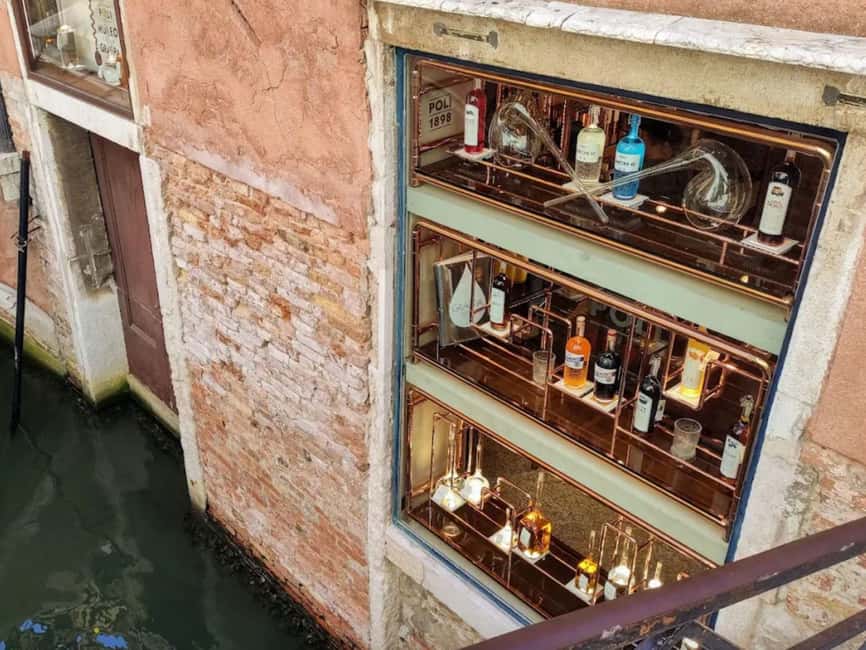
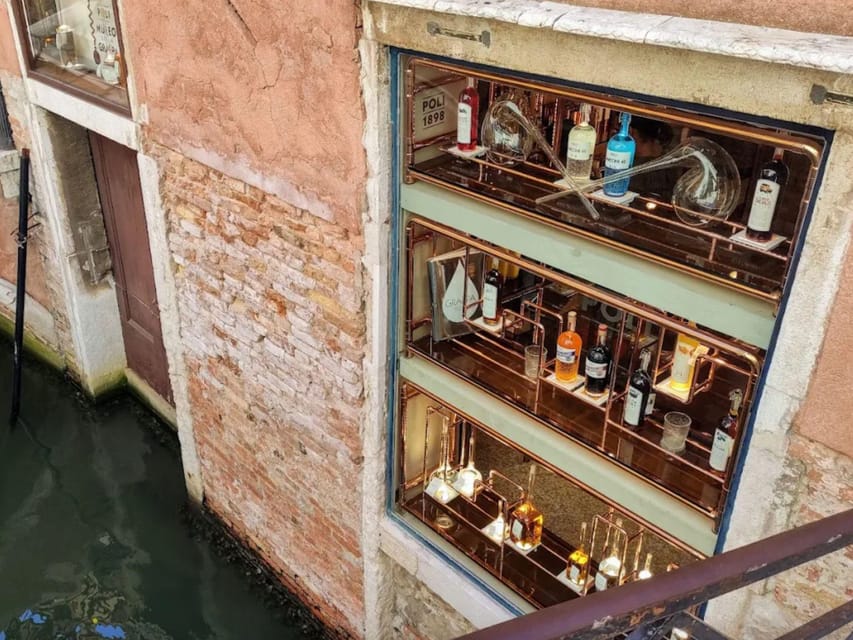
Inside the shop, you’ll get a brief introduction to grappa—its place in Italian drinking culture and the basics of production methods. You may also see a book that covers grappa history and production, which helps anchor the talk in something you can flip through at your own pace.
The team guides you through the tasting with a simple approach: what’s different about each product, which grape varieties are involved, and what tasting notes to look for. In at least one of the English-language experiences, the guide named Jessie is singled out for making the story feel clear and engaging—so you’re not left standing with a glass, nodding politely.
That production-focused context is useful because it trains your palate. Once you understand that one sample is unaged, one is influenced by oak in barriques, and one is flavored via natural infusion, your tasting stops being random. You start noticing patterns.
And since the group is small (max 8), you’re more likely to get real answers rather than a one-size-fits-all script.
Walking through the short route: Poli Grappa stop to tasting moment
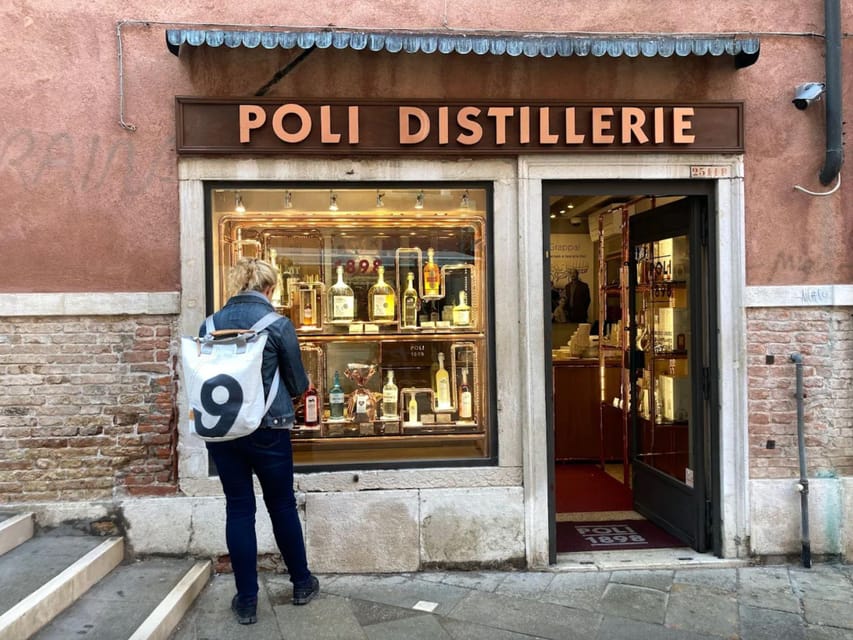
This experience follows a simple in-and-out rhythm.
Stop 1: Poli Grappa (the start)
You begin at the Poli Grappa shop area in Venice city center. From here, everything stays close, which is a win in a city where every extra detour costs energy.
Stop 2: a short shop-time break around the tasting
The rest of the session happens in the same general setting: you’ll move through the tasting flow, with time that also works for browsing and shopping in the spirits space. The pacing is designed for the overall duration—about 30 minutes—so you get instruction first, and optional shopping time fits naturally after.
Because this is indoors and close range, it’s also a strong choice if you’re dealing with heat, light rain, or just the fatigue that can set in after hours of walking.
Back to the start point
You finish back at Poli Grappa, so you aren’t trying to navigate a second pickup point later.
How to taste grappa like you know what you’re doing
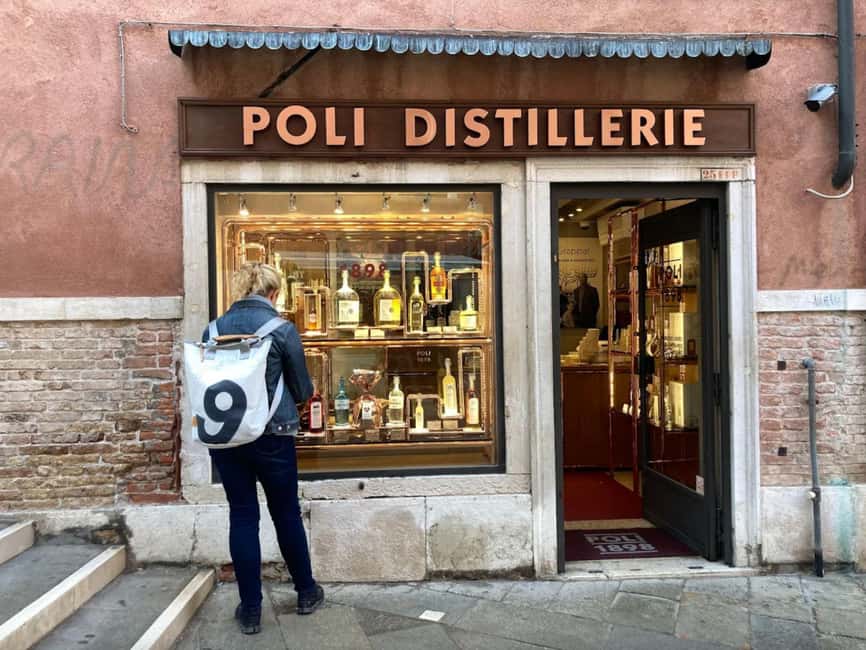
You don’t need a sommelier badge. What you need is a method. Here’s a simple way to use the tasting guidance in a way that actually sticks with you.
First, pay attention to the order: young first, then barrique-aged, then naturally infused. That sequencing makes it easier to spot changes without your senses getting confused by heavier styles too early.
Second, listen for the specific cues the staff gives you:
- which production method is involved
- which grape varieties are part of the style
- what tasting notes are expected
Third, do one small mental label per sample. For example, say to yourself: this one feels more direct, this one feels more shaped by oak, this one tastes like ingredients are driving the character. You’ll be surprised how fast you improve with that approach.
If you’re the type who tends to overthink, I recommend focusing on smell first and taste second. Grappa can move quickly in the glass. Catching the aroma gives you something steady to compare across all three.
Price and value: is $14 fair for three tastings?
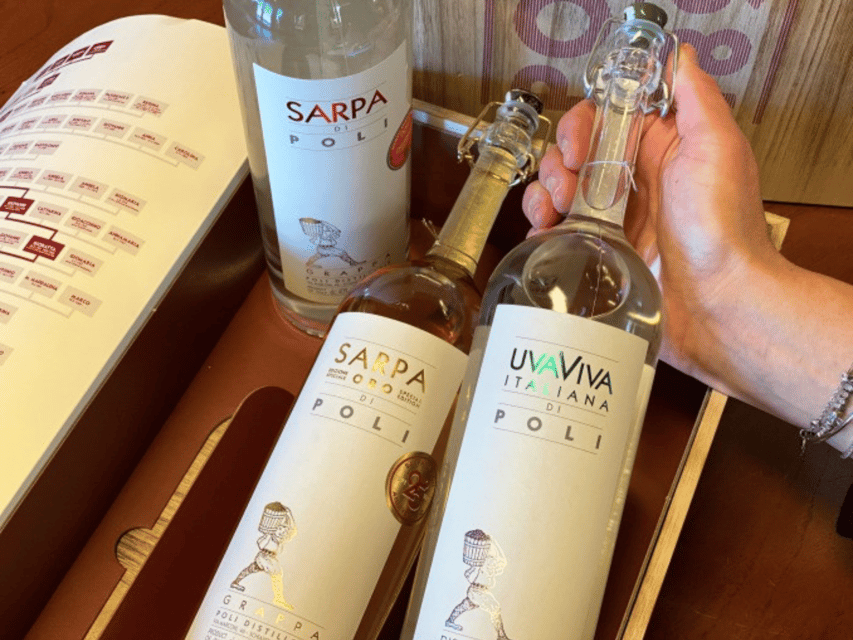
At $14 per person, you’re buying more than “three drinks.” You’re paying for guided tasting plus context on history and production methods. For Venice, where time and convenience cost real money, this is a solid value setup.
Here’s the practical way to look at it:
- You get three distinct grappa styles in one short session.
- You get explanation on why each style tastes the way it does.
- You can keep the experience targeted if you prefer only one type.
Could you buy grappa elsewhere and taste at your own pace? Sure. But you’d miss the structured instruction and the ability to ask questions while someone knowledgeable answers in real time. For many people, that’s the difference between a fun sip session and a meaningful takeaway you can use later.
Who this experience suits best (and who should skip it)
This tasting is designed for adults and for people who want clarity, not a long marathon.
It’s a great fit if:
- you’re curious about Italian spirits and want a structured introduction
- you like guided tastings, but you don’t want to lose half your day
- you enjoy comparing flavor shifts across different production styles
- you want a small-group experience (only up to 8 participants)
You should skip it if:
- you’re under 18 (participants must be at least 18, and ID is required)
- you’re pregnant (it’s not suitable for pregnant women)
Also, if you’re sensitive to alcohol and aromas, go in with honesty about your comfort level. This is a tasting format, so alcohol is part of the point.
Practical tips that make the tasting smoother
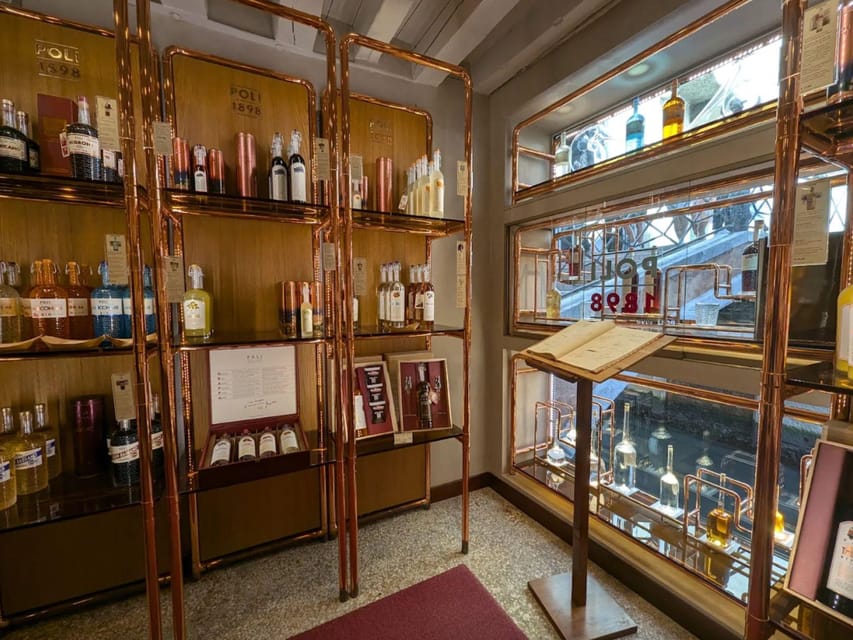
A few details will help you enjoy it without rushing.
- Bring ID if you want to avoid any age verification issues. Participants must be at least 18.
- Wear comfortable shoes. Venice floors and cobbles do not care about your schedule.
- Expect the session to last about 30 minutes.
- Go ready to ask questions. The format works best when you let the guide guide you, especially if you want a focus on only young, only barrique-aged, or only infused.
And because the language support includes English and Italian, you can expect explanations to be accessible even if your Italian is rusty.
Should you book? My call on this easy grappa tasting
Book this if you want an efficient, high-signal experience in Venice. For $14, you’re getting three grappa styles, guided tasting notes, and a production-and-history explanation—delivered in a small group and in about 30 minutes. It’s also a smart choice when you’re staying near San Marco and want something indoor that doesn’t hijack your day.
I’d skip it only if you’re looking for a long, multi-stop tour experience or you don’t want alcohol involved in a tasting setting. Otherwise, this is exactly the kind of small, focused stop that makes a trip feel more personal.
If you want to learn grappa without the stress, this one’s a very reasonable bet.
FAQ
Where is the tasting located in Venice?
You’ll find the start at the Poli Grappa shop in Venice city center, about 3 minutes walking from San Marco square.
How long does the grappa tasting take?
The tasting session lasts about 30 minutes.
What kinds of grappa will I taste?
You’ll taste 3 types: young grappa, barrique-aged grappa, and naturally infused grappa.
How many people are in the group?
The group is small, limited to a maximum of 8 participants.
Do they offer the guide in English?
Yes. The live tour guide is available in English and Italian.
Is there an age requirement?
Yes. Participants must be at least 18 years old, and ID is required for age verification.
Is it wheelchair accessible?
Yes, the activity is wheelchair accessible.
How much does it cost?
The price is $14 per person.